top of page

2026 Top Full Face Radiotherapy Mask Types for Buyers?

Radiotherapy remains a major part of cancer care, making patient positioning and immobilization important purchasing considerations. The World Health Organization’s 2022 global cancer estimates recorded about 20 million new cases and 9.7 million cancer deaths. The International Atomic Energy Agency notes that radiotherapy is needed by many patients during cancer treatment. For buyers, these figures underscore the need to assess equipment carefully, not select a mask by appearance alone.

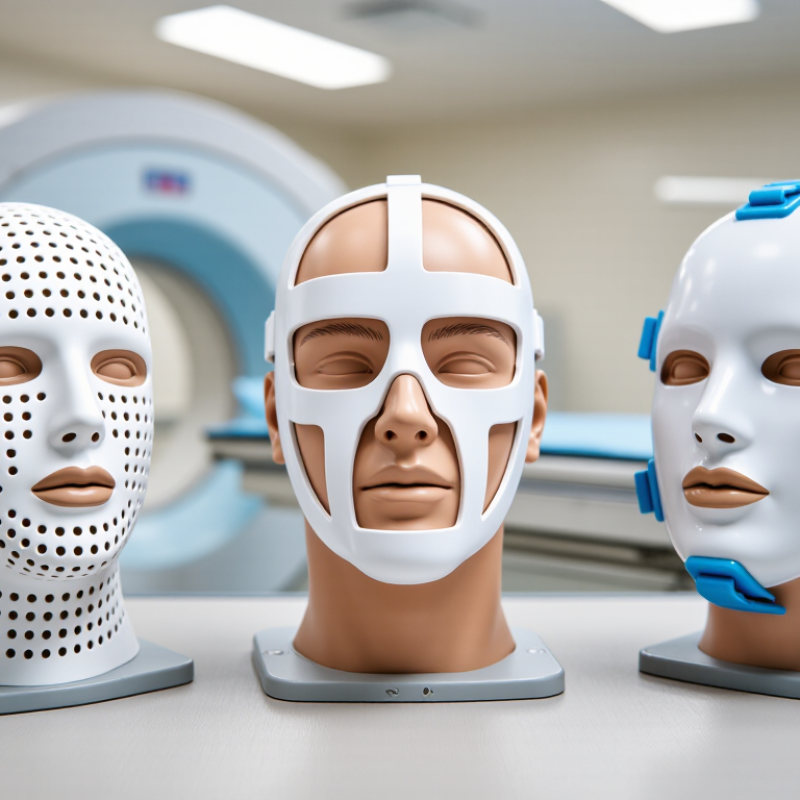
A Full Face Radiotherapy Mask may cover the forehead, cheeks, chin, and neck, helping limit movement during treatment. Common options include perforated thermoplastic masks, open-face designs, and masks with different fixation-point configurations. The AAPM Task Group 176 report on immobilization devices highlights the importance of considering how such devices interact with radiation delivery. Fit matters. Buyers should compare material, visibility, patient comfort, reproducibility, and compatibility with the treatment couch and imaging workflow. Ask for clinical documentation and clear instructions for molding, cleaning, and replacement. A polished product photo cannot show pressure points or how easily a patient tolerates the mask. That is easy to overlook. No design is best for every patient or treatment site, and published product claims may not reflect local workflow. This guide compares leading mask types and practical selection criteria for 2026, while recognizing that purchasing decisions should involve the clinical team.
2026 Top Full Face Radiotherapy Mask Types for Buyers?

What Defines a Full-Face Radiotherapy Mask and Its Immobilization Role?

2026 Top Full Face Radiotherapy Mask Types for Buyers?

What Defines a Full-Face Radiotherapy Mask and Its Immobilization Role?

A full-face radiotherapy mask is a custom-fitted shell, often made from perforated thermoplastic mesh. It rests over the face and head, then attaches to a treatment couch or support plate. The openings allow breathing and help the care team monitor the patient. Once shaped, the mask helps keep the head in a repeatable position during treatment.

Immobilization matters because even small movements can affect how consistently radiation reaches the planned area. The mask provides a stable reference for setup, but it does not hold every internal structure perfectly still. Imaging and clinical checks remain important. Fit matters. A mask that feels too tight, presses on the nose, or limits comfortable breathing should be discussed with the treatment team. A secure appearance alone is not enough.

Which Thermoplastic Sheets Fit the Need: 2.4 mm or 3.2 mm?

For full-face radiotherapy masks, 2.4 mm and 3.2 mm thermoplastic sheets serve different needs. The thinner sheet usually softens faster and conforms more easily around the nose, cheeks, and chin. It can feel less restrictive, but may flex more during handling. The 3.2 mm option generally provides a firmer shell and may suit patients who need stronger restraint. It can also feel heavier and require careful molding around facial contours. Thicker is not automatically better.

AAPM Task Group 176’s 2014 dosimetric review found that immobilization accessories, including thermoplastic masks, can change surface dose and beam attenuation. The measured effect varied with material and beam arrangement, so mask thickness should be checked within the clinic’s treatment setup. Ask for local measurements or commissioning records, not just a product specification. Fit the mask during simulation and inspect pressure points near the eyes, nose, and jaw. A close fit matters.

For buyers, compare molding time, repeat-use durability, patient comfort, and the clinic’s imaging and treatment workflow. A 2.4 mm sheet may work well for a cooperative patient and a carefully molded facial fit. A 3.2 mm sheet may offer more rigidity when movement is a concern. Still, thickness alone cannot guarantee positioning accuracy. That part is easy to overlook. A practical choice should be tested with the intended mask design and local quality-assurance process.

2026 Buyer Guide: Full-Face Radiotherapy Mask Sheet Thickness

Compare the nominal thickness options shown. Thickness alone does not establish clinical suitability or mask performance; confirm compatibility with the mask system and clinical team.

Values are nominal thicknesses in millimeters. Select materials according to the system’s specifications and treatment requirements.

How Do 3-, 5-, and 7-Point Fixation Designs Differ?

2026 Top Full Face Radiotherapy Mask Types for Buyers?

A full-face mask should hold the head and face steadily while allowing a comfortable, repeatable treatment position. The number of fixation points describes how the mask attaches to its support system; it does not, by itself, prove treatment accuracy. Fit matters more.

A 3-point design uses fewer attachment locations and may be quicker to position. It can suit patients whose treatment plan needs less extensive restraint, but a loose fit or movement during setup may be a concern.

A 5-point design adds contact locations, which can distribute support more evenly and help limit small shifts. The added contact should not create pressure around the jaw, cheeks, or forehead.

A 7-point design offers still more attachment locations and may provide firmer stabilization for cases requiring tighter positioning. Yet more fixation can mean longer setup and greater discomfort, especially if the mask presses unevenly.

Point layouts vary by system, so buyers should compare the actual attachment pattern, mask coverage, and compatibility with the treatment couch. Clinical teams can assess fit during simulation and confirm positioning with their usual imaging workflow. Ask how easily staff can reproduce the setup, and whether patients can tolerate the mask without strain. More points are not automatically better. Even a well-made mask can feel wrong on one patient; that deserves a second look.

What Do Peer-Reviewed IGRT Setup Errors of About 1–3 mm Mean for Buyers?

Peer-reviewed IGRT studies sometimes report residual setup errors of about 1–3 mm after image guidance. For buyers, this is a measured result, not a promise that every patient will stay within that range. The number depends on the study group, imaging method, correction process, and definition of error. Small numbers need context.

Ask whether reported errors describe movement before or after correction, and whether rotations were included. A mask may feel secure on a fitting-room table yet behave differently during repeated treatment sessions. Check how the full-face design supports the head and shoulders, permits imaging, and accommodates individual facial contours. Ask for repeatability data from comparable clinical workflows. Details matter.

A millimetre is small. It is not trivial. Still, mask performance is only one part of setup accuracy; imaging, couch corrections, staff technique, and patient comfort also matter. Request evidence behind any stated accuracy range, including study conditions and limitations. Then assess practical factors: fitting time, cleaning instructions, durability, and replacement procedures. No single mask type suits every patient. Buyers should compare documented performance with the needs of their own treatment service, and admit where evidence is thin.

Which 2026 Checks Cover CT Compatibility, Repositioning, and QA?

For a full-face radiotherapy mask, check CT compatibility before comparing mask types. Confirm that the material and support frame are suitable for the scanner and treatment workflow. Review CT images for streaks or visible distortion near the patient’s face. Small details matter. Test the mask with the intended headrest and indexing system, not as a loose sample. The radiation oncology team should confirm that the mask holds the planned position without blocking required imaging or creating uncomfortable pressure. Fit can change with swelling, weight loss, or a different hairstyle. That part is easy to overlook.

Repositioning checks should show that the patient can return to a consistent setup across visits. Record the headrest, couch indexing, mask position, and any reference marks. During simulation, note whether the nose, chin, and forehead settle into the same contact points after the mask is opened and refitted. Repeat the setup when practical. One trial may look reassuring, but it can miss a small shift. For QA, inspect the mask for cracks, loosened fasteners, and changes in fit, then follow the clinic’s imaging and verification procedures. A medical physicist and therapist can review setup images and investigate persistent discrepancies. Document exceptions clearly; the record may not be perfect, but an honest note is safer than an assumed match.

bottom of page