2026 Top Automatic Transmission Filter Types for Buyers
Choosing an Automatic Transmission Filter starts with understanding what the filter must catch and where it sits. Some vehicles use a flat pickup screen inside the transmission pan. Others use a replaceable cartridge or an external inline filter. A few designs combine a screen with filter media. Small part. Big consequences. Restricted flow can affect lubrication and hydraulic pressure, while poor fitment may allow unfiltered fluid to bypass the element.
This guide compares common filter types for buyers in 2026, including their construction, service access, and typical maintenance considerations. A mesh screen is often washable, but it may not capture finer debris like a media-based filter. Cartridge filters can be straightforward to replace when access is clear. External filters may simplify service, though hose routing and pressure ratings still matter. These are general differences, not guarantees; transmission design varies by vehicle and model year.
Before buying, check the vehicle’s service information, transmission code, and specified fluid requirements. Confirm the filter’s dimensions, seals, and mounting style against the original part. Packaging claims alone are not enough. A bargain filter can look convincing and still fit poorly. I would not assume that a “universal” label settles the question; that deserves a closer look. The right choice depends on compatibility, operating conditions, and a realistic service plan. This overview helps buyers compare options without treating one filter type as best for every transmission.
What an Automatic Transmission Filter Does and How It Works
What an Automatic Transmission Filter Does and How It Works
An automatic transmission filter helps keep fluid moving through the system with less grit and debris. As the pump draws fluid from the transmission pan, the fluid passes through a pickup screen or filter media. Larger particles may be caught by a screen, while finer material can be trapped by layered media in some designs. Clean fluid then travels through hydraulic passages to operate clutches, bands, and valves.
Small, but important. A restricted filter can reduce fluid flow, especially when the fluid is cold or contaminated. That may contribute to delayed engagement or rough shifting, but those symptoms can have other causes too. A filter is not a cure for worn parts or degraded fluid.
Filter layouts vary. Some are positioned inside the transmission pan, while others use a separate external housing. During service, a technician can inspect the removed filter and pan for unusual debris; a light coating of fine material differs from conspicuous metal fragments. Still, appearance alone cannot confirm every fault. Check the vehicle’s service information for the correct filter and fluid procedure. It is tempting to assume every transmission follows the same schedule. That assumption can be wrong.
The Main Types of Automatic Transmission Filters
The Main Types of Automatic Transmission Filters
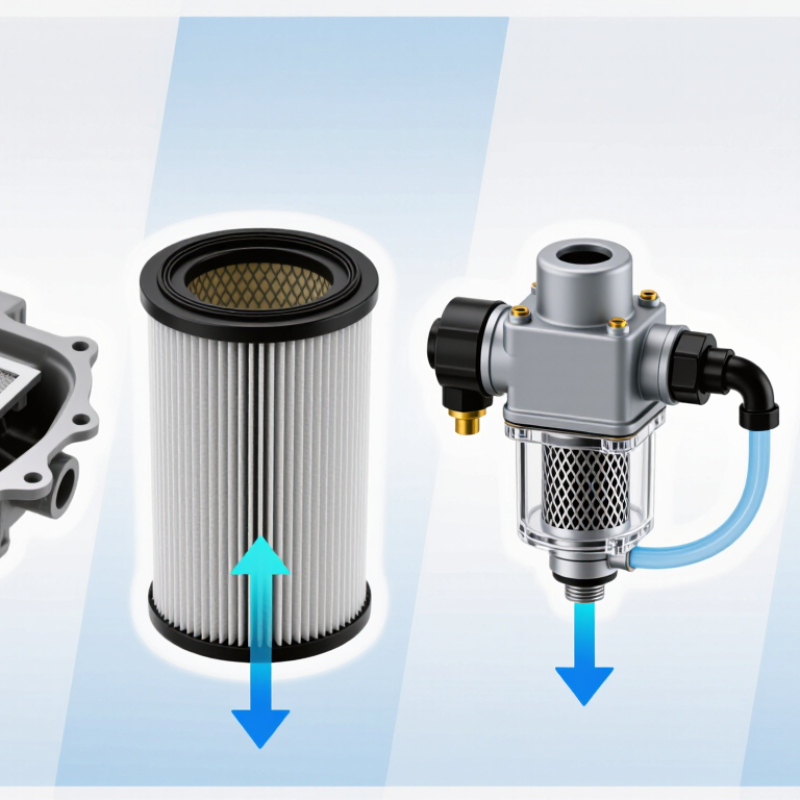
Automatic transmission filters generally fall into three groups: pickup screens, internal cartridge filters, and external inline or spin-on filters. A pickup screen sits near the pan and catches larger debris before fluid reaches the pump. Its metal mesh is easy to picture: a small barrier beneath the fluid, not a fine polishing filter.
Internal cartridges use pleated media and are replaced during transmission service, often after the pan is removed. External filters are easier to access, but their location and service interval vary by vehicle design.
Filter labels can mislead. A “finer” rating does not automatically mean better protection if flow becomes restricted. SAE J1858 describes multipass testing that evaluates filter efficiency and contaminant-holding capacity; however, its scope is engine-oil filters, not a universal automatic-transmission filter rating. That distinction matters when comparing product claims.
For buyers, check the vehicle service information for the correct filter type, sealing method, and replacement procedure. Look for the specified gasket or O-ring, and inspect the pan for metal fragments or clutch material. A dark fluid color alone is not a dependable diagnosis.
The detail that is easy to miss? A clean-looking screen may still hide restricted flow or wear elsewhere.
Filter Materials, Designs, and Key Differences
Automatic transmission filters differ by media and by how they sit in the fluid path. Metal mesh strainers catch larger debris and usually prioritize steady flow. Felt or synthetic depth media can trap finer particles, but may load up sooner when fluid is contaminated. Some assemblies combine a screen with a finer layer. Small details matter.
Design affects replacement and fit. A pan-mounted pickup filter is common in many transmissions; cartridge-style units fit inside a housing, while external filters are used in some systems. Their seals, neck depth, and pickup position must match the transmission. A filter that looks close may still draw air if its seal sits incorrectly. Fit matters.
Buyers should check the vehicle’s service information for the specified filter and fluid, rather than choosing by appearance alone. Compare media type, housing shape, seal placement, and stated compatibility. Finer filtration is not automatically better: restricted flow can be a concern if the filter is unsuitable or clogged. A clean-looking screen also cannot show every trapped particle. Specifications are useful, but real-world condition can be less tidy than a product description suggests.
2026 Top Automatic Transmission Filter Types for Buyers
Typical filter media constructions and their representative number of filtration layers.
Metal-mesh screens and felt or nonwoven media are commonly single-layer constructions; composite and screen-plus-media designs combine layers. Layer count describes construction, not filtration efficiency. Actual materials and specifications vary by transmission and filter model, so verify vehicle fitment and manufacturer specifications before buying.
How to Compare Filters for Your Vehicle and Driving Needs
A transmission filter should match the exact transmission in your vehicle, not just its year and model. Check the owner’s manual or service information for the filter design, part dimensions, seal type, and any specified bypass valve. Some units use a pan-mounted screen or cartridge; others use a replaceable spin-on filter. They are not interchangeable. A filter that looks close may still sit incorrectly or restrict fluid flow.
Driving conditions matter, too. Frequent stop-and-go traffic, steep roads, towing, or long periods in hot weather can increase transmission workload. Choose a filter that meets the vehicle maker’s flow and filtration requirements, and avoid assuming that finer media is always better. If flow is restricted, the transmission may not receive fluid as intended. Fit and specification come first. Very practical.
During service, inspect the pan and old filter for unusual debris, and use the correct replacement seal. Fine gray residue may be normal wear, but larger metal pieces or a burnt smell deserve attention from a qualified technician. Filter material and construction can vary, so compare published specifications rather than relying on appearance alone. It is easy to overlook the seal. I would also verify whether the service procedure calls for replacing the filter at every fluid change; intervals differ by vehicle and use.
Fitment, Replacement Intervals, and Installation Considerations
Automatic transmission filter fitment depends on more than the vehicle’s make and year. Check the transmission code, pan shape, pickup-tube position, gasket profile, and filter design before ordering. A shallow pan and a deep pan may look similar in a photo but require different parts. S&P Global Mobility reported that the average age of U.S. light vehicles reached 12.6 years in 2024, making accurate fitment checks especially relevant for older vehicles. That matters. Confirm the transmission identification and compare the replacement with the removed filter; catalog listings can still leave room for error.
Replacement intervals vary by transmission and operating conditions. Use the vehicle’s maintenance schedule rather than assuming every filter is due at one fixed mileage. Frequent towing, stop-and-go driving, and high operating temperatures can increase service demands. Some designs are serviced with a pan-mounted filter, while others use a cartridge or an internal filter that is not routinely replaced. A clean-looking fluid can still mislead. During installation, clean the pan and magnet, keep lint and grit away from the open transmission, and use the specified fluid. Follow the correct tightening sequence and torque values, then check fluid level using the required temperature and procedure. I would not treat a universal interval as reliable advice.