What Is the Best Bulk Sorter Supplier in China?
Choosing the best Bulk Sorter supplier in China is not simply a matter of comparing prices or polished product photos. The right partner should understand your material, target accuracy, operating speed, and installation conditions. A sorter handling rice may need different sensors and settings from one processing plastic flakes, minerals, or packaged goods. Details matter.
A useful supplier conversation gets specific. Ask how the machine performs on your own sample, what throughput was measured, and how sorting results are checked. Request clear information about sensor options, belt dimensions, reject mechanisms, spare parts, and operator training. Watch a live test if possible. See the material move. A short demonstration can reveal inconsistent feeding or missed defects that a brochure will not show. No catalog answers everything.
This guide explains how to assess Chinese suppliers using practical evidence, not broad promises. It looks at product fit, manufacturing capability, quality checks, communication, customization, and after-sales support. Ask for references from similar applications, and confirm what service the supplier can provide at your location. Compare written specifications with test results, and keep the expected material variation in mind. A supplier may be skilled yet still be a poor fit for a particular line. That is worth admitting. By asking focused questions before ordering, buyers can narrow their shortlist and make a more informed decision about the best Bulk Sorter supplier for their operation.
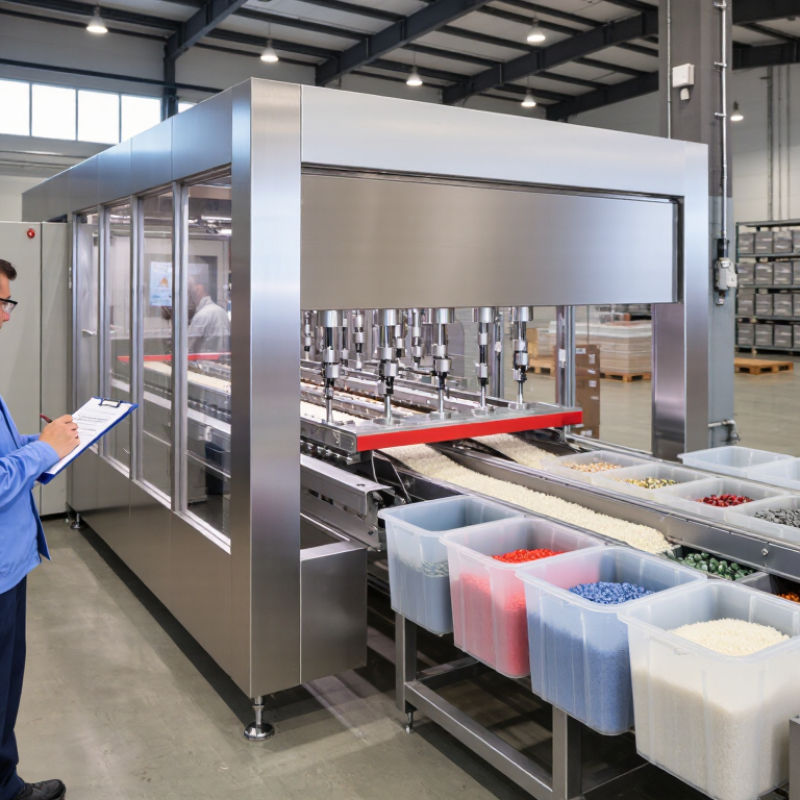
Define the Feed: Particle Size (mm), Moisture, and Material Mix
What Is the Best Bulk Sorter Supplier in China?
Define the Feed: Particle Size (mm), Moisture, and Material Mix
Before comparing bulk sorter suppliers in China, define the feed in measurable terms. Record the smallest and largest particle sizes in millimeters, along with the share of fines and oversize. A label like “mixed granules” is not enough. Use sieve analysis where practical, and photograph the sample beside a scale. Small details matter.
Moisture affects flow, adhesion, and how consistently particles reach the sorting zone. Measure it across several sample points, not just from a dry surface. Tell suppliers how the material is stored and whether moisture changes by season or shift. Ask for a test using feed close to your normal operating condition. Exact limits vary. If the trial uses unusually clean, dry material, results may flatter the machine.
List the valuable fraction, unwanted material, color differences, and any particles that look alike. For example, dark flakes mixed with pale chips may sort differently from nearly identical shades. Ask what sensor method is proposed, and request measured recovery, rejection, and throughput from the trial. Check how results change when particle size or moisture shifts. One limitation remains: a lab sample may not represent a full production line. That gap is easy to overlook, and it should be discussed before comparing quotations.
Compare Rated Throughput (t/h), Sorting Purity (%), and Recovery (%)
What Is the Best Bulk Sorter Supplier in China?
Rated throughput, sorting purity, and recovery should be compared together, not treated as separate sales figures. A machine rated at 10 t/h may achieve that rate only with evenly fed material and a specific particle-size range. Ask suppliers to test a representative sample, then record the feed rate, operating settings, and results. Small details matter. Moisture, dust, and mixed particle sizes can change performance on a real production line.
Sorting purity measures how much of the accepted output meets the target specification. Recovery shows how much of the wanted material the sorter retains. High purity can come at the cost of recovery if the settings reject borderline pieces. Request both percentages from the same test run, with their calculation methods stated clearly.
A useful report identifies the sample composition and weighs the accepted, rejected, and misplaced material. Watch the belt during a demonstration: uneven loading or frequent stoppages can make rated throughput a poor guide to daily output. Test conditions are never perfect, and one sample may not represent every shift. Ask how results vary across different feed batches before comparing quotations.
Match RGB, NIR, or XRT Sensors to the Target Material
What Is the Best Bulk Sorter Supplier in China?
Match RGB, NIR, or XRT Sensors to the Target Material
Bulk sorting performance depends on the difference a sensor can actually detect. RGB cameras read visible color and shape, making them suitable for grains, plastics, or flakes with clear visual contrast. NIR sensors identify material signatures beyond visible color. They can help separate mixed polymers or remove unwanted organic material, but moisture, dirt, and overlapping spectra may weaken results. XRT measures differences in density and atomic composition. It can detect dense inclusions in ores or food products, though it does not replace careful sample testing. Real materials are rarely as tidy as brochure samples.
Tips: Send representative samples, including dusty, wet, and borderline pieces. Ask for test results at your intended throughput, not only a clean laboratory run. Check sensor resolution, belt speed, ejection timing, and reject rate together.
When comparing suppliers in China, request a trial using your target material and define what counts as a successful separation. Review recovery and purity, since improving one can reduce the other. Ask how settings change when feed conditions vary. A supplier should explain limitations plainly and provide verifiable data. If two sensor types seem suitable, test both. The cheaper option may be enough, but guessing is a poor commissioning plan. Sensor choice is only part of the decision; stable feeding and service support matter too.
Verify Quality Systems with ISO 9001:2015 and FAT/SAT Test Records
Choosing a bulk sorter supplier requires more than a polished brochure. Ask for a current ISO 9001:2015 certificate and check that its scope covers the relevant manufacturing activities. Confirm the issuing body, certificate dates, and whether the certificate can be independently verified. A certificate is useful, but it does not prove that every machine will meet your process needs. Details matter.
Review the supplier’s FAT and SAT records before placing an order. A factory acceptance test should record the agreed test material, feed rate, sorting accuracy, reject rate, and operating conditions. Check that instruments were calibrated and that results meet written acceptance criteria. At installation, the SAT should show how the sorter performs with your actual line setup, utilities, and material flow.
Ask for dated records, measured results, and notes on any corrective actions—not just a signed checklist. Paper is not proof. Ideally, test representative material, including pieces that vary in size, color, or surface condition.
Even then, a short trial may not capture a full shift’s fluctuations. That limitation deserves discussion. A careful supplier will explain test boundaries, share unresolved issues, and agree on how performance will be checked after commissioning.
Compare Total Cost per Tonne, Uptime, Spares, and Service Coverage in China
When comparing bulk sorter suppliers in China, start with cost per tonne, not the quoted machine price. Include installation, energy use, operators, maintenance, and expected downtime. Divide these costs by the tonnes of saleable product processed. A low purchase price can look attractive until frequent stoppages slow the line.
Ask for uptime figures from installations handling similar material and feed rates. Then check how those figures were measured. Dust, moisture, uneven particle sizes, and changing belt speed can affect sorting results. Request a site trial or a clear acceptance test. Downtime gets expensive. This is where comparisons get messy: estimates rarely capture every production interruption.
Spares and service coverage also shape the real cost. Confirm which wear parts are held in China, typical dispatch times, and whether technicians can reach your plant promptly. Ask about support outside standard working hours, and get response commitments in writing. A spare sensor on a local shelf may prevent a long wait; a specialized component shipped from elsewhere may not. Forecasts are never exact. Compare suppliers using your own operating hours, material samples, and maintenance records, then ask each to show the assumptions behind its cost-per-tonne estimate.
What Is the Best Bulk Sorter Supplier in China? — Compare Total Cost per Tonne, Uptime, Spares, and Service Coverage in China
The comparison below models three anonymous equipment-package scenarios for a 100 t/h bulk sorting line. It is a transparent planning benchmark, not verified supplier pricing, a supplier ranking, or a guarantee of performance. Replace the assumptions with written quotations and site-specific data before making a purchasing decision.
| Comparison dimension | Entry-level package | Balanced package | High-availability package |
|---|---|---|---|
| Illustrative package profile | Lower initial investment; suitable where budget is the main constraint and downtime can be managed. | Moderate investment with a balanced modeled combination of energy use, uptime, and service costs. | Higher initial investment; intended for operations where availability is especially important. |
| Modeled installed equipment cost | CNY 1,200,000 | CNY 1,800,000 | CNY 2,600,000 |
| Rated throughput assumption | 100 tonnes per hour | 100 tonnes per hour | 100 tonnes per hour |
| Modeled operating availability | 90% | 94% | 97% |
| Illustrative average electrical load | 35 kW | 45 kW | 55 kW |
| Electricity cost assumption | CNY 0.75 per kWh | CNY 0.75 per kWh | CNY 0.75 per kWh |
| Modeled electricity cost | CNY 0.29 per processed tonne | CNY 0.36 per processed tonne | CNY 0.42 per processed tonne |
| Modeled spares and planned-service allowance | CNY 0.45 per processed tonne | CNY 0.35 per processed tonne | CNY 0.30 per processed tonne |
| Modeled operating-labor allowance | CNY 0.12 per processed tonne | CNY 0.10 per processed tonne | CNY 0.10 per processed tonne |
| Modeled equipment-capital cost | CNY 0.33 per processed tonne | CNY 0.48 per processed tonne | CNY 0.67 per processed tonne |
| Modeled total cost per tonne | CNY 1.20/t | CNY 1.29/t | CNY 1.50/t |
| China service coverage to request in the contract | Remote support within one business day; on-site response target of 3–5 days, subject to site location. | Remote support within one business day; on-site response target of 2–3 days for covered regions. | Named service contact, remote response within 4 hours, and an on-site response target of 24–48 hours in agreed service regions. |
| Critical-spares provision to verify | Obtain a recommended spares list and confirm local stock status and replenishment lead times before ordering. | Agree a site-specific critical-spares kit and written China delivery targets for wear parts. | Agree a larger critical-spares kit, stock location, inventory responsibility, and expedited replenishment terms. |
| Best suited to | Sites with flexible production schedules, available maintenance staff, and strong sensitivity to upfront cost. | Sites seeking a balanced modeled lifecycle cost, provided the quoted service and uptime commitments are validated. | Sites where downtime has a high operational cost and the extra investment is justified by verified availability and service terms. |
How the modeled total cost is calculated: equipment capital cost per tonne + electricity cost per tonne + spares and planned-service allowance + operating-labor allowance.
Common calculation basis: 100 t/h rated throughput, 4,000 scheduled hours per year, 10-year service life, and the availability assumptions shown in the table. Capital cost per tonne is calculated by dividing installed equipment cost by modeled lifetime tonnes processed.
Important limits: These figures are illustrative assumptions, not measured market averages or actual supplier data. They exclude financing, taxes, feedstock, reject handling, upstream and downstream equipment, major rebuilds, and the value of lost production during downtime. Confirm actual power draw, performance guarantees, spare-parts availability, and service response times in writing for the intended site in China.