top of page

What Is the Best High Speed Pick and Place Robot in 2026?

Choosing the best high speed pick and place robot in 2026 starts with the job, not a headline cycle-time figure. A robot moving empty trays across a clear conveyor faces different demands from one sorting small parts under changing light. Speed is only one measure. Payload, reach, positioning repeatability, vision performance, and recovery after a stoppage all affect real output.

This guide compares the practical factors buyers should verify before selecting a system. Look for cycle-time data tied to a clearly described task, including object size, load, travel distance, and inspection steps. Ask how the robot handles missed picks, product changes, and routine maintenance. A fast demonstration is useful, but it does not prove sustained production performance. That distinction matters.

There is no universal winner. A compact delta robot may suit lightweight items and a short conveyor, while another application may call for a different arm, gripper, or vision setup. Consider integration support, spare-part access, safety features, and total operating costs alongside speed. Request a live trial using representative products, and record results under repeatable conditions. Real floors are messier than demos. Even a careful comparison has limits: supplier data may use different test methods, and site conditions can change results. The sections ahead offer a grounded way to assess candidates and decide which robot fits your process—not just which one looks fastest.
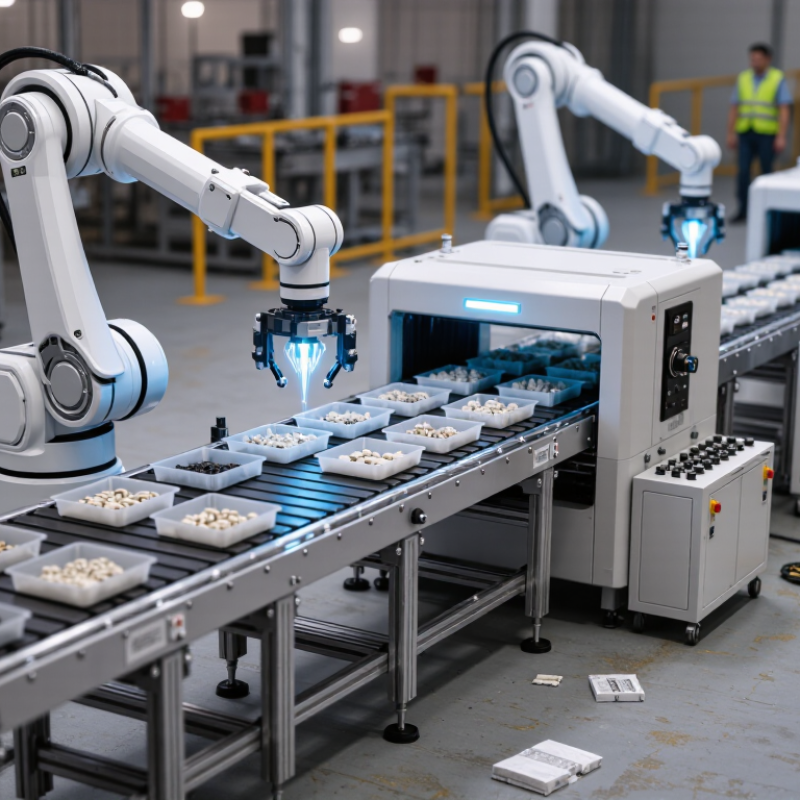
What Is the Best High Speed Pick and Place Robot in 2026?

What a High-Speed Pick-and-Place Robot Is

A high-speed pick-and-place robot is a machine that identifies an item, grips it, moves it, and places it at a target location. A vision system may locate products on a moving conveyor, while a controller coordinates the robot and gripper. Delta and SCARA designs are common where rapid, repeatable movement matters. Small parts. Tight timing.

The International Federation of Robotics reported 541,302 industrial robot installations worldwide in 2023 in its World Robotics 2024 report. That figure covers industrial robots broadly, not pick-and-place systems alone. It shows the scale of industrial automation, but it cannot tell buyers how many items a particular cell will handle each minute.

“High speed” depends on the whole work cell, not just the robot arm. Product spacing, camera response, grip time, payload, and placement accuracy all affect output. A lightweight pouch and a rigid component behave differently on a fast conveyor. In practice, measure completed, correctly placed items over a sustained run, including brief stops and missed picks. A supplier’s cycle-time figure can be useful, but it may reflect ideal conditions. Real production is messier. The best assessment comes from testing representative products, packaging, and conveyor speeds in the intended setup.

How Its Motion and Control Systems Work

What Is the Best High Speed Pick and Place Robot in 2026?

A high-speed pick-and-place robot is only as capable as its motion and control system. The arm must accelerate, decelerate, and settle precisely without shaking the payload. A controller coordinates joint movement along a planned trajectory, while servo feedback corrects small position errors in real time. At a conveyor, even a brief settling delay can shift a grip point.

Vision and motion planning work together. A camera identifies an item’s position; the controller adjusts the pickup path and timing to match the moving belt. The International Federation of Robotics reported 541,302 industrial robot installations worldwide in 2023, with 4.28 million units in operation (World Robotics 2024). These figures show the scale of industrial automation, but they do not measure pick-and-place speed specifically. Cycle-time claims should therefore be checked against payload, travel distance, and test conditions.

Look beyond peak acceleration. A lighter gripper may shorten movement time, while a poorly tuned system can cause vibration or missed picks. Small delays matter. In practice, conveyor tracking and repeatable placement can matter more than a headline speed. Engineers should review cycle-time tests using the intended product, tool, and layout. One limitation deserves attention: real production lines rarely behave like clean test setups. Dust, product variation, and changing belt speeds can expose weaknesses in sensing and control.

Key Criteria for Comparing Robots in 2026

Comparing high-speed pick-and-place robots in 2026 starts with the real task, not a headline speed. Measure cycle time with the intended payload, travel distance, approach path, and settling time. A 0.2-second catalog figure may not reflect a line moving small cartons between trays. Test representative parts, including awkward shapes and occasional misalignment. Check repeatability separately from absolute placement accuracy; they describe different performance limits. Small details matter.

Capacity and integration matter just as much as speed. The International Federation of Robotics reported 4.28 million industrial robots operating worldwide in 2023, in World Robotics 2024: Industrial Robots. That scale makes service access, spare-part availability, and uptime practical comparison criteria. Deloitte’s 2024 Smart Manufacturing and Operations Survey found that 86% of surveyed executives viewed smart manufacturing initiatives as likely to drive competitiveness over the next five years. This is context, not proof that a faster robot pays back. Compare the controller’s compatibility with existing vision, conveyor tracking, and safety systems, then estimate total cost per accepted pick. Run a timed trial. Watch vacuum loss, missed picks, heat buildup, and recovery after a fault. One caveat: a carefully staged demo can still flatter performance. Test during a representative production shift.

What Is the Best High Speed Pick and Place Robot in 2026? — Key Criteria for Comparing Robots in 2026

Comparison Criterion Delta Robot SCARA Robot Six-Axis Articulated Robot
Typical pick-and-place rate Often around 100–200 picks per minute in light-load, short-travel applications. Often around 50–120 cycles per minute, depending on payload, travel, and cycle definition. Often around 20–60 cycles per minute; complex paths and heavier loads generally reduce throughput.
Typical payload range Approximately 1–6 kg for many high-speed packaging applications; heavier-duty models are available. Approximately 1–20 kg across common industrial configurations. Approximately 2–20 kg for many compact and medium-duty applications; larger models can handle more.
Work envelope and reach Typically suited to a defined work area above a conveyor; the usable envelope depends on arm length and layout. Commonly available with horizontal reach of roughly 200–1,000 mm. Commonly available with reach of roughly 500–1,800 mm in compact and medium-duty classes.
Repeatability Often specified around ±0.1 mm, with the exact figure dependent on model and measurement conditions. Often specified around ±0.01–0.1 mm, depending on model and axis. Often specified around ±0.02–0.1 mm, depending on robot size and configuration.
Best-fit applications Very fast, repetitive transfers of small items between conveyors, trays, or packaging stations. Fast assembly, loading, sorting, and transfers that need strong horizontal reach and vertical insertion. Handling tasks that require flexible approach angles, obstacle avoidance, or multiple orientations.
Main trade-off Highest speed potential for suitable layouts, but less suited to applications requiring broad orientation changes. Good balance of speed and precision, but reach and motion are less flexible than a six-axis robot. Most versatile motion, but typically slower and more complex to program for simple repetitive transfers.
Integration factors to compare Conveyor tracking, vision-system compatibility, end-of-arm tooling, and access to the work envelope. Controller and fieldbus compatibility, mounting orientation, tool clearance, and axis limits. Reach around fixtures, collision zones, safety-cell requirements, and the complexity of path programming.
Best choice when... Maximum throughput is the priority and the product is light enough for a fast, repeatable transfer. The task needs a practical mix of speed, repeatability, and horizontal working range. Product orientation and access flexibility matter more than achieving the highest simple pick rate.

How to compare fairly: These are indicative ranges, not guaranteed specifications for every robot. Published cycle rates may use different test patterns, payloads, and definitions of a cycle. Compare robots using the same pick-and-place path, payload, tooling, accuracy requirement, and production conditions; confirm final performance with the robot supplier or an application test.

Common Robot Types and Their Industrial Uses

High-speed pick-and-place robots come in several forms, and the right type depends on the product, reach, and motion path. Delta robots are often used for lightweight items on fast-moving food or packaging lines. Their overhead arms can sort small packets into trays, but payload and working area are limited. SCARA robots suit compact assembly tasks, such as placing caps or components into fixed positions. They offer quick horizontal movement and controlled vertical motion. Small parts move fast.

Cartesian robots travel along straight axes, making them useful for orderly layouts, palletizing, and loading machines. They can be easier to program around rectangular workspaces, though their frames may take up floor space. Articulated robots handle more complex angles and can reach around fixtures, but speed depends on the load and path. Collaborative models may help where people share a work area, yet “collaborative” does not automatically mean safe at every speed. That detail is easy to overlook.

In practice, compare cycle time under the real payload, inspect how parts are presented, and test placement accuracy over a full shift. A fast robot cannot fix inconsistent incoming parts, and the best choice is rarely the one with the highest advertised speed.

How to Choose the Best Robot for a Production Line

Choosing the best high-speed pick-and-place robot starts with the product, not the headline cycle rate. Measure the part’s weight, dimensions, grip surface, and travel distance. Then test the required placement accuracy using the actual fixture. A robot that moves quickly in a catalog may slow down when parts arrive unevenly or require careful alignment. Small details matter.

Compare the robot’s payload and reach with the full end-of-arm tool, including cables and grippers. Check cycle time under realistic conditions: include pickup, settling, release, and any vision inspection. Ask for a trial using representative parts. Watch for missed picks, vibration, and recovery time after a fault. A few seconds lost per cycle can add up across a shift.

Production lines also need smooth changeovers and practical maintenance. Review how operators load recipes, replace gripper fingers, and access service points. Confirm that the controller can communicate with existing equipment and that guarding fits the cell layout. Fast is not always better. In one line, a gentler motion profile may protect fragile parts and reduce jams. I would still question any estimate that excludes changeover time; that number is often less tidy than the brochure suggests.

bottom of page