Contact Us
Contact Us

Your Total Safe Patient Handling Partner
1000 Items
What Is the Best Parcel Sorting System in 2026?
In 2026, the best Parcel Sorting System is not simply the fastest machine on a specification sheet. It is the system that handles your parcel mix reliably, fits your building, and keeps working during peak volume. A small e-commerce hub may need flexible belt modules and clear exception handling. A large distribution center may prioritize high throughput, sort accuracy, and integration with its warehouse software. One size rarely fits all.
Frederick W. Smith, FedEx’s founder, famously observed, “The information about the package is just as important as the package itself.” That principle still matters. Scanners, dimensioners, routing software, and conveyors must work together. A parcel with a smudged label should not quietly disappear into a pile of exceptions. Neither should a system’s impressive advertised speed obscure its real performance on mixed parcels.
This guide compares sorting technologies through practical measures: throughput under typical operating conditions, accuracy, flexibility, maintenance demands, and total cost of ownership. It also considers installation space, staff training, and how easily operators can clear a jammed chute. Those details are less exciting than a top-speed figure. They often matter more. Vendor demonstrations help, but they cannot replace testing with your own parcel data and workflow. Even a careful assessment has limits; future volumes and parcel shapes can change. The best choice is therefore the one that meets today’s needs and can adapt without forcing a costly rebuild tomorrow.
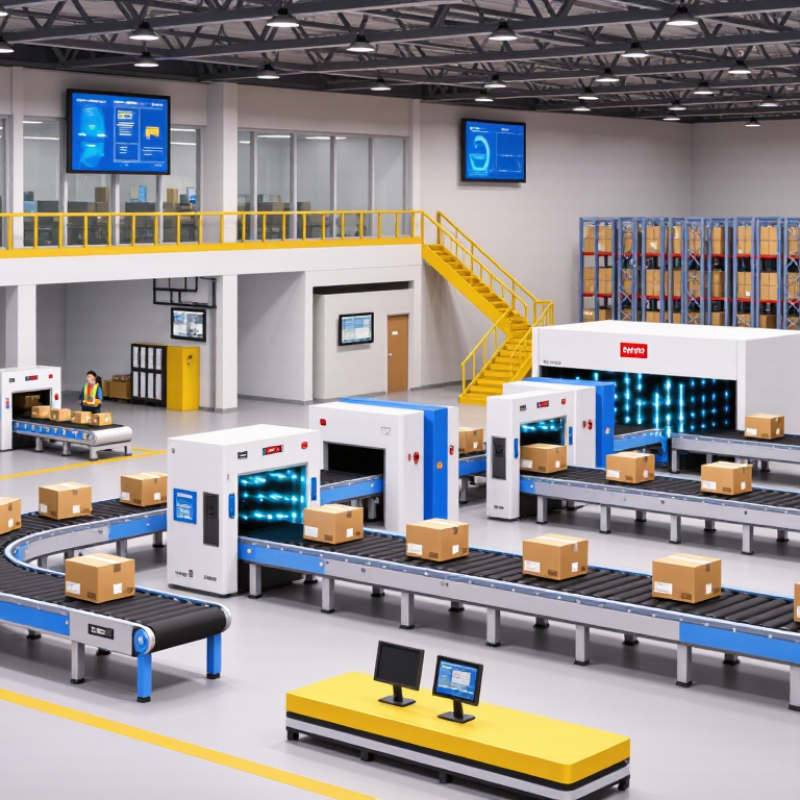
What a Parcel Sorting System Does: 161 Billion Parcels in 2023 (Pitney Bowes)
In 2023, global parcel volume reached 161 billion, according to a widely cited industry estimate. Each parcel must be identified, routed, and moved to the right destination. A sorting system uses conveyors, scanners, and diverters to handle these steps at scale. A barcode is read; a chute opens; the parcel continues toward dispatch. During busy periods, even small delays can create a growing queue. Automation helps, but staff still need to resolve unreadable labels and parcels that stop moving.
Tips: Measure peak-hour volume, not just daily averages. Test whether scanners read labels on small, glossy, or creased packages. Leave space for exceptions and manual checks.
The best system depends on parcel sizes, building layout, and the speed required at peak times. Compare throughput with mis-sort rates and downtime, not speed claims alone. A dashboard may show impressive numbers while a jammed conveyor slows the whole line. That detail is easy to overlook. Check real operating data, and revisit the design as parcel mix changes.
What Is the Best Parcel Sorting System in 2026? — What a Parcel Sorting System Does: 161 Billion Parcels in 2023
| Dimension | Data or system option | What it means for parcel operations |
|---|---|---|
| Parcel-volume context | ||
| Worldwide parcel volume | 161 billion parcels in 2023 | A measure of the scale of parcel delivery worldwide, rather than the capacity of any single sorting facility. |
| Average per day | Approximately 441 million parcels per day | Calculated by dividing 161 billion by 365 days. Actual daily volumes vary by market, season, and day of the week. |
| Average per second | Approximately 5,105 parcels per second | A global annual average derived from the reported 2023 total; it is not a real-time rate. |
| Common sorting-system options | ||
| Manual or assisted sorting | Workers identify parcels and place them into destination areas or containers. | Can suit low-volume operations, irregular parcels, or processes that need flexibility. Throughput depends heavily on staffing and work design. |
| Conveyor with diverters | Conveyors move parcels past fixed or controlled diverters that send them to selected destinations. | Useful for repeatable routes and layouts. The number and placement of destinations, parcel characteristics, and conveyor design affect performance. |
| Cross-belt sorter | Individual belt-equipped carriers move parcels along a track and discharge them at assigned destinations. | Often considered for high-volume operations with many destinations. It requires a suitable facility layout and integration with upstream and downstream processes. |
| Shoe sorter | Sliding shoes on a conveyor divert parcels toward selected chutes or lanes. | Can support automated destination sorting where parcel size, shape, and handling requirements are compatible with the equipment. |
| Tilt-tray sorter | Carriers with trays tilt or release parcels into assigned destinations. | May suit operations that need many sort destinations. Parcel stability, dimensions, and chute design should be checked during system selection. |
| Robotic or vision-guided sorting | Robots and sensing systems identify, pick, move, or place parcels within a sorting workflow. | Can provide flexible handling for selected tasks. Performance depends on parcel presentation, identification quality, system integration, and exception handling. |
| How to choose a system | ||
| Required throughput | Measure parcels per hour at normal and peak demand. | Use measured site volumes and peak profiles; a global parcel total does not determine the right capacity for an individual facility. |
| Parcel mix | Record dimensions, weight, packaging types, and non-conveyable items. | Check the proposed equipment’s operating limits and define a process for parcels that cannot be sorted automatically. |
| Destination count | Count lanes, chutes, routes, and required sorting stages. | The number of destinations and sortation passes can influence equipment choice, facility footprint, and operating complexity. |
| Identification and data | Assess barcode readability, label placement, scanning coverage, and routing data quality. | Sorting automation depends on correctly identifying parcels and receiving accurate destination instructions. |
| Best-fit principle | No single sorter is best for every operation. | Compare capacity, parcel compatibility, available floor space, flexibility, maintenance needs, and total operating cost before selecting a system. |
Note: The daily and per-second figures are arithmetic averages based on 161 billion parcels over 365 days. They should not be interpreted as measured hourly or real-time volumes.