top of page

China Top 10 HB88509 Center Bearing Manufacturers?

A center bearing is easy to overlook until vibration travels through the floor, a low hum rises with vehicle speed, or a worn rubber support lets the driveshaft move out of line. For buyers researching China Top 10 Hb88509 Center Bearing Manufacturers, those symptoms make supplier selection more than a price comparison. Fit, materials, manufacturing consistency, and clear application data all matter.

The S&P Global Mobility 2024 report put the average age of U.S. light vehicles at 12.6 years. That figure does not measure center-bearing demand, but it highlights why durable replacement parts matter across an aging vehicle fleet. A useful comparison should therefore examine bearing dimensions, rubber-bond quality, balancing and inspection practices, traceability, and the manufacturer’s ability to confirm vehicle fitment. Small details matter.

A careful guide should also separate verified specifications from sales claims. No independently verifiable quotation from a named HB88509 Center Bearing specialist was supplied for this introduction, so attributing a statement to an expert would be misleading. That is a limitation worth acknowledging. Instead, the manufacturer review can focus on checkable evidence: product drawings, test records, quality certifications, and responsive technical support. The goal is not to declare one supplier best for every buyer, but to identify credible options and the questions that reveal whether a part is suitable for a specific application. A bearing that looks right may still be wrong.
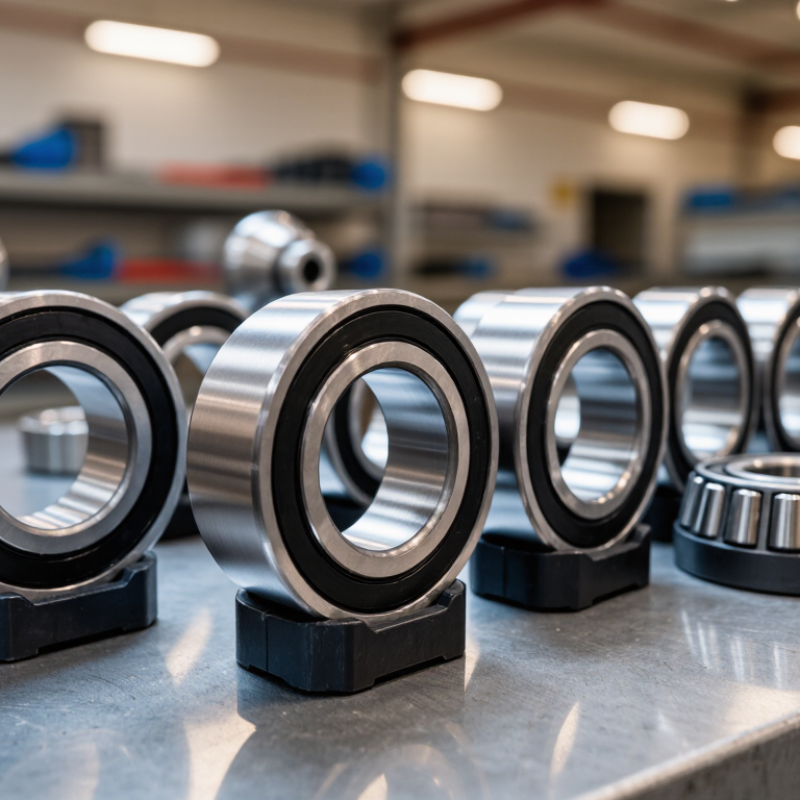
China Top 10 HB88509 Center Bearing Manufacturers?

What Defines an HB88509 Center Bearing: Dimensions, Load Rating, and RPM

An HB88509 center bearing supports a vehicle’s propeller shaft and helps limit vibration. The code alone does not confirm a universal fit. Check the supplier’s drawing and compare the bearing bore, overall width, bracket shape, and mounting-hole spacing with the original part. Measure carefully. Even a small offset can make installation difficult or place the shaft out of alignment.

Load rating matters under real operating conditions. A dynamic rating describes capacity while the bearing rotates; a static rating concerns loads when it is stationary. These figures are not interchangeable. The required capacity depends on shaft weight, vehicle layout, operating shocks, and support spacing. Ask for documented ratings, and treat missing data as a reason to investigate—not as proof of failure.

RPM also needs context. A bearing’s permissible speed depends on its internal design, lubrication, temperature, and fit. The propeller shaft’s balance and critical speed matter too. A high bearing speed rating alone cannot guarantee safe shaft operation. Verify the manufacturer’s stated limits against the vehicle’s actual shaft speed and service conditions. Real installations can be less tidy than a catalog suggests. Check for abnormal heat, noise, or vibration after fitting.

What Defines an HB88509 Center Bearing?

Dimensions, load ratings, and RPM limits must be confirmed against the exact bearing’s technical drawing or datasheet; the model code alone does not establish universal specifications.

How to read this chart: The 100% bars indicate that each specification requires verification—not the bearing’s measured dimensions, load capacity, or operating speed. Check the supplier’s drawing and operating conditions before selecting a replacement.

Which Standards Matter: ISO 281 Bearing Life and ISO 492 Tolerances

When comparing China’s HB88509 center bearing manufacturers, ask how they use ISO 281 and ISO 492 in production and inspection. ISO 281 estimates bearing rating life from dynamic load rating and equivalent load. Its basic L10 calculation represents a statistical life at 90% reliability, not a promise for every vehicle. Real service also depends on speed, alignment, lubrication, road shock, and contamination. A dusty test rig and a clean laboratory may produce very different outcomes.

ISO 492 defines dimensional and rotational accuracy classes for rolling bearings. For an HB88509 assembly, tolerance control can affect shaft fit, runout, vibration, and installation consistency. Ask for inspection records tied to actual batches, plus clear information on fits and measurement methods.

Numbers help. They do not decide. A supplier’s datasheet may look precise while leaving unclear how samples were selected or measured. That gap deserves a follow-up question. Compare the stated tolerance class with your application, then check whether incoming parts match it. Life calculations and tolerance grades are useful evidence, but neither replaces practical validation under representative load and operating conditions.

How to Assess 10 Chinese Manufacturers: Materials, Testing, and Capacity

To assess ten Chinese HB88509 center bearing manufacturers, use the same drawing and requirements for every supplier. Check bearing dimensions, mounting-hole spacing, and shaft fit against the specified application. Ask for material details, including steel grade, rubber compound, and hardness range. A clear material record is more useful than a broad claim of “high quality.” A neat brochure is not proof.

Review how each factory checks incoming parts and finished assemblies. Useful evidence may include dimensional inspection records, rubber hardness readings, noise checks, and endurance-test results. Ask how samples are selected and whether test reports identify the production batch. Also examine traceability, equipment maintenance, and staff training. One test cannot show everything, and a polished report may still leave gaps.

Tips: Request samples from more than one batch. Compare results against agreed tolerances, not just supplier averages. Check monthly output, lead times, and backup capacity using realistic order quantities. If a supplier cannot explain a failed test plainly, pause and ask again. Capacity figures can be optimistic; verify them with production records where possible.

How HB88509 Suppliers Compare on L10 Life, Noise, and Quality Control

For HB88509 center bearings, L10 life is meaningful only when suppliers use comparable loads, speeds, lubrication, and temperatures. ISO 281 defines basic rating life at 90% reliability; its calculation uses dynamic load rating and equivalent load, with different exponents for ball and roller bearings. Ask for the bearing type and test conditions. A headline life figure without them is incomplete.

Noise claims also need a controlled method. ISO 15242-1:2015 describes vibration measurement for rolling bearings, but vibration readings do not directly predict noise inside a vehicle cabin. Request readings at specified speeds, microphone or sensor positions, and temperature. Listen for roughness, too. Small differences can matter.

Quality control is visible in the details. ISO 492:2023 specifies dimensional tolerances, while incoming checks should verify bore, outside diameter, width, runout, and fit. Ask for lot traceability, inspection records, and evidence that grease quantity and seal assembly are checked. Compare suppliers using the same sample size and test setup; otherwise, the comparison can mislead. Real-world installation and bracket condition also affect noise and service life. That part is easy to overlook. These standards provide a sound basis, not a guarantee of performance.

What Buyers Should Verify: Fitment Data, Traceability, and Warranty Terms

China Top 10 HB88509 Center Bearing Manufacturers?

When comparing HB88509 center-bearing suppliers, request a fitment sheet tied to the exact vehicle, drivetrain, and production year. Check shaft diameter, mounting-hole spacing, bearing width, and rubber-support dimensions against the original part. A matching part number alone is not enough. Ask for measurement tolerances, cross-reference sources, and drawings with revision dates. Test-fit one sample before approving a larger order; catalog data can be incomplete.

Traceability should connect each bearing to its production lot, inspection record, and material batch. IATF 16949:2016, clause 8.5.2.1, addresses identification and traceability in automotive production. Request a sample lot record and confirm that its codes remain readable after packaging and handling. Gartner’s 2021 estimate put the average annual cost of poor data quality at $12.9 million across organizations. That figure is not bearing-specific, but it shows why inaccurate fitment records can become costly.

Get warranty terms in writing, including coverage duration, labor exclusions, claim evidence, and the process for handling repeat failures. Ask whether a failed unit must be returned and who pays freight. Keep dated installation photos and the vehicle’s mileage. Small details matter. A supplier may answer quickly, yet leave one condition unclear; resolve it before purchase, not after a truck is waiting for repair.

China Top 10 HB88509 Center Bearing Manufacturers? - What Buyers Should Verify: Fitment Data, Traceability, and Warranty Terms

This is a 10-point supplier evaluation checklist, not a verified manufacturer ranking. No supplier-specific claims are made; verify each item directly with the seller before purchase.

No. Evaluation Dimension What to Verify Evidence to Request Status Before Verification
1 Vehicle and application fitment Confirm the intended vehicle, model year, drivetrain, and application. Do not rely on the part number alone. Written application list or a fitment confirmation tied to the buyer’s vehicle details. Not verified — request confirmation
2 Dimensional compatibility Compare the supplied part’s relevant dimensions and mounting arrangement with the original part or an authoritative application reference. Dimensioned drawing or inspection report showing units, measurement points, and tolerances. Not verified — request drawing
3 Part-number cross-reference Check that any cross-reference is supported and applies to the exact vehicle configuration and revision. Cross-reference document identifying its source and applicable vehicle details. Not verified — confirm applicability
4 Product construction Clarify the bearing, bracket, rubber support, and included hardware supplied in the package; confirm what is not included. Product specification sheet and package-content list. Not verified — request specification
5 Material and manufacturing information Ask for relevant material or process information and check whether it is specific to the offered part and production batch. Part-specific material declaration or manufacturing inspection record, where available. Not verified — request records
6 Quality inspection Determine which checks are performed before shipment and how nonconforming parts are handled. Inspection plan, sample inspection report, or written quality-control procedure. Not verified — request inspection details
7 Batch traceability Check whether the part or packaging can be linked to a production lot and shipment record. Example lot code, batch record, or documented method for tracing a shipped unit. Not verified — request traceability method
8 Packaging and identification Confirm that labels identify the supplied part and that packaging is suitable for storage and transport. Current packaging photographs and a sample label showing the part identifier and lot information, if used. Not verified — request photographs
9 Warranty terms Review the warranty period, start date, covered defects, exclusions, and remedy offered. Written warranty terms applicable to the quoted product and destination market. Not verified — request written terms
10 Claims and returns process Confirm claim deadlines, required evidence, return authorization steps, and responsibility for shipping costs. Written returns and claims procedure, including contact and response process. Not verified — confirm before ordering
bottom of page