Why Choose the Right Industrial Monitor for Your Business Needs?
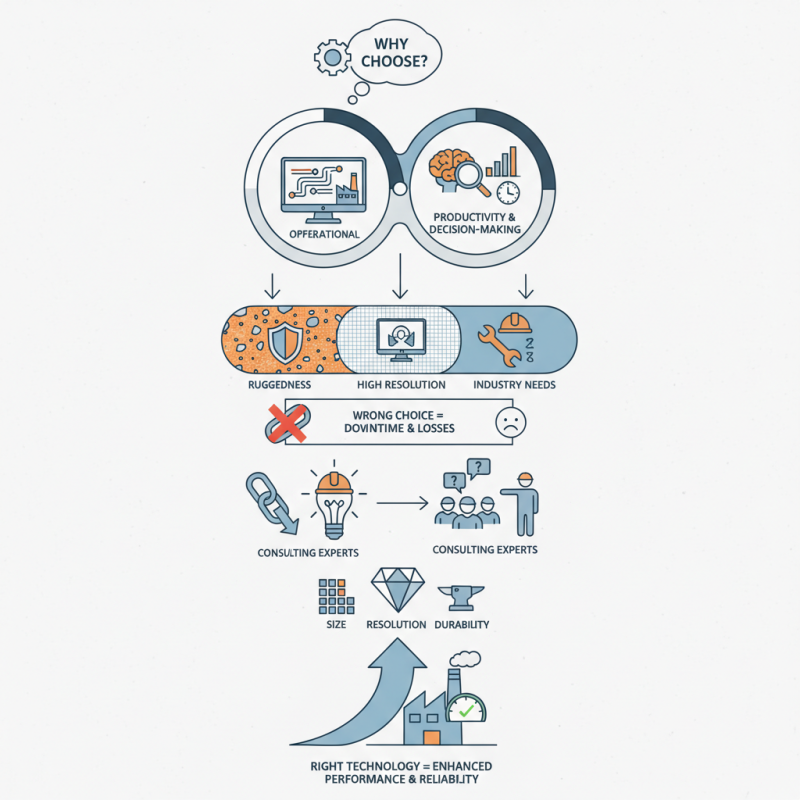
In today's fast-paced industrial world, choosing the right Industrial Monitor is crucial for operational efficiency. These monitors are not just screens. They serve as vital tools for data visualization and equipment monitoring. Selecting an appropriate industrial monitor affects productivity and decision-making processes.
Different industries require distinct features from their monitors. Some need ruggedness for harsh environments, while others prioritize high resolution for detailed graphics. Understanding these needs is essential. Making the wrong choice can lead to unexpected downtime and losses. Moreover, many businesses struggle to select the right specifications.
Consulting experts can guide you in selecting an appropriate industrial monitor. They consider factors such as size, resolution, and durability. Many options exist, and not all are suitable for every application. An informed decision is necessary. Investing in the right technology can significantly enhance performance and reliability in the workplace.
Importance of Selecting the Right Industrial Monitor for Business Efficiency
Selecting the correct industrial monitor is crucial for business efficiency. An appropriate monitor enhances productivity in various industries. It can withstand harsh environments, preventing downtime. Businesses lose valuable time and money when monitors fail.
A monitor with good resolution improves visibility. Employees can work faster and make fewer mistakes. Proper screen size is essential. A too-small display can strain the eyes, leading to fatigue. Additionally, touch capabilities can streamline operations. With high interactivity, tasks become more efficient.
Brands often overlook ergonomics. A well-designed monitor reduces workplace injuries. Comfort leads to better focus. Investing in quality displays pays off in the long run. Consideration of these factors can significantly affect overall performance and profitability.
Key Factors in Choosing Industrial Monitors for Specific Industry Applications
Choosing the right industrial monitor is crucial for specific industry applications. Factors such as environmental conditions, display size, and resolution can significantly impact your operations. In a factory, for example, a monitor must withstand dust and temperature fluctuations. A sealed design prevents contamination, ensuring longevity and reliability.
Consider the display size relevant to your workspace. A large monitor may enhance visibility but can occupy valuable space in a compact area. Balance is key; assess your workflow needs. High resolution is essential for detailed inspections but may increase costs. Striking the right balance between cost and performance is vital.
Another critical aspect is connectivity. Interfaces like HDMI or Ethernet improve integration with existing systems. However, compatibility issues can arise with older machinery. Regularly reviewing your monitor's performance and adaptability is worthwhile. This process can yield insights into whether your current choice meets evolving business demands or if adjustments are necessary. It's essential to remain open to change as technology progresses.
Impact of Display Resolution on Operational Effectiveness in Industrial Settings
In industrial environments, display resolution plays a crucial role in operational effectiveness. Higher resolution monitors deliver clearer visuals, enabling workers to see details that lower resolution displays may miss. For example, when monitoring intricate machinery, clarity in display can reduce errors and improve safety. Employees benefit from seeing critical information more sharply, which can speed up their response times.
However, not all industrial settings require the highest display resolution. Some operations may prioritize durability and ruggedness over visual fidelity. A balance must be struck. Investing in ultra-high-definition displays could be unnecessary for tasks that involve more straightforward data or basic monitoring. This reflection on operational needs can lead businesses to make better, more informed decisions.
Moreover, employees often adapt to their monitors over time. If a workspace is not regularly updated with higher resolutions, workers may not realize they are missing out. Regular assessments of display effectiveness can reveal gaps in productivity. Improving visual clarity can sometimes lead to significant operational improvements, which should not be overlooked. Understanding these nuances is essential for maximizing the effectiveness of industrial monitors.
Why Choose the Right Industrial Monitor for Your Business Needs? - Impact of Display Resolution on Operational Effectiveness in Industrial Settings
| Display Resolution | Typical Applications | Operational Effectiveness (%) | Cost Implication ($) |
| 1920 x 1080 (Full HD) | Standard monitoring tasks | 75% | 500 |
| 2560 x 1440 (QHD) | Detailed data analysis | 85% | 800 |
| 3840 x 2160 (4K) | High-resolution imaging | 92% | 1200 |
| 1280 x 720 (HD) | Basic, low-cost monitoring | 65% | 300 |
| 5120 x 2880 (5K) | Advanced engineering applications | 95% | 1500 |
Industry Standards and Certifications for Reliable Industrial Monitor Selection
Selecting the right industrial monitor requires understanding industry standards and certifications. These criteria ensure that the monitors meet performance, safety, and durability requirements. The Global Industrial Monitor Market Report indicates that more than 70% of companies prioritize certifications when selecting monitors.
Certifications like IP ratings are crucial for determining dust and water resistance. An IP65 rating ensures the monitor can withstand harsh environments, common in manufacturing. A study by MarketsandMarkets suggests that monitors with higher IP ratings reduce failures by 30%. This statistic highlights the importance of robust design in industrial settings.
Furthermore, adherence to safety standards like UL and CE is vital. These certifications verify that equipment meets specific safety requirements. Many companies report a 25% reduction in workplace accidents after implementing certified devices. This data emphasizes the need for reliable industrial monitors, enabling businesses to maintain a safe and efficient environment. However, it’s essential to critically assess the relevance of these certifications to your specific application to ensure optimal performance.
Industrial Monitor Selection Criteria
Cost-Benefit Analysis of Investing in Quality Industrial Monitors for Productivity
Investing in quality industrial monitors can significantly enhance workplace productivity. A good monitor improves visual clarity and minimizes eye strain. Workers can operate with better focus and efficiency. They complete tasks faster—leading to higher output. However, not all monitors are created equal. It’s essential to evaluate your specific needs before making a purchase.
Cost is always a concern. Lower-priced monitors might seem attractive initially. But, they often lack the durability and features needed for industrial environments. When screens fail, costs add up quickly. Downtime affects productivity. Factor in repair costs and replacements. A rugged, high-quality monitor may seem costly upfront but pays off in the long run.
Moreover, consider the ergonomics of your workspace. Monitors that adjust to different heights or angles help reduce worker fatigue. Even small changes in monitor positioning can lead to better health and increased morale. Workers feel valued when given the right tools. This can lead to higher job satisfaction and retention. Investing in the right industrial monitor is more than just a financial decision; it’s about fostering a productive work environment.