top of page

How to Choose the Right Ceiling Lift?

Choosing the right Ceiling Lift begins with the person, not the product brochure. Each user has different mobility, weight, balance, and transfer requirements. A careful assessment should include the bedroom, bathroom, wheelchair, and usual transfer points. Measure doorways, ceiling height, bed position, and available walking space. Small details matter.

A qualified occupational therapist, nurse, or certified installer can help assess these conditions. They may recommend a fixed track, a traversing track, or a portable overhead system. The correct sling must support the user comfortably and match the lift’s approved capacity. Check emergency lowering features, battery indicators, hand-control design, and cleaning requirements. Fit matters. Safety comes first.

However, a detailed checklist cannot replace real-world testing. A lift may work well beside the bed but feel awkward near a narrow bathroom entrance. Caregivers should practice transfers with trained professionals before regular use. Observe whether the user feels secure, supported, and respected during movement. Listen carefully.

Cost also deserves honest consideration. Installation, maintenance, replacement slings, and future accessibility needs can affect the total investment. The cheapest option may become expensive if it limits daily use. Conversely, the most advanced system may offer features the household never needs. Choosing well means balancing clinical guidance, room design, caregiver confidence, and long-term reliability. There is no universal answer. The best Ceiling Lift is the one that supports safe, dignified transfers in the places where they actually happen.
How to Choose the Right Ceiling Lift?

Identify the User’s Mobility and Transfer Requirements

How to Choose the Right Ceiling Lift?

Identify the User’s Mobility and Transfer Requirements

Choosing a ceiling lift starts with the person, not the equipment. Observe how they move from bed to chair, toilet, or shower. Can they bear weight briefly? Do they follow instructions consistently? Can they control their trunk, hips, and head? These details determine whether they need partial support, full-body lifting, or repositioning assistance.

A short transfer assessment helps. Record the user’s weight, height, pain points, skin risks, joint limitations, and typical transfer routes. Measure the bed-to-bathroom distance, doorway clearance, and available track area. The lift should support current needs, but also likely changes. Disability can fluctuate. That matters.

The World Health Organization and UNICEF reported in the Global Report on Assistive Technology (2022) that more than 2.5 billion people need assistive products worldwide. The report projects this figure will exceed 3.5 billion by 2050. Meanwhile, the CDC reports that about one in four U.S. adults has a disability, with mobility limitations among the most common types.

Match the lift’s safe working load to the user and sling, allowing practical clearance. Select sling shapes according to posture, toileting needs, and pressure concerns. Test transfers with trained clinicians and caregivers. A model that looks suitable on paper may feel unstable during a real bathroom transfer. That lesson is easy to overlook.

Ask the user where discomfort begins. Ask the caregiver what feels unsafe. Their answers may challenge the first assessment. Sources: WHO and UNICEF, Global Report on Assistive Technology, 2022; CDC, Disability and Health Data System.

Compare Ceiling Lift Types, Features, and Installation Options

How to Choose the Right Ceiling Lift?

Choosing a ceiling lift starts with the transfer, not the equipment catalogue. The World Health Organization reports that falls cause about 684,000 fatal injuries globally each year. Safe handling deserves careful planning. A fixed straight-rail lift suits repeated bed-to-chair transfers along one route. A room-covering track supports wider movement, including bathroom access. Portable gantry systems require no permanent ceiling work, but they occupy valuable floor space.

Not always.

Compare the working load, lift range, sling compatibility, emergency lowering, battery status, and control design. A higher capacity is not automatically safer. The sling must support posture, pressure management, and the person’s clinical needs. The U.S. Centers for Disease Control and Prevention estimates that more than three million older adults receive emergency care for falls annually. Smooth starts, controlled descent, and trained caregivers matter greatly.

Installation can be the deciding factor. A structural survey should confirm ceiling strength, fixing points, electrical access, and clearance above the user. Straight rails usually cost less to install. XY systems cover more floor area but need more planning and support. In older buildings, hidden services may complicate drilling. Measure twice. A perfect specification cannot repair poor training or a badly positioned track. Reassess the layout after real transfers, because daily movement often exposes assumptions missed during the survey.

Evaluate Safety Standards, Weight Capacity, and Comfort

Choosing a ceiling lift starts with safety, not appearance. Check compliance with ISO 10535:2021, which covers hoist testing, stability, and transfer performance. Ask for inspection records, emergency lowering procedures, and battery-failure protection. The World Health Organization reports about 684,000 fatal falls globally each year, with adults over 60 facing the greatest risk. A lift cannot remove every hazard. Poor sling placement, wet flooring, or rushed transfers still create danger.

Weight capacity needs careful interpretation. Do not match the lift to body weight alone. Include the sling, spreader bar, clothing, and any transfer equipment. Leave a practical safety margin, especially in facilities serving different users. OSHA’s Guidelines for Nursing Homes links safer patient-handling practices with reduced musculoskeletal strain among caregivers. That evidence supports powered transfers, but capacity labels are not permission to exceed site procedures. Read the load chart. Recheck it after maintenance.

Comfort is equally measurable. Look for smooth acceleration, low operating noise, adjustable positioning, and sling support that avoids pressure behind the knees. The resident should remain aligned, not swing beneath the rail. Caregivers should maintain a clear view during movement. In real assessments, small details matter: a rail stopping too early, a handset placed too far away, or fabric bunching at the hip. These issues are easy to overlook. I would test the lift with representative users, then question the first result. A quiet transfer may still feel unstable.

How to Choose the Right Ceiling Lift? - Evaluate Safety Standards, Weight Capacity, and Comfort

Evaluation Dimension Recommended Requirement Why It Matters What to Verify Before Purchase
Applicable Safety Standard The lift should be designed and tested in accordance with ISO 10535 or the applicable regional equivalent, such as EN 10535. These standards address requirements and test methods for hoists used to transfer people with disabilities. Request the declaration of conformity, test documentation, and the latest user and maintenance manuals.
Safe Working Load Select a rated capacity that exceeds the user’s weight plus clothing, sling, and any approved accessories. Common ceiling-lift capacities range from approximately 150 kg to 300 kg, depending on the model. Adequate capacity reduces overloading risk and supports stable transfers. Confirm the complete transfer load, not only the user’s body weight. Never exceed the lowest rated component in the system.
Ceiling and Track Structure The ceiling, support structure, track, and fasteners must be assessed and approved for the intended safe working load. A properly rated lift can still be unsafe if the building structure or installation is inadequate. Obtain a professional site assessment, especially for suspended ceilings, older buildings, and non-standard mounting surfaces.
Emergency Lowering Include a clearly accessible emergency-lowering function that can be used during power or control failure. It allows the user to be lowered safely if the handset, battery, or powered movement system stops working. Test the procedure with trained caregivers and confirm whether it is manual, electrical, or both.
Battery and Charging Look for a rechargeable battery, clear low-battery indication, overcharge protection, and a practical charging location. Reliable battery management helps prevent interruptions during transfers. Check charging time, expected transfer cycles per charge, battery replacement interval, and availability of a backup battery.
Transfer Range Choose a vertical lifting range that accommodates the bed, wheelchair, toilet, and floor-level transfer points used in the care environment. Insufficient lift range can create awkward postures and prevent safe transfers from low surfaces. Measure the highest and lowest transfer points and allow clearance for the sling and user’s body position.
Sling Compatibility Use slings that are approved for the lift and appropriate for the user’s body shape, posture, and transfer needs. The sling provides much of the user’s support and directly affects safety, positioning, and comfort. Check size range, fabric, head support, positioning straps, washing instructions, and compatibility with the spreader bar.
Noise and Movement Prefer smooth acceleration, controlled stopping, and low operating noise, particularly in bedrooms and shared care areas. Quiet, predictable movement can reduce anxiety and improve communication during transfers. Arrange a practical demonstration and observe movement at different loads and travel speeds.
Handset and Controls Controls should be intuitive, clearly labeled, easy to grip, and usable by the intended caregivers. Simple controls reduce operating errors and support consistent transfer procedures. Check button size, cable length or wireless range, emergency-stop access, and visual or audible alerts.
Patient Comfort The system should maintain stable body support, minimize pressure points, and allow an upright or reclined position when clinically appropriate. Proper positioning helps reduce discomfort, fear, sliding, and the risk of skin or soft-tissue injury. Conduct a supervised trial with the actual user and review fit with a qualified clinician or moving-and-handling professional.
Track Configuration Choose a straight, traversing, room-covering, or multi-room track layout according to the required transfer path. The correct layout reduces manual repositioning and may allow transfers between several locations. Map bed, chair, bathroom, and doorway positions. Confirm turning clearance and compatibility with room dimensions.
Maintenance and Inspection Follow the manufacturer’s inspection schedule and applicable local regulations; inspect slings and attachment points before each use. Regular inspection helps identify wear, damaged stitching, battery problems, and track or attachment issues. Confirm service availability, inspection records, replacement-part access, and staff training requirements.
Electrical and Environmental Safety For powered medical equipment, verify applicable electrical safety and ingress-protection requirements for the intended environment. Bathrooms and wet areas may require additional protection and installation controls. Check electrical ratings, cleaning instructions, moisture limitations, and whether the installation is suitable for wet-room use.
User and Caregiver Training Provide hands-on training covering sling selection, attachment, positioning, emergency procedures, and pre-use checks. Correct equipment cannot compensate for unsafe transfer technique or unsuitable sling application. Document competency checks and ensure all regular caregivers can complete a supervised transfer safely.

Note: Weight capacities, dimensions, battery performance, and permitted installation methods vary by model and location. Always verify the current technical documentation and obtain a professional installation assessment.

Assess Room Layout, Track Design, and Installation Needs

How to Choose the Right Ceiling Lift?

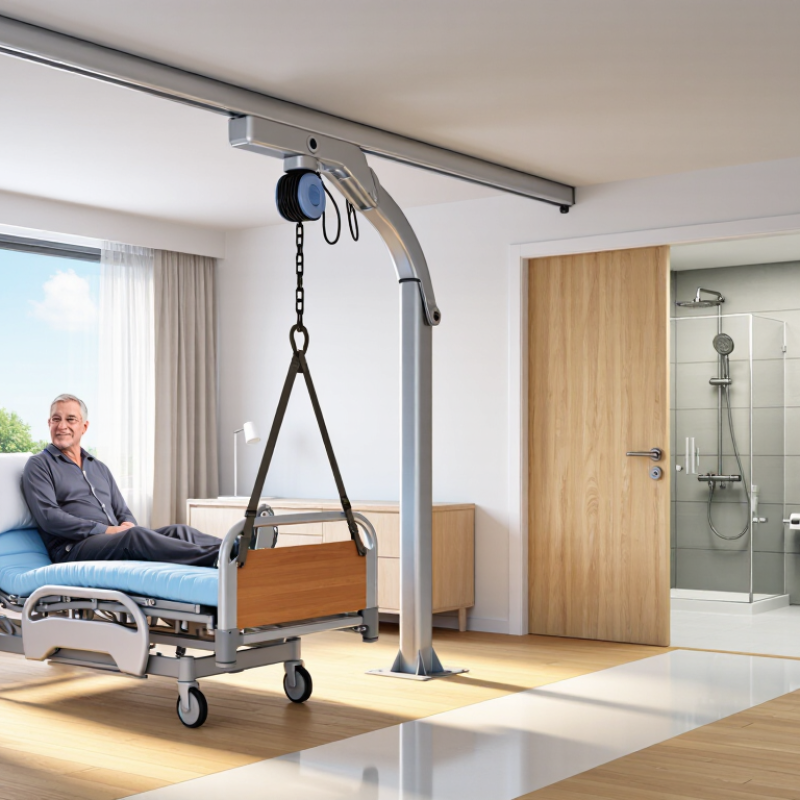
Assess the room before comparing ceiling lift features. Measure ceiling height, bed position, doorway width, and clearance around furniture. A lift should support safe transfers without forcing the caregiver to twist or reach. Leave clearance.

Track design must match daily movement, not just the room’s shape. A straight track may suit a bed-to-chair transfer, while a curved or room-covering system can reach a bathroom or changing area. Check where the user needs support, including wheelchair access and turning space. Measure twice.

The ceiling structure also matters. A qualified installer should confirm load capacity, fixing points, and possible obstructions such as lighting, sprinklers, or ventilation. Installation may require reinforcement, especially in older buildings. Local safety requirements should guide the final design, and an occupational therapist can help assess transfer routines. I have found that drawings sometimes look perfect but ignore real furniture movement. Plans can change. Test the proposed route with the bed, chair, and caregiver in place. Review emergency lowering, battery access, cleaning needs, and future changes in mobility. A practical assessment is more reliable than choosing equipment from measurements alone.

Review Costs, Maintenance, Training, and Long-Term Support

Choosing a ceiling lift requires more than comparing purchase prices. Installation, room coverage, batteries, slings, inspections, and staff training all affect the real cost. The WHO and UNICEF Global Report on Assistive Technology estimates that over 2.5 billion people need assistive products worldwide. Demand is growing, but budgets remain limited. I would request a five-year ownership estimate, not only a quotation. That estimate should include replacement parts, service visits, and possible room modifications.

Maintenance deserves close attention. Ask who inspects the lift, how quickly technicians respond, and whether inspection records are easy to verify. A small battery warning light may prevent a serious transfer problem. OSHA recommends planned safe patient-handling programs, including equipment, staff education, and regular evaluation. Training should cover sling selection, weight limits, emergency lowering, infection control, and communication with the person being lifted. Short refreshers work better than one annual lecture. Often.

Published evidence supports this investment. A cost-benefit analysis of a safe patient-handling program in a U.S. hospital found approximately 3.4 dollars in benefits for every dollar invested, including fewer injuries and related costs (Collins et al., International Journal of Nursing Studies, 2004). Results vary by facility, staffing, and compliance. That limitation matters. Ask for practical training records, maintenance response data, and user feedback before deciding. A lift can be technically excellent yet poorly supported. Long-term reliability depends on people using it correctly, every day.

bottom of page