How Are Peptides Synthesized In The Lab For Global Buyers
Peptides, versatile molecules with applications in therapeutics and research, are synthesized in labs around the world. Understanding "How Are Peptides Synthesized In Lab" is crucial for global buyers seeking quality products. The synthesis process involves various techniques, each with its own benefits and challenges.
In peptide synthesis, chemists often use solid-phase synthesis. This method offers a controlled environment and improved yield. However, it can be time-consuming and requires specialized knowledge. Synthesizing peptides can lead to errors, requiring careful monitoring and adjustments. Sometimes, the final product may not meet expectations, prompting a need for re-evaluation.
Alternative methods, like liquid-phase synthesis, are also employed. This approach can be less labor-intensive but may provide lower yields. Buyers must understand these differences to make informed decisions. Ultimately, while peptide synthesis is a remarkable scientific endeavor, it is not without its complications and uncertainties.
Overview of Peptide Synthesis Techniques in Laboratory Settings
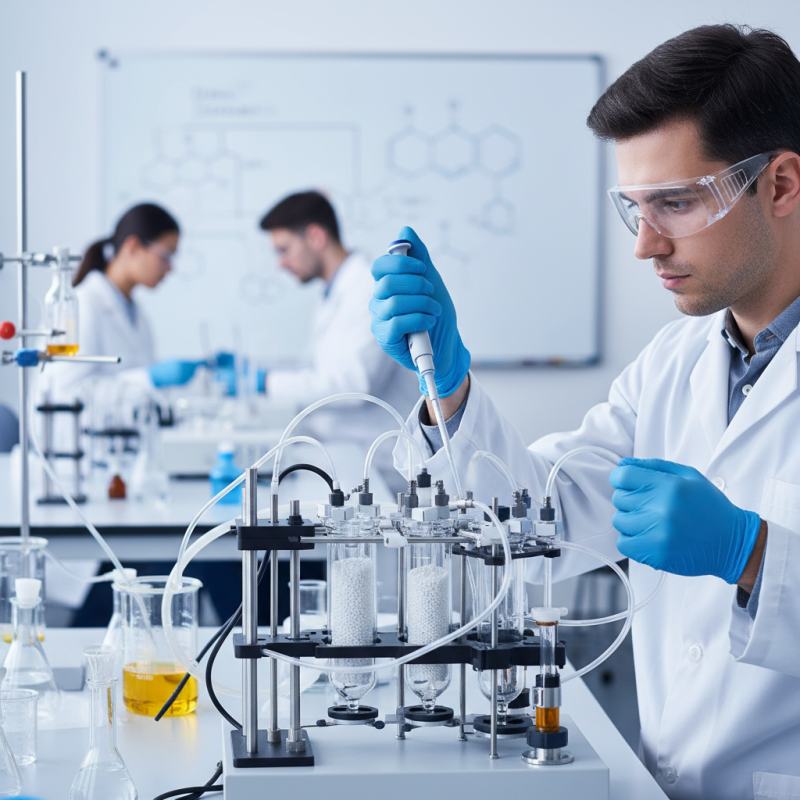
Peptide synthesis in laboratory settings involves several key techniques. One common method is solid-phase synthesis. In this process, amino acids are sequentially added to a growing peptide chain fixed to a solid support. This allows for easier purification and high yields. Each coupling step must be carefully monitored, as incomplete reactions can lead to impurities.
Liquid-phase synthesis is another approach, often used for shorter peptides. Here, the peptides are synthesized in solution. While this method can provide better control over reaction conditions, it may also be more challenging to isolate the final product. Researchers must pay attention to the solubility and stability of the peptides during this process.
Despite advancements, peptide synthesis can be complex. It requires precision and expertise. Mistakes in sequence or coupling efficiency can lead to significant setbacks. Labs must constantly refine their techniques to improve reliability and efficiency. The ongoing evolution of peptide synthesis techniques reflects the dynamic nature of research in this field.
Key Methods of Solid Phase Peptide Synthesis (SPPS)
Solid Phase Peptide Synthesis (SPPS) is a widely used method for peptide production in laboratories. This technique allows for the efficient assembly of amino acids on a solid support, facilitating easy purification. In recent years, reports have shown that the global SPPS market is expected to reach $1.5 billion by 2026, highlighting its importance in pharmaceutical development.
One of the key advantages of SPPS is its ability to streamline the synthesis process. The use of a solid support reduces the number of purification steps, often leading to higher yields. The efficiency of SPPS can be attributed to advances in automated synthesizers. Researchers are now able to produce complex peptides in a fraction of the time required by traditional methods. However, there are challenges. The process can become inefficient with longer peptides or when specific modifications are needed.
Moreover, the risk of side reactions can complicate the synthesis. Ensuring quality and purity remains a concern for manufacturers. According to a recent industry study, nearly 30% of peptide synthesis batches encounter issues that require re-evaluation of methods. These challenges highlight the need for continual innovation and refinement in SPPS techniques.
Liquid Phase Peptide Synthesis: Procedure and Applications
Liquid phase peptide synthesis (LPPS) is a critical method in the lab for creating peptides. This approach contrasts with solid-phase synthesis. During LPPS, individual amino acids are added to a reacting solution. The process involves several key steps, including coupling, deprotection, and purification. Each step must be executed carefully to ensure high yields and quality.
In practice, LPPS requires specific reagents and conditions. Activation of amino acids is essential for effective coupling. Solvents play a crucial role, as they affect solubility and reaction rates. However, controlling these variables can be challenging. Temperature adjustments may be necessary, and each batch can behave differently. These variations require skilled personnel to optimize the conditions for each peptide.
Furthermore, the purification of the synthesized peptides often presents difficulties. Traditional methods, such as extraction and chromatography, can lead to loss of material. This necessitates a careful evaluation of the yields. Validating peptide structures through techniques like mass spectrometry is critical. This helps ensure that the peptides meet the required specifications. Ultimately, while LPPS has many advantages, the intricacies involved present opportunities for continuous improvement and refinement.
Challenges and Solutions in Peptide Synthesis Process
Peptide synthesis in the lab is a complex process fraught with challenges. One significant issue is achieving high purity. Impurities can arise during synthesis, affecting the final product's efficacy. Careful monitoring and purification techniques are crucial. Despite advancements in technology, the quest for perfect purity remains elusive. The balance between yield and purity often leads to trade-offs that require continuous optimization.
Another challenge lies in the costs associated with synthesis. The process can involve multiple steps and specialized equipment, driving up expenses. This poses a hurdle for smaller labs or startups. Managing budgets while maintaining quality can be difficult. Solutions like automation and improved methodologies may help. However, these innovations often require upfront investments that not all labs can afford.
Moreover, peptide sequences may exhibit different properties than anticipated. This often results in formulation issues. Predicting how a peptide interacts in diverse environments can be complex. Understanding these interactions is essential for practical applications. Researchers strive to create more accurate predictive models. Yet, no solution is perfect. Continuous experimentation is necessary to refine these models and improve outcomes.
Challenges and Solutions in Peptide Synthesis Process
Quality Control and Purification of Synthesized Peptides
Quality control and purification and purification of synthesized peptides are crucial steps in the peptide synthesis process. After peptides are synthesized in the lab, they may contain impurities or incomplete sequences. These impurities can impede research and applications. Therefore, effective purification methods are essential for achieving high-quality peptides.
Techniques such as high-performance liquid chromatography (HPLC) are commonly used to ensure purity. HPLC separates peptides based on their properties, allowing for the isolation of the desired product. However, this process may not always yield perfect results. Some impurities might still remain, necessitating further scrutiny. Regular assessments of the methods used can help identify areas for improvement.
Another important aspect is the rigorous testing of synthesized peptides. Mass spectrometry can confirm the molecular weight and sequence accuracy. Yet, this step may also introduce variability. Not all techniques are infallible, and occasional discrepancies can occur. Maintaining an open dialogue about these limitations can foster trust and enhance the reliability of peptide synthesis in the industry.