top of page

Top 10 Carton Suction Cup Manufacturers in China

Choosing a Carton Suction Cup manufacturer is not just a price comparison. The right supplier can help keep cartons moving steadily through packaging, printing, and palletizing lines. Yet a cup that works well on a smooth box may struggle with dusty, porous, or uneven cardboard. Small differences matter: lip shape, rubber hardness, cup diameter, and vacuum connection can all affect grip. Fit matters.

This guide to the Top 10 Carton Suction Cup Manufacturers in China introduces companies worth considering for product range, customization, manufacturing experience, and customer support. A useful supplier should explain material options and recommend cups based on carton weight, surface, cycle speed, and available vacuum pressure. Ask for samples or test data when possible. Details count. A polished catalog alone does not prove performance on your production line.

The list is a starting point, not a universal ranking. Manufacturer capabilities, lead times, and product specifications can change, so confirm current details directly before making a purchase. It is also wise to test cups with your actual cartons; real packaging is rarely as uniform as a sample photo suggests. That is an easy point to overlook. Comparing suppliers with clear criteria can make the decision more practical and help reduce avoidable downtime.
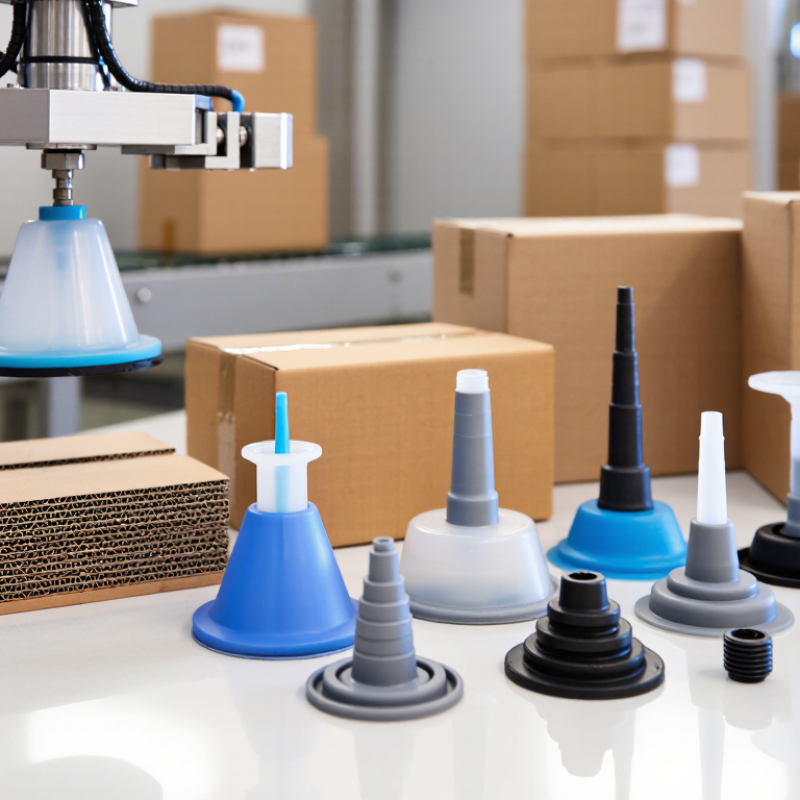
Top 10 Carton Suction Cup Manufacturers in China

What Carton Suction Cups Are and How They Work

Carton suction cups are flexible end-effectors that grip boxes without clamps. A vacuum generator removes air from the cup, creating lower pressure inside. Higher surrounding air pressure then holds the carton against the cup. Seal matters. A soft lip can conform to corrugated board, but crushed edges, dust, or uneven flaps may break the seal. Cup material and shape should match the carton surface, load, and operating temperature. In practice, test with the actual box, not only a smooth sample. A paper specification can still mislead.

Automation is expanding in China, but robot figures do not measure suction-cup use directly. The International Federation of Robotics’ World Robotics 2024 report recorded 541,302 industrial robot installations worldwide in 2023, including 276,288 in China. These figures cover many applications, not carton handling alone. For a carton pick, engineers consider cup diameter, vacuum level, acceleration, and a suitable safety margin. Porous board may need more airflow, while a small cup can struggle with a heavy or flexible box. The right setup depends on real handling conditions.

How to Assess Carton Suction Cup Manufacturers in China

When assessing carton suction cup manufacturers in China, look beyond catalog photos. Check the cup’s material, diameter, lip shape, and stated vacuum range. These details affect grip on coated, dusty, or slightly uneven cartons. Ask for evidence. A clear datasheet should identify operating conditions, not just an attractive maximum value.

Request samples and test them on the cartons used in your line. Include different board finishes and box weights, then watch for slipping, surface marks, and slow release. Test real cartons. Ask how the supplier checks hardness, dimensions, and batch consistency. Photos or recorded test results can help, but they do not replace a trial under your own operating conditions.

Review production controls, customization options, lead times, and spare-part availability. A capable manufacturer should explain which specifications can change and which require new tooling. Check whether sample results match the written specifications. Small details matter. Even a well-made cup may perform poorly if its lip does not suit your carton surface. Suppliers may also describe test conditions differently, so compare like with like and record your assumptions before making a purchasing decision.

Profiles of 10 Carton Suction Cup Manufacturers in China

This profile compares ten Chinese manufacturers of carton suction cups, focusing on products and production capabilities rather than promotional claims. The International Federation of Robotics reported that China installed 276,288 industrial robots in 2023, representing 51% of global installations. This indicates a substantial automation base, but it does not prove that every cup maker has equally advanced quality control.

The profiles examine cup materials, lip shape, available diameters, and performance on coated or dusty cartons. Some manufacturers offer silicone or polyurethane options; buyers should check material compatibility and wear life under real operating conditions. Ask for test results at the intended vacuum level, not just a catalogue maximum. A cup that seals well on a clean sample may slip on a rough carton edge. Small detail. It matters.

Each profile also considers customization, lead times, sample support, and replacement-part availability. Request dimensions, hardness data, and test conditions in writing. Compare leakage rates across repeated cycles, since one successful pick is not enough. Manufacturer claims can be useful, though they may omit the carton type or test setup. That gap deserves scrutiny. The ten profiles therefore help buyers frame practical questions, while recognizing that factory capability and delivered consistency still need independent verification.

Top 10 Carton Suction Cup Manufacturers in China - Profiles of 10 Carton Suction Cup Manufacturers in China

Data note: No source material was provided to verify or rank specific manufacturers. To avoid presenting invented company information, the entries below are anonymous product-profile categories, not verified supplier profiles or a ranking. Material and application notes are general selection guidance; confirm exact specifications with each supplier.

Profile Carton-Cup Product Focus Common Material Consideration Typical Carton-Handling Use Supplier Details to Verify
Profile 1 — Flat-cup range Flat suction cups in multiple diameters and connection styles Rubber or silicone compounds are commonly offered; suitability depends on the formulation and operating conditions. Picking relatively smooth, even carton surfaces Cup dimensions, allowable vacuum, carton-surface compatibility, and replacement-part availability
Profile 2 — Bellows-cup range Single- or multi-bellows cups designed to provide vertical compliance Material choice should be checked against temperature, wear, and the packaging surface. Handling cartons with uneven surfaces or small height differences Bellows count, compressed height, stroke, load guidance, and connection dimensions
Profile 3 — Oval-cup range Elongated cups for applications with a narrow gripping area Compound and hardness affect grip and service life; request the supplier’s specific material data. Picking narrow carton panels or elongated packages Overall length and width, effective sealing area, mounting options, and test conditions
Profile 4 — Foam-gripper range Foam-style vacuum grippers or foam-sealed contact surfaces Foam type and seal design matter when carton surfaces are textured or porous. Handling rough, irregular, or porous packaging surfaces Required vacuum flow, foam replacement method, surface limits, and cleaning guidance
Profile 5 — Large-area cup range Larger cups or gripper arrangements intended to distribute contact across a broad area Material must be matched to the carton coating and the environment; avoid assuming one compound fits every use. Picking larger carton panels where a suitable sealing area is available Effective area, recommended operating conditions, load calculation, and safety factor
Profile 6 — High-cycle application range Cups and fittings selected for repeated automated pick-and-place cycles Wear resistance and elastic recovery are relevant selection factors, but performance is compound-specific. Repetitive carton transfer on automated packaging lines Cycle-life test method, replacement interval guidance, and compatibility with the vacuum system
Profile 7 — Temperature-conscious range Cup options intended for applications with non-ambient operating temperatures Temperature limits vary by material grade and design; consult the supplier’s technical data sheet. Carton handling near warm or cool process areas, within the cup’s rated limits Published temperature range, exposure duration, and performance under actual conditions
Profile 8 — Oil-exposure consideration Material options selected with potential contact with oils or process residues in mind Nitrile rubber is often considered for oil resistance, but compatibility depends on the specific compound and exposure. Carton handling in environments where incidental oil contact may occur Compound compatibility, chemical-resistance data, and any effect on grip or service life
Profile 9 — Custom-connection range Cups offered with different threads, adapters, or mounting configurations Material should be specified separately from the connector and mounting requirements. Retrofitting carton-handling equipment or matching an existing tool head Thread standard, connector drawing, dimensional tolerances, and sample availability
Profile 10 — Application-engineering range Supplier support focused on selecting and testing cups for a particular carton and machine Final material and geometry should be validated using the actual carton surface and operating conditions. New or difficult carton-picking applications requiring trials Sample testing, documented recommendations, test setup, and after-sales technical support

Comparing Product Types, Materials, and Customization Options

When comparing carton suction cup manufacturers in China, start with the cup geometry, not the catalog photos. Flat cups can suit smooth, coated cartons, while bellows cups help manage height differences and uneven surfaces. Foam-faced designs may seal better on rough corrugated board, though they can wear faster in dusty production areas. Fit matters.

Material choice affects grip, service life, and carton marking. Silicone handles a broad temperature range, while nitrile rubber can offer useful abrasion resistance. Polyurethane is another option for demanding cycles, but compound performance varies by formulation. Ask suppliers for hardness data and sample cups, then test them on your actual carton stock. A glossy sample box may behave very differently from a recycled, slightly dusty case.

Customization can include cup diameter, lip thickness, bellows height, threaded fittings, and vacuum ports. Some manufacturers also adapt cup layouts for narrow cartons or robotic end effectors. Small details count. Check whether the supplier can share dimensional drawings and explain its inspection process. I would not rely on a single successful pick test; cartons shift, seams rise, and suction changes with speed. A short trial across several carton batches gives more useful evidence, even if it takes extra setup time.

Top 10 Carton Suction Cup Manufacturers in China — Comparing Product Types, Materials, and Customization Options

Typical operating-temperature ranges for materials commonly used in vacuum suction cups

Ranges are approximate general-purpose material values, not specifications for individual manufacturers or products. Actual limits vary by compound, design, and operating conditions.

Applications and Key Considerations for Buyers

Carton suction cups are used on case packers, pick-and-place robots, palletizers, and machines that transfer flat blanks. They lift cartons from stacks, position boxes for filling, or move finished packs along a line. The right cup depends on the job. A smooth coated carton may seal easily, while recycled board can be rough, dusty, or porous. Small leaks matter.

Buyers should check carton weight, surface texture, pickup angle, and cycle speed before choosing a cup. For porous board, a high-flow vacuum supply may help maintain grip. A larger cup can spread the load, but it may not fit between flaps or labels. Lip shape and rubber hardness also affect sealing and wear. There is no perfect cup for every carton.

Ask manufacturers for material details, dimensional drawings, and samples for line trials. Test with cartons from actual production, not only clean display samples. Check pickup reliability when boxes are slightly warped or stacked unevenly. A specification sheet can look convincing, yet miss those conditions. One detail is easy to overlook: replacement cups should be available in the same dimensions and material. Record the vacuum level and failure rate during testing; otherwise, comparisons between samples can become guesswork.

bottom of page