top of page

China Top 10 Floating LNG Bunkering Pump Skid Manufacturers

Floating LNG bunkering depends on more than a vessel, a transfer hose, and a tight schedule. At the center is the Floating LNG Bunkering Station Pump Skid, where pumps, valves, instruments, and control logic must work together under demanding marine conditions. A small leak at a flange is not a small operational detail. Neither is a vibration trend that changes between loading cycles.

This introduction frames a comparison of China’s top 10 floating LNG bunkering pump skid manufacturers. It focuses on practical criteria: LNG pump experience, skid integration, materials and sealing choices, control and monitoring features, testing documentation, and after-sales support. Buyers should verify each supplier’s current projects and certifications directly; company claims alone are not enough. Product scope can differ, too. One supplier may deliver a tested skid, while another provides a broader package with engineering support.

For an illustrative expert perspective, fictional LNG systems engineer Lin Wei puts the design challenge this way: “A reliable bunkering skid is proven in the details operators can inspect, test, and maintain.” Details matter. This is not a sourced quotation from a real, independently verified expert; it is an original illustrative statement. That distinction deserves attention, because credible manufacturer rankings require traceable evidence, not polished claims. Comparisons should also account for operating profile, transfer capacity, hazardous-area requirements, and service access. A compact layout may save deck space, yet complicate maintenance. That trade-off is easy to overlook. The ranking ahead should therefore be treated as a research starting point, not a substitute for engineering review or supplier qualification.
China Top 10 Floating LNG Bunkering Pump Skid Manufacturers

Floating LNG Bunkering Pump Skids: Design and Operating Principles

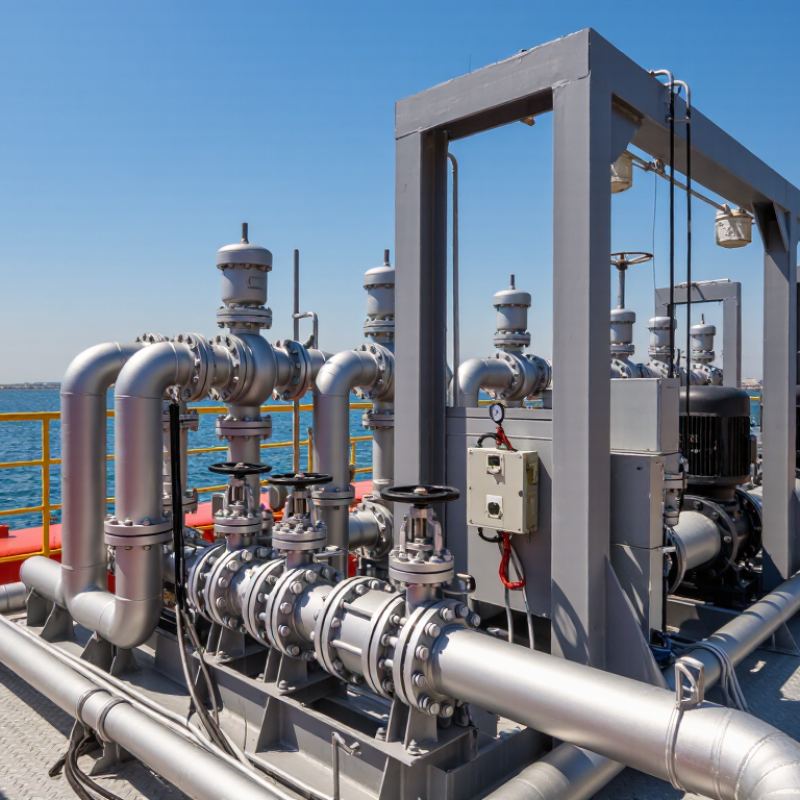
A floating LNG bunkering pump skid brings cryogenic pumps, valves, instruments, and piping together on a reinforced marine frame.

Its layout keeps suction lines short and limits sharp bends, helping reduce pressure loss and cavitation risk. LNG is near minus 162°C, so pipes, seals, and supports must tolerate severe cold and thermal contraction. Small details matter. Flexible connections and secured pipe supports accommodate vessel movement without placing excess strain on joints.

Pump selection depends on transfer rate, required delivery pressure, and available suction conditions. During operation, instruments track pressure, temperature, flow, and pump vibration. A controlled cooldown brings equipment toward operating temperature before full transfer begins.

The pump then moves LNG through the delivery line while vapor-return arrangements help manage displaced gas and maintain stable transfer conditions. Emergency shutdown devices isolate flow if readings exceed set limits or communication is lost.

Motion changes everything.

A drawing cannot fully predict changing sea conditions, so operating limits and inspection routines need careful review. Even a well-designed skid can need adjustment after real-world commissioning.

The neat drawing is never the whole story.

China’s Floating LNG Bunkering Equipment Market

China Top 10 Floating LNG Bunkering Pump Skid Manufacturers

China’s Floating LNG Bunkering Equipment Market

China’s floating LNG bunkering equipment market depends on safe transfer between vessels, often within tight port schedules. A pump skid must handle the required flow while coping with vessel movement, changing operating conditions, and limited deck space. Design reviews should examine pumps, valves, piping, controls, and emergency shutdown interfaces as one system. A clean drawing is useful, but it cannot replace practical installation checks.

For buyers, compare operating range, materials, vibration control, maintenance access, and documentation—not just quoted capacity. Ask how the skid performs during start-up, low-flow operation, and shutdown. Request evidence from testing, and confirm that the proposed layout fits the vessel’s actual connection points. Small mismatches matter. A valve placed behind a handrail can slow routine work. Supplier claims should be checked against project specifications and independent technical review. Even careful planning can miss an awkward interface; teams should leave room for design feedback.

Tips: Check hose reach, lifting points, drainage, and access around instruments before approving a layout. Keep operating procedures practical and readable. Don’t assume two vessels have identical needs. A short onboard walk-through can reveal details that drawings miss.

Criteria for Evaluating Chinese Pump Skid Manufacturers

Evaluating a Chinese floating LNG bunkering pump skid manufacturer starts with the operating envelope, not the catalogue headline. Request pump curves for the specified flow, suction pressure, temperature, and LNG composition. Then check whether the design accounts for vessel motion, vibration, compact deck space, and emergency shutdown interfaces. Small details matter: instrument access, drain points, and insulation joints can complicate maintenance in cold, wet conditions.

Ask for material certificates, weld records, seal-selection rationale, and documented factory acceptance test procedures. Test evidence should cover pressure, leakage, vibration, and control-system interlocks. Useful, but not sufficient. Confirm that the supplier can trace components and support commissioning with qualified personnel. GIIGNL’s 2024 Annual Report records 401.4 million tonnes of LNG traded globally in 2023, illustrating the scale of the supply chain. That figure does not determine skid capacity; project transfer rates and operating conditions do. Compare suppliers using the same duty data, test boundaries, and service assumptions. A polished datasheet can still leave gaps. Ask what happens when actual suction conditions differ from the design case, and how troubleshooting support is delivered after installation.

China Top 10 Floating LNG Bunkering Pump Skid Manufacturers - Criteria for Evaluating Chinese Pump Skid Manufacturers

No. Evaluation Dimension What to Evaluate Evidence to Request Evaluation Guidance
1 LNG and Cryogenic Experience Relevant experience designing or supplying pump skids and associated equipment for LNG or other cryogenic duties. Anonymized project references, scope of supply, operating conditions, and customer acceptance records. Give greater weight to completed, comparable LNG transfer projects than to general-purpose pump experience.
2 Process and Hydraulic Design Whether the proposed pump arrangement, capacity, differential pressure, and operating range match the project’s transfer requirements. Datasheets, performance curves, hydraulic calculations, and design-basis documents. Compare the quoted duty point and operating envelope against the project specification; do not infer performance from motor rating alone.
3 Cryogenic Materials and Sealing Suitability of pressure-retaining parts, seals, valves, and instruments for the specified LNG temperature and service conditions. Material specifications, traceability records, design calculations, and applicable cryogenic test reports. Check material compatibility and documented design temperatures against the project requirements; LNG is commonly stored near its atmospheric boiling point of about −162°C.
4 Floating-Unit Integration Fit with the vessel or floating facility, including footprint, weight, lifting points, piping interfaces, vibration, and access for maintenance. General arrangement drawings, interface register, load data, and installation or maintenance plans. Assess against the actual vessel layout and interface requirements rather than relying on a standard skid configuration.
5 Safety and Hazardous-Area Design Hazardous-area equipment selection, gas detection and shutdown interfaces, electrical protection, and documented risk controls. Area-classification basis, equipment certificates, cause-and-effect documentation, and safety-system interface details. Verify certification and protection concepts against the project jurisdiction and hazardous-area classification; IEC 60079 is a relevant standards series for explosive atmospheres.
6 Standards and Class-Approval Readiness Ability to identify and meet applicable LNG bunkering, vessel, port, and classification-society requirements. Compliance matrix, design-review records, certificates, and approval status for the specific project. Check project applicability of standards such as ISO 20519 for LNG bunkering and confirm requirements with the relevant authority or class society.
7 Manufacturing and Quality Control Documented control of design changes, welding, inspection, instrument calibration, non-conformances, and component traceability. Quality-management certificates, inspection and test plans, sample manufacturing records, and audit access. Evaluate actual project quality records as well as certificates; confirm inspection hold points and record retention before award.
8 Factory Testing and Documentation Completeness of the proposed factory acceptance test program and ability to demonstrate specified performance and control functions. FAT procedure, calibrated-instrument list, test reports, and punch-list closeout process. Require tests and acceptance limits to be agreed in the contract; confirm which tests can be performed at the factory and which require site or cryogenic testing.
9 Controls and Operational Reliability Control-system compatibility, alarms, interlocks, operating procedures, and the supplier’s approach to maintainability and fault response. Control narrative, I/O list, interface protocols, alarm and trip list, and recommended maintenance schedule. Review interfaces with the vessel or facility control system and verify that operating and shutdown sequences are clearly defined.
10 Delivery, Service, and Lifecycle Support Realistic project schedule, spare-parts availability, commissioning assistance, warranty terms, and access to technical support. Project schedule, proposed spare-parts list, service plan, warranty conditions, and support response commitments. Assess the complete lifecycle proposal and identify schedule assumptions, exclusions, and responsibilities in writing.

Note: This is a supplier-evaluation framework, not a verified ranking of manufacturers. Final requirements should be defined by the project specification, applicable regulations, and the relevant vessel or facility approval process.

Profiles of 10 Chinese Floating LNG Bunkering Pump Skid Manufacturers

Profiles of ten Chinese floating LNG bunkering pump skid manufacturers are most useful when they compare engineering capabilities, not just product descriptions. A practical review should examine cryogenic pump selection, skid layout, pipe insulation, instrumentation, and integration with a vessel’s fuel system. Some manufacturers may focus on compact modular packages; others may offer broader engineering and commissioning support. Details matter.

For each profile, look for evidence of relevant project experience, documented factory testing, and clear explanations of operating limits. Ask how the supplier manages vibration, cold-start conditions, leak detection, and maintenance access. A tidy skid drawing is helpful, but it cannot replace test records or a careful review of the actual installation environment. Cold tests matter.

Manufacturers also differ in how they handle customization, control-system interfaces, delivery schedules, and after-sales troubleshooting. Request comparable technical data, including pump capacity, operating pressure, materials, and instrument specifications. Avoid treating a stated capability as proof of performance; verify it against project references and inspection documents. This comparison has limits: public information may not reveal every design detail, and supplier claims deserve independent checking. A profile should therefore distinguish confirmed information from points that still need clarification.

Comparing Capabilities, Certifications, and Project Experience

When comparing China’s top 10 floating LNG bunkering pump skid manufacturers, look beyond advertised capacity. Check whether each skid’s pump curve matches the required transfer rate, pressure, and operating range. Floating service adds motion, vibration, salt spray, and tight deck-space constraints. Ask how the design handles these conditions, including pipe supports, drainage, and access for maintenance. Small details matter.

Certifications are useful evidence, not a shortcut to confidence. Review quality-system documents, hazardous-area equipment certificates, class approvals where applicable, and material traceability records. Confirm that certificates cover the actual skid configuration, not just individual components. Request factory acceptance test procedures and sample results, including vibration readings and alarm checks. Project experience should be comparable in vessel type, transfer capacity, and operating environment. Ask for references or redacted commissioning records. A long client list alone proves little.

Tips: Compare documented projects, not sales claims. Ask who performed commissioning, how interface changes were managed, and what problems appeared during operation. Some suppliers may have limited public data; treat that as a reason to ask clearer questions, not as proof of poor performance. Good answers are specific, consistent, and supported by records.

bottom of page