top of page

Top 10 Horizontal Drill Guides for Global Buyers?

Choosing a Horizontal Drill Guide can make repeat drilling more controlled, especially when a handheld drill needs steadier support. For global buyers, the right choice depends on the work, the drill, and the available setup space. A compact guide may suit a small workshop, while heavier jobs can call for a broader base and firmer clamping. Details matter. Check the guide’s stated drill compatibility, bit range, angle settings, and adjustment method before comparing prices. A clear scale and a secure clamp can save time when holes must line up across several workpieces.

This overview of the top 10 options focuses on practical buying questions, not just product claims. It considers construction, ease of adjustment, portability, and the information manufacturers provide. Buyers should also confirm shipping availability, replacement-part access, and local service options with the seller. Specifications can differ between models, even when product photos look similar. No guide is perfect. A budget model may have limited adjustments, while a sturdier unit may take more bench space. Neither trade-off is automatically wrong. Compare the guide with your drill and the materials you actually use, then verify important measurements in the manual. This shortlist offers a starting point, not a substitute for checking current specifications. Some details may be easy to overlook. That is worth remembering before placing an order.
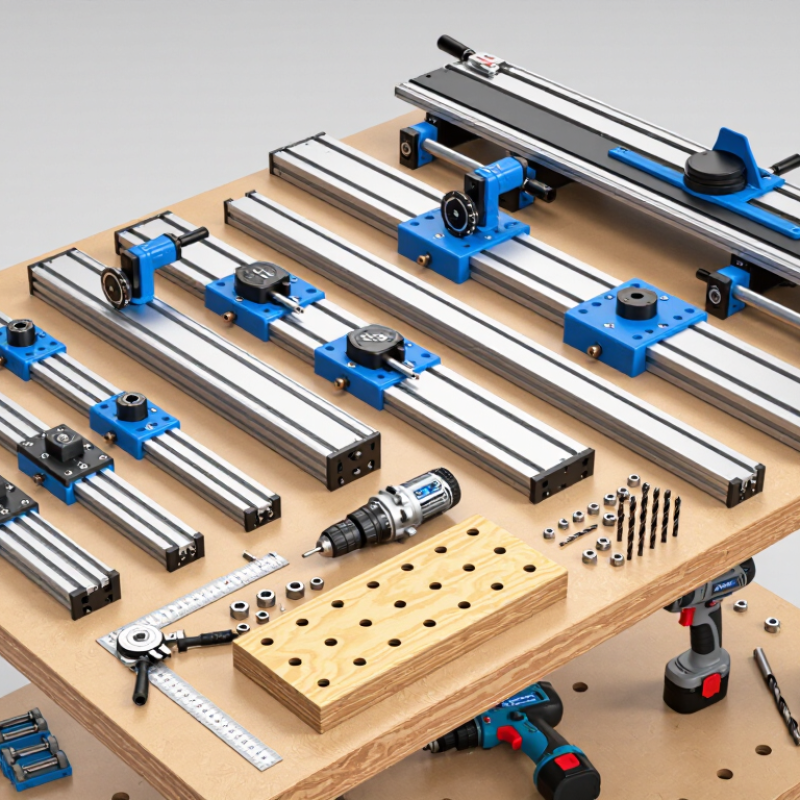
Top 10 Horizontal Drill Guides for Global Buyers?

What Horizontal Drill Guides Are and How They Are Used

A horizontal drill guide is a fixture that holds a handheld drill in a controlled position for sideways or edge drilling. Its base or fence rests against the workpiece, while a guide bushing helps keep the bit on line. Some models also set drilling depth. Not a drill press.

Woodworkers use these guides to bore dowel holes into board edges, align holes for joinery, or drill repeatable openings in cabinet parts. For example, a clamp can hold a narrow rail steady while the bit enters its edge. Check the guide’s bit range, clamping space, and angle adjustment before buying; a guide that fits one drill may not suit another. The guide reduces wandering, but it cannot correct a bent bit or loose setup.

Workpiece condition matters, too. The USDA Forest Products Laboratory’s Wood Handbook, FPL-GTR-282 (2021), places wood’s fiber saturation point at roughly 30% moisture content, with variation by species. Below that point, moisture changes can cause wood to shrink or swell. That movement can affect hole alignment and joint fit, especially in precision work. A drill guide is helpful, not magic; test the setup on scrap first, and inspect the hole before repeating the operation.

How Horizontal Drill Guides Work: Components and Operating Principles

Top 10 Horizontal Drill Guides for Global Buyers?

How Horizontal Drill Guides Work: Components and Operating Principles

A horizontal drill guide keeps a handheld drill aligned with a workpiece edge or surface. Its base or fence rests against the material, while a guide sleeve supports the bit near the entry point. Some models also include clamps, adjustable stops, or replaceable bushings. These parts help control position and drilling depth. Small details matter.

During setup, the operator squares the guide to the workpiece and secures it against movement. The sleeve limits sideways drift, but it cannot correct a crooked approach or a loose setup. As the bit advances, steady pressure and periodic chip removal help maintain a clean hole. Different materials respond differently; hardwood may need slower feeding than softwood. I would still check alignment on scrap material, because even a solid guide can leave a slight angle.

Tips: Match the sleeve diameter to the drill bit, and confirm the guide suits your drill and material. Keep the base flat and clamps snug. Start slowly, then increase speed only when the bit tracks steadily. Recheck depth stops before each batch of holes. A guide improves consistency, not judgment; worn bushings or uneven stock can still affect accuracy.

Key Criteria for Comparing Horizontal Drill Guides

Key Criteria for Comparing Horizontal Drill Guides

A dependable horizontal drill guide should hold the bit square under pressure, not just look accurate on a product sheet. Compare guide-rod rigidity, adjustment range, chuck compatibility, and base stability. Check whether the clamp grips your actual workpiece thickness; a small slip can leave an angled hole in a cabinet panel. For repeat jobs, look for clear depth stops and scales that remain readable after dust builds up. Fit matters.

Treat workholding and operator control as buying criteria. The U.S. Bureau of Labor Statistics recorded 2.6 million nonfatal workplace injury and illness cases in private industry in 2023, in its Employer-Reported Workplace Injuries and Illnesses report. This figure is not specific to drilling guides, but it supports careful attention to stable setups. Compare the guide’s weight and handle position, too, especially if operators must reposition it often. A heavy base may feel reassuring, yet become awkward on a ladder or narrow bench. Real use can be messier than the spec sheet suggests.

Tips: Test the guide on scrap matching your material and thickness. Drill several holes, then check their alignment with a square and calipers. Confirm that replacement bushings and compatible clamps are available in your market. Don’t rely on one test; operator pressure can vary.

Top 10 Horizontal Drill Guides for Global Buyers

For global buyers, the top ten horizontal drill guides are best compared by setup and material, not appearance. A useful shortlist includes bench-mounted and portable-base guides. Add angle-adjustable, dowel, cabinet, pipe, edge, fence, clamp-on, and multi-hole models. That gives ten practical formats. Each suits different work: a pipe guide needs a stable curved-surface hold, while an edge guide helps keep holes aligned near a board’s side. Small details matter. Check the guide’s stated drilling range, bushing size, and compatibility with your drill before ordering.

For cross-border purchasing, confirm whether measurements are metric, imperial, or both. Ask about replacement bushings, spare clamps, and clear setup instructions. These details can matter more than a low quoted price when a jig arrives without a usable fitting. Inspect the base and locking parts for rigidity, and look for specific guidance on keeping the drill square. Not every setup fits. Thick panels, narrow stock, and uneven surfaces may call for different support, so a product description alone cannot settle every choice. A shortlist can miss awkward workpieces; that is a real limitation. Compare the guide against the actual material and hole pattern you plan to use.

How to Match a Drill Guide to Your Tools, Materials, and Market Needs

Choosing a horizontal drill guide starts with the drill, not the price. Check the guide’s stated chuck or collar range, bit clearance, and travel before ordering. A compact cordless drill may fit one guide but sit awkwardly in another. Test the setup with the drill unplugged or its battery removed, then confirm that the bit stays centered through the full stroke. Small alignment errors show up quickly on narrow board edges.

Material changes the choice. For hardwood, look for a rigid guide, secure clamps, and enough travel for the intended bit. Softer wood may tolerate a simpler setup, but thin stock can split if the bit wanders. Metal work calls for a guide designed for that use, plus suitable bits and controlled feed; a wood-only guide is not automatically appropriate. A scrap test helps. It can also reveal that the clamp blocks access or that the workpiece shifts under pressure.

Market needs matter, too. Confirm whether measurements are metric or imperial, whether replacement bushings are available, and whether instructions explain setup clearly. Buyers sourcing for workshops may value durable parts and repeatable positioning; occasional users may prefer a lighter guide that stores easily. Specifications do not tell the whole story. Even a well-made guide can disappoint if it does not match the drill, material, or workspace.

Top 10 Horizontal Drill Guides for Global Buyers? – How to Match a Drill Guide to Your Tools, Materials, and Market Needs

A practical comparison of common guide types, rather than a brand ranking. Capacities and compatible bits vary by model; check the manufacturer’s specifications before purchase.

No. Drill guide type Best suited to Tool and bit compatibility Materials and typical work Key buying checks Market and measurement considerations
1 Portable 90-degree drill guide Keeping handheld drilling square to a flat work surface Handheld drill; many guides accept common twist or brad-point bits, often within an approximate 3–13 mm (1/8–1/2 in) range Wood, plastics, and light-duty metal when paired with an appropriate bit and speed Check the stated bit range, guide-bushing material, base stability, and whether the guide can be clamped securely Look for clearly stated metric and inch capacities; a right-angle guide controls alignment but does not replace safe workholding
2 Adjustable-angle drill guide Angled holes in furniture parts, panels, and repair work Handheld drill with compatible shank sizes; angle settings and bit limits are model-specific Primarily wood and plastics; metal use depends on the guide, bit, and clamping setup Check the usable angle range, angle-lock strength, depth stop, and whether the base remains stable at the selected angle Confirm whether angle markings use degrees and whether the scale is easy to read; avoid assuming every guide reaches the same maximum angle
3 Self-centering doweling jig Aligned horizontal dowel holes across board edges and faces Hand drill with matching drill bushings; common dowel systems use 6, 8, or 10 mm dowels, or inch-based sizes such as 1/4, 5/16, and 3/8 in Softwood, hardwood, plywood, and other suitable wood products Match the bushing to the dowel diameter; check clamping range, edge-centering method, and replacement-bushing availability Metric and inch dowel sizes are not interchangeable; specify the required system before ordering
4 Multi-position doweling guide Repeated, evenly spaced horizontal holes for panel assembly Handheld drill and a set of matching guide bushings; some jigs support multiple hole sizes or spacing patterns Cabinet components, shelves, solid wood, and sheet materials when supported by the jig Check hole spacing, indexing stops, alignment features, and whether the jig can accommodate the panel thickness Confirm spacing units and tolerances; production users should verify repeatability on sample workpieces before scaling up
5 V-block drill guide Preventing round stock from rolling during horizontal drilling Hand drill or drill press with a suitable clamp or fixture; bit capacity depends on the guide and setup Round dowels, rods, and some pipes or tubes, subject to the V-block dimensions Check the V-block angle, stock diameter range, clamping method, and whether the workpiece can be held without deforming Specify the stock’s outside diameter in millimetres or inches; thin-wall tubing may need broad, controlled clamping pressure
6 Pipe- or tube-specific drilling fixture Repeatable holes through curved pipe or tube walls Hand drill or drill press; the fixture must suit the chosen bit and the tube’s diameter Metal or plastic pipe and tube, depending on fixture construction and cutting tool Match the fixture to outside diameter and wall thickness; check tube support, clamp fit, and alignment of the drilling point Pipe dimensions and naming conventions vary by market; use actual outside diameter and wall thickness rather than nominal size alone
7 Edge-boring guide for panels and boards Horizontal holes entering through a board or panel edge Handheld drill with compatible bushings; use a bit suited to the hole diameter and material Solid wood, plywood, and compatible engineered panels Check the guide’s edge register, panel-thickness range, hole-position adjustment, and provision for a depth stop Useful for furniture and joinery; verify the panel thickness and hole-center offset in the units used on the production drawing
8 Long-hole or beam-boring guide Deeper horizontal bores in beams, posts, and thick timber Drill with suitable torque and an auger or long-series bit; verify bit length and shank compatibility Timber and other materials specifically approved for the bit and guide Check maximum bit length, guide support, alignment over the full bore, and safe chip removal Long bits can wander; buyers should assess timber dimensions, required bore depth, and the drill’s capacity under load
9 Bench-mounted horizontal boring fixture Repeated horizontal holes in workshop or small-production settings Designed for a specified drill, spindle, or boring-machine arrangement; compatibility is not universal Wood components and other materials allowed by the machine and tooling Check mounting pattern, workpiece capacity, depth adjustment, guarding, and availability of replacement bushings or stops Confirm voltage, plug, and electrical compliance separately when the fixture is supplied with powered equipment
10 Magnetic-base drill stand for steel work Guided drilling on suitable ferrous steel surfaces, including horizontal or overhead setups when permitted Compatible magnetic drill and specified cutting tool; many systems use annular cutters rather than ordinary twist bits Flat or suitably shaped ferrous steel; not suitable for aluminium, wood, or non-magnetic surfaces as a magnetic hold-down Check magnet holding requirements, surface condition, cutter capacity, safety chain provisions, and approved operating orientation Confirm electrical and safety requirements for the destination market; magnetic adhesion depends on the workpiece and contact surface
bottom of page