Top 10 Natural Gas Generator Manufacturers in the World
Natural gas generators turn fuel into dependable electricity for hospitals, factories, data centers, and remote work sites. Their value is practical: a well-sized unit can respond quickly when grid supply falters. Yet performance depends on more than rated kilowatts. Fuel pressure, gas quality, ambient temperature, maintenance access, and emissions controls all shape real-world operation.
Energy scholar Vaclav Smil writes, “Energy transitions are inherently prolonged affairs.” That perspective matters here. Generator technology evolves, but buyers still need equipment that fits today’s site, fuel supply, and operating schedule. This guide examines ten leading Natural Gas Generator manufacturers, comparing their product strengths, engineering experience, global reach, and service support. Manufacturer rankings can help readers navigate the market. They cannot replace project-specific checks.
Look closely at the details. A hospital may prioritize fast start-up and reliable backup power. A factory running for long hours may care more about fuel efficiency, overhaul intervals, and lifecycle costs. Specifications deserve careful reading, too. Output ratings can vary with operating conditions, while service coverage differs by location. A strong brand on paper may not be the best fit nearby. That is an uncomfortable limitation, but an important one.
The manufacturers featured here serve different applications and markets. Use the comparison as a starting point, then verify current specifications and support with each supplier. A generator is not just a machine. It is a long-term operating decision.
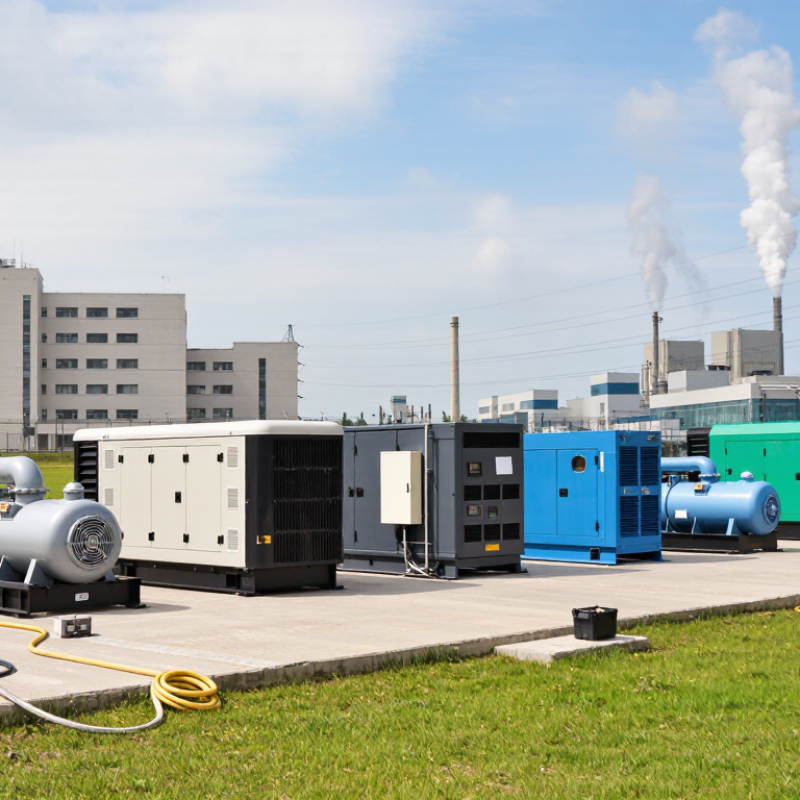
Natural Gas Generators: Definition and Main Applications
Top 10 Natural Gas Generator Manufacturers in the World
Natural Gas Generators: Definition and Main Applications
A natural gas generator converts fuel energy into electricity. In an engine-based unit, combustion turns a shaft connected to an alternator. Larger facilities may use gas turbines. These systems supply backup, continuous, or peak-demand power. Common sites include hospitals, data centers, factories, and remote facilities where grid access is limited. Some installations also capture engine heat for combined heat and power (CHP), improving overall fuel use when there is steady demand for both electricity and heat.
Natural gas plays a major role in power generation. The U.S. Energy Information Administration’s Electric Power Annual reports that natural gas supplied about 43% of U.S. electricity generation in 2023. That figure describes the national power mix, not generator sales, but it shows how widely gas is used. Selection still depends on the job: a standby unit may run rarely, while a prime-power unit may operate for long periods. Fuel pressure, load changes, maintenance access, and exhaust management all matter. One planning detail is easy to underestimate: gas supply can become less reliable during severe weather.
Tips: Match rated output to the actual load, including motor-starting surges. Check gas pressure at the generator, not only at the meter. For CHP, confirm there is year-round use for recovered heat; otherwise, expected efficiency gains may not materialize.
How Natural Gas Generator Systems Work
A natural gas generator converts fuel energy into electricity through a controlled sequence. Gas passes through shutoff valves and a pressure regulator before mixing with air inside the engine. A spark ignites the mixture, driving pistons and turning a shaft. That shaft spins an alternator, which produces electrical current. The engine does the mechanical work; the alternator makes power.
A control panel monitors voltage, frequency, engine temperature, and oil pressure. If readings move outside safe limits, it can trigger an alarm or shutdown. In standby installations, an automatic transfer switch can move selected building loads to generator power after a utility outage. The exhaust and cooling systems also matter: blocked airflow or poor ventilation can cause overheating. One easily missed detail is gas pressure. It may vary with other equipment using the same supply, so sizing and commissioning should be checked by qualified technicians. Real installations are not always as tidy as diagrams suggest.
Tips: Match the generator’s rated output to the loads that must run together, including motors that draw extra power at startup. Keep intake and exhaust areas clear, and follow the service schedule for filters, plugs, and oil. Record test results. Small details count. A brief routine test may reveal a weak battery or an unexpected fault before an outage.
Criteria for Comparing Global Manufacturers
Comparing global natural gas generator manufacturers requires more than lining up rated kilowatts. A unit’s performance depends on site conditions, fuel quality, ambient temperature, and the load it must carry. Ask for test data at the intended operating range, not only peak output. A steady factory load and a remote facility with sudden motor starts are very different jobs.
Efficiency and emissions deserve careful review. Compare fuel consumption at several load points, such as 50, 75, and 100 percent, and check whether figures come from consistent test conditions. Request documentation for applicable emissions standards and operating limits. Small differences can matter over thousands of annual hours. But published figures do not tell the whole story; installation and maintenance affect real-world results.
Service capability is equally practical. Check parts availability, technician coverage, response times, warranty terms, and the maintenance schedule. Ask for references from sites with similar climates and duty cycles, then verify what support was actually delivered. A low purchase price may be offset by slow repairs or frequent service visits. No scorecard is perfect. I would give more weight to evidence that can be checked than to polished claims, while admitting that reference checks take time and may still miss problems.
Profiles of Ten Leading Natural Gas Generator Manufacturers
Profiles of ten leading natural gas generator manufacturers reveal distinct engineering priorities, not a single best design. One specializes in large reciprocating engines for steady industrial loads. Another builds compact turbine packages for sites with limited space. A third emphasizes fast-start systems for backup power. A fourth focuses on modular units that can scale with demand. A fifth integrates heat recovery for facilities that need both electricity and process steam.
A sixth develops equipment for remote operations, where service access matters. A seventh targets utility-scale projects with combined-cycle configurations. An eighth prioritizes low-emission combustion and monitoring controls. A ninth offers containerized systems for quicker installation. A tenth concentrates on customized packages for variable gas quality. These profiles describe capabilities, not a verified ranking. Easy to miss. The U.S. EPA’s Catalog of CHP Technologies reports electrical efficiency near 45% for some large natural-gas reciprocating engines; smaller turbines generally trade efficiency for compactness. These figures are benchmarks, not guarantees. Actual performance depends on load, altitude, fuel composition, and maintenance. Buyers should compare tested efficiency curves, service coverage, and heat-recovery data—not headline output alone. Even a strong specification can disappoint when the site conditions differ.
Top 10 Natural Gas Generator Manufacturers in the World – Profiles of Ten Leading Natural Gas Generator Manufacturers
Company names and brands are intentionally omitted. The profiles are presented as an illustrative overview, not a verified market-share ranking. Founding dates refer to the associated company or engineering heritage; product availability and specifications vary by model and market.
| Profile | Country of origin | Founding year or heritage | Natural gas generator focus | Typical applications | Portfolio orientation |
|---|---|---|---|---|---|
| Manufacturer 1 | United States | 1925 | Industrial gas-engine generator sets and integrated power systems | Industrial facilities, commercial sites, combined heat and power (CHP) | Distributed generation, from facility power to larger multi-unit installations |
| Manufacturer 2 | Austria | Engine-manufacturing heritage dating to 1959 | Spark-ignited gas engines designed for continuous operation; some platforms can also use biogas | CHP, industrial power, municipal facilities, and energy projects using gaseous fuels | Modular engine-generator systems for continuous and combined heat-and-power duty |
| Manufacturer 3 | Finland | 1834 | Large reciprocating gas-engine power plants and flexible generation systems | Utility-scale generation, industrial plants, and balancing power | Large installations built from individual engines or multiple generating units |
| Manufacturer 4 | United States | 1919 | Natural gas generator sets for standby, prime, and distributed power applications | Commercial buildings, data infrastructure, healthcare, and industrial sites | Packaged generator sets across a range of site power requirements |
| Manufacturer 5 | Germany | Engine-manufacturing heritage dating to 1871 | Gas-engine generator sets with a strong emphasis on CHP and heat utilization | Factories, hospitals, campuses, district energy, and municipal facilities | CHP-oriented systems for on-site electricity and useful heat production |
| Manufacturer 6 | Germany | Engineering heritage dating to 1758 | Large-bore gas engines for power generation and industrial energy systems | Power plants, energy-intensive industries, and large on-site installations | Large-engine solutions for continuous-duty and utility-related projects |
| Manufacturer 7 | Japan | 1884 | Gas-engine and power-generation systems for large facilities and energy projects | Industrial power, utility projects, and large commercial installations | Project-based systems, including generator equipment and associated engineering |
| Manufacturer 8 | Germany | Engine-building heritage dating to 1909 | Gas-powered generator sets for distributed and continuous power | Commercial buildings, industrial sites, and CHP installations | Packaged systems designed for on-site power and energy-efficiency projects |
| Manufacturer 9 | United States | 1959 | Natural gas standby generator sets for residential and commercial use | Homes, small businesses, and light-commercial facilities | Standby-focused products, with installation and automatic-transfer options varying by model |
| Manufacturer 10 | United States | 1873 | Natural gas generator sets for backup and distributed power applications | Commercial buildings, institutions, and industrial facilities | Standby and facility-power systems across multiple installation sizes |
Key Technologies and Market Trends in Natural Gas Generation
Natural gas generation is moving toward faster, more flexible operation. Modern engines and turbines can adjust output to follow changing demand, while digital controls track temperatures, pressure, and fuel use. Combined heat and power systems capture exhaust heat for nearby buildings or industrial processes. Less fuel is wasted.
Performance depends on the site. A generator sized for peak demand may run inefficiently during ordinary hours. Fuel composition, altitude, hot weather, and maintenance access also matter. On a hot afternoon, cooling limits can reduce available output. Small details count.
Tips: Match capacity to the real load profile, not just the highest recorded demand. Ask for efficiency data at partial load, emissions monitoring plans, and clear maintenance intervals. Check how fuel quality affects operation.
Market interest is also growing in renewable gas and equipment designed for future fuel blends. Readiness varies by model and operating conditions, so verify technical limits rather than relying on broad claims. Natural gas units can support grids with variable renewable output, but their lifecycle emissions include methane leakage across the fuel supply chain. That issue deserves careful measurement. The transition is useful, but not effortless.
Natural Gas Generation: Key Technologies and Market Trends
Typical Net Electrical Efficiency Ranges
Combined-cycle gas turbines use exhaust heat to generate additional power, giving them a higher typical electrical efficiency than open-cycle turbines. Reciprocating gas engines offer a flexible option across a range of plant sizes. Actual performance varies with equipment design, operating conditions, and plant configuration; these indicative ranges are not manufacturer-specific.