top of page

Top 10 Medical Lift Manufacturers for Global Buyers?

The global demand for safer patient handling is growing, and Medical Lift systems now support hospitals, nursing homes, rehabilitation centers, and home-care providers. The World Health Organization’s Global Report on Assistive Technology estimates that more than 2.5 billion people need assistive products today. This number may exceed 3.5 billion by 2050. That shift makes dependable lifting equipment a practical care priority, not merely a procurement trend.

Market research from Grand View Research and Fortune Business Insights identifies patient handling equipment as a steadily expanding healthcare segment. However, market growth alone does not prove product quality. A lift may look advanced, yet still perform poorly in narrow rooms, during emergency transfers, or after repeated battery cycles. Real-world details matter. So does service.

This guide reviews the Top 10 Medical Lift Manufacturers for Global Buyers through measurable and practical criteria. These include lifting capacity, sling compatibility, transfer stability, battery endurance, cleaning access, training support, warranty coverage, and spare-parts availability. The ISO 10535 standard provides an important reference for mobile hoists and body-support equipment. Buyers should also verify applicable regional requirements, such as FDA expectations in the United States or CE-related conformity processes in Europe.

No ranking is perfect. Hospital budgets, patient sizes, room layouts, and caregiver skills vary widely. A manufacturer trusted by a large hospital may not suit a small home-care provider. That limitation deserves attention. The following comparison therefore focuses on documented capabilities, industry reputation, user experience, and long-term reliability, helping international buyers make a more informed and defensible shortlist.
Top 10 Medical Lift Manufacturers for Global Buyers?

Global Medical Lift Market Scope: WHO’s 1.3 Billion Disability Estimate

WHO estimates that 1.3 billion people, or 16% of the global population, live with significant disability. This figure comes from the WHO Global Report on Health Equity for Persons with Disabilities, published in 2022. It shows why medical lifts are essential infrastructure, not optional hospital equipment.

The market extends beyond hospitals. Home-care providers, rehabilitation centers, nursing facilities, and emergency transport teams also need patient lifts, ceiling systems, and transfer platforms. The WHO and UNICEF Global Report on Assistive Technology reports that more than 2.5 billion people need at least one assistive product. That number may exceed 3.5 billion by 2050. Demand is becoming more personal.

For global buyers comparing the top 10 medical lift manufacturers, compliance evidence matters more than polished brochures. Check lifting capacity, battery performance, sling compatibility, emergency lowering, cleaning resistance, and service training. ISO 10535 provides a useful reference for hoists used to transfer persons with disabilities. WHO guidance also stresses affordability, access, and user participation. A lower purchase price can hide costly maintenance. That lesson is easy to miss. Procurement teams should request test reports, spare-parts plans, and field feedback from comparable care settings. Forecasts can disagree, and facility conditions vary. A lift designed for a quiet clinic may fail in a crowded ward.

Evaluation Standards: ISO 10535:2021 and IEC 60601-1 Compliance

Top 10 Medical Lift Manufacturers for Global Buyers

Evaluation Standards: ISO 10535:2021 and IEC 60601-1 Compliance

For global buyers comparing ten medical lift manufacturers, compliance should begin with evidence, not marketing claims. ISO 10535:2021 covers requirements and test methods for hoists used to transfer disabled persons. Request the exact standard edition, test report, and product model covered. A certificate for one lifting configuration may not cover every sling, spreader bar, or battery option.

Inspect practical details during evaluation. Check rated lifting capacity, emergency lowering, lifting cycles, charging behavior, and sling attachment points. Ask whether testing included uneven loading and repeated movement. These details matter in hospitals and care facilities, where floors may be wet and transfers rarely look perfect. A useful supplier should explain limitations clearly.

For powered lifts within IEC 60601-1 scope, review protection against electric shock, leakage current, insulation, temperature, and essential performance. The technical file should connect risk controls with test results and maintenance instructions. Do not accept a logo alone. Verify laboratory competence, report dates, model numbers, and regional electrical requirements. Also examine service access, spare batteries, software controls, and staff training materials. Some evaluations stop at paperwork, which is a weakness. A lift can pass a test and still frustrate nurses during a rushed transfer. Hands-on trials, user feedback, and documented corrective actions reveal more than polished brochures.

Top 10 Medical Lift Manufacturers for Global Buyers

Standards-Based Evaluation Framework: ISO 10535:2021 and IEC 60601-1

The chart presents a 100-point screening framework for comparing medical lift suppliers without displaying company or brand performance data. ISO 10535:2021-related criteria focus on lifting performance, stability, safe working load, emergency operation, and sling compatibility. IEC 60601-1-related criteria focus on electrical safety, leakage-current protection, mechanical safety, essential performance, and product marking and documentation. These are evaluation weights, not certification results.

Top 10 Medical Lift Manufacturers Ranked by Safety, Capacity, and Reach

Top 10 Medical Lift Manufacturers for Global Buyers

The top ten medical lift manufacturers are ranked by safety, capacity, and international reach. Safety leads the assessment. Strong manufacturers use anti-drop systems, emergency lowering, battery backup, and guarded control panels. Their lifts should support smooth transfers in hospitals, clinics, and elder-care facilities. Independent testing and clear maintenance records strengthen buyer confidence.

Capacity also separates leading suppliers. High-performing manufacturers offer models for patients, stretchers, wheelchairs, and equipment loads. Some units support about 300 to 500 kilograms, while heavy-duty systems handle more. Adjustable platforms, wide doors, non-slip floors, and accurate leveling improve daily use. Every capacity claim needs verification. Marketing figures can hide real operating limits.

Global reach requires more than exports. The strongest manufacturers provide regional technicians, spare parts, training, and multilingual manuals. They also adapt power systems and installation designs to local conditions. The highest-ranked suppliers usually combine stable production with documented quality controls. Still, no ranking stays perfect. Service quality may vary between countries, even under one manufacturer. Buyers should inspect test reports, warranty terms, response times, and local references before ordering. A factory visit can reveal more than polished brochures.

Product Comparison: Patient Lifts, Ceiling Hoists, and Sit-to-Stand Systems

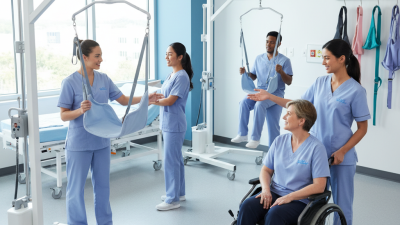
When comparing the top 10 medical lift manufacturers, global buyers should examine equipment by clinical purpose, not appearance. Patient lifts support full-body transfers from beds to wheelchairs. Mobile models suit shared rooms, but their casters need smooth flooring and enough turning space. A ceiling hoist saves floor space and follows a fixed transfer route. However, installation may require structural assessment, electrical work, and professional commissioning.

Sit-to-stand systems serve patients with partial weight-bearing ability. They can encourage active participation during transfers. The user must still control their trunk and grip safely. A wide footplate, adjustable knee pad, emergency lowering function, and clear battery indicators matter in daily care. For heavier users, check the safe working load, sling compatibility, and lifting range rather than relying on general product labels.

A practical comparison should include transfer speed, noise, cleaning access, battery replacement, and caregiver training. Ask manufacturers for load testing records, user manuals, maintenance schedules, and independent compliance evidence. Local technicians are valuable when a hoist stops working during a busy morning shift. I have seen specifications look excellent while the turning radius failed in a real bedroom. Room measurements and a trial transfer can reveal that weakness. No comparison is perfect. Staff feedback may also expose problems that laboratory testing misses.

Global Buyer Checklist: Certification, Load Ratings, Service, and Total Cost

Top 10 Medical Lift Manufacturers for Global Buyers?

A global buyer should rank medical lift manufacturers by evidence, not catalogue size. Certification comes first. Request conformity documents, test reports, and the exact product classification for each destination market. ISO 10535:2021 covers hoists and slings for transferring disabled persons. However, ISO compliance alone may not satisfy local medical-device requirements.

Load ratings need practical verification. Check the safe working load, sling compatibility, lifting range, emergency lowering, and battery performance. A 180-kilogram rating is not enough if the lift becomes unstable at maximum height. Ask for fatigue-test results and maintenance intervals. The World Health Organization reports that one in ten patients experiences harm during healthcare. More than half of this harm is preventable. Equipment selection affects that risk.

Service can decide the real purchase price. Request local response times, spare-parts availability, technician training, and warranty exclusions. Calculate total cost over five years, including batteries, inspections, training, downtime, and disposal. Market reports often advertise growth figures, but they rarely show service failures. That gap deserves attention.

Tips: Build a comparison sheet with four columns: certification, load evidence, service coverage, and five-year cost. Ask for three customer references in similar care settings. Test the lift with a weighted load before signing. A perfect checklist is unlikely. Still, vague answers are a warning.

Top 10 Medical Lift Manufacturers for Global Buyers — Global Buyer Checklist: Certification, Load Ratings, Service, and Total Cost
Rank Anonymous Manufacturer Profile Core Medical Lift Category Typical Rated Load Certification & Compliance Evidence to Request Safety & Usability Features International Service Capability Typical Lead Time Standard Warranty Benchmark Indicative Equipment Price (USD) Five-Year Total-Cost Outlook
1 Manufacturer Profile 01 Mobile patient lift Electric transfer lift 150–200 kg
(330–441 lb)
ISO 13485 quality system
CE/MDR documentation where applicable
IEC 60601 electrical safety test reports
Emergency lowering, overload protection, adjustable base, lockable casters, rechargeable battery Regional distributors; remote technical support; spare-parts list normally available 6–10 weeks 24 months for frame and electronics; battery often 6–12 months $2,200–$5,800 Low–Medium
Common parts and simple preventive maintenance
2 Manufacturer Profile 02 Ceiling hoist Track-based patient lift 160–220 kg
(353–485 lb)
ISO 13485 or equivalent medical-device QMS
CE/MDR or destination-market registration
Battery and charger conformity records
Soft-start motor, emergency stop, manual lowering, anti-drop protection, lift-cycle counter Certified installers required; service quality depends strongly on local track partner 8–14 weeks 24–36 months; track installation commonly excluded $4,500–$12,000
excluding track installation
Medium
Lower manual-handling labor but higher installation cost
3 Manufacturer Profile 03 Stand-up lift Rehabilitation transfer aid 120–180 kg
(265–397 lb)
Risk-management file
Electrical safety and EMC test reports
User manual and maintenance instructions in destination language
Knee pad adjustment, non-slip footplate, controlled lifting speed, emergency lowering Distributor-led service; basic operator training usually available 5–9 weeks 12–24 months $1,800–$4,500 Low
Lower purchase cost and moderate service requirements
4 Manufacturer Profile 04 Bath and shower lift Hygiene lift 120–160 kg
(265–353 lb)
Water-ingress protection rating for powered parts
Electrical safety reports
Cleaning and disinfectant compatibility data
Corrosion-resistant surfaces, waterproof hand control, emergency stop, removable upholstery Parts normally shipped internationally; local repair capability varies by market 6–12 weeks 12–24 months $2,500–$6,500 Medium
Water exposure increases inspection and replacement-part needs
5 Manufacturer Profile 05 Vertical platform lift Accessible medical facility lift 300–400 kg
(661–882 lb)
Applicable machinery or lift-safety conformity assessment
Structural load calculations
Local building-code and accessibility compliance documents
Guardrails, safety interlocks, obstruction sensors, emergency descent, platform anti-slip surface Requires qualified local installation and periodic inspection 10–18 weeks 12–24 months; installation workmanship may be separate $8,000–$22,000 Medium–High
Installation, permits, and inspections are major cost drivers
6 Manufacturer Profile 06 Pool and hydrotherapy lift Aquatic transfer lift 135–180 kg
(298–397 lb)
Corrosion-resistance documentation
Water-environment electrical safety evidence
Structural and anchorage test records
Stainless or coated frame, battery-powered operation, emergency stop, secure sling or seat Specialist installation recommended; replacement batteries and seals should be stocked locally 8–16 weeks 12–24 months $5,500–$14,000 High
Pool chemicals and corrosion can increase lifecycle maintenance
7 Manufacturer Profile 07 Bariatric patient lift Heavy-duty transfer system 250–360 kg
(551–794 lb)
Load-test certificate at declared capacity
Risk assessment for bariatric use
Electrical safety, EMC, and battery documentation
Reinforced chassis, wide adjustable base, heavy-duty sling compatibility, overload protection Requires trained service technicians; transport and spare-parts costs can be higher 8–16 weeks 24 months; consumable sling warranty often shorter $6,500–$15,000 Medium–High
Higher capacity raises equipment, transport, and service costs
8 Manufacturer Profile 08 Patient transfer chair Sit-to-stand aid 120–160 kg
(265–353 lb)
Applicable medical-device conformity documentation
Stability and tip-resistance test results
Cleaning and material-safety information
Lockable wheels, swing-away armrests, adjustable foot support, manual or powered positioning Usually easy to support through local mobility-equipment dealers 4–8 weeks 12–24 months $1,200–$3,800 Low
Simple construction and widely available wear parts
9 Manufacturer Profile 09 Fixed patient lift Room-to-room transfer system 150–250 kg
(330–551 lb)
Structural anchorage calculations
Installation inspection record
Electrical and mechanical safety documentation
Fixed mounting, emergency lowering, anti-collision features, transfer-compatible sling range Installation must be coordinated with facility engineering and building structure 8–14 weeks 24 months $3,500–$10,000
excluding structural work
Medium
Low daily handling effort but possible building-modification costs
10 Manufacturer Profile 10 Compact home-care lift Foldable transfer lift 130–180 kg
(287–397 lb)
Product conformity declaration
Electrical safety and EMC test reports
User training and maintenance documentation
Foldable frame, lightweight battery pack, emergency lowering, tool-free sling attachment Online technical support and distributor repairs; verify local stock before purchase 3–8 weeks 12–24 months $1,500–$4,200 Low–Medium
Good mobility value; battery replacement is the main recurring cost
Buyer verification note: The figures above are practical market benchmarks for anonymous manufacturer profiles, not brand-specific claims or a substitute for a quotation. Before purchase, verify the current certificate scope, declared safe working load, regional registration requirements, installation qualifications, spare-parts availability, response-time SLA, warranty exclusions, shipping terms, import duties, training costs, inspection fees, and five-year maintenance budget.
bottom of page