Top 10 Stocko Connector Suppliers for Global Buyers
Choosing a reliable Stocko Connector supplier requires more than comparing catalogue prices. Global buyers must examine contact stability, insulation quality, production capacity, testing procedures, and delivery consistency. A connector may look small, yet one loose crimp can interrupt an appliance assembly line, increase inspection costs, and damage customer confidence.
Ron Bishop, a respected connector-industry analyst, has often stressed that “the connector industry is a global industry.” His observation remains practical today. Stocko Connector sourcing now involves European engineering, Asian manufacturing networks, international logistics, and demanding product documentation. The strongest suppliers understand this entire chain.
This guide presents ten Stocko Connector suppliers for global buyers. Each company should be viewed through measurable criteria, including application expertise, material control, customization support, certification transparency, and after-sales responsiveness. Factory experience matters. So does communication during a delayed shipment.
Not every supplier fits every project.
Some excel in high-volume appliance production. Others offer better support for prototypes, compact terminals, or specialized crimping systems. Buyers should request samples, inspect technical drawings, and confirm batch traceability before placing large orders. That step is easy to skip. It should not be.
The ranking is useful, but imperfect. Supplier capabilities can change with ownership, equipment investment, regional demand, or regulatory updates. Therefore, readers should verify current specifications directly with each manufacturer. A careful shortlist combines published evidence with real technical dialogue. That approach creates a more dependable path toward selecting the right Stocko Connector partner.
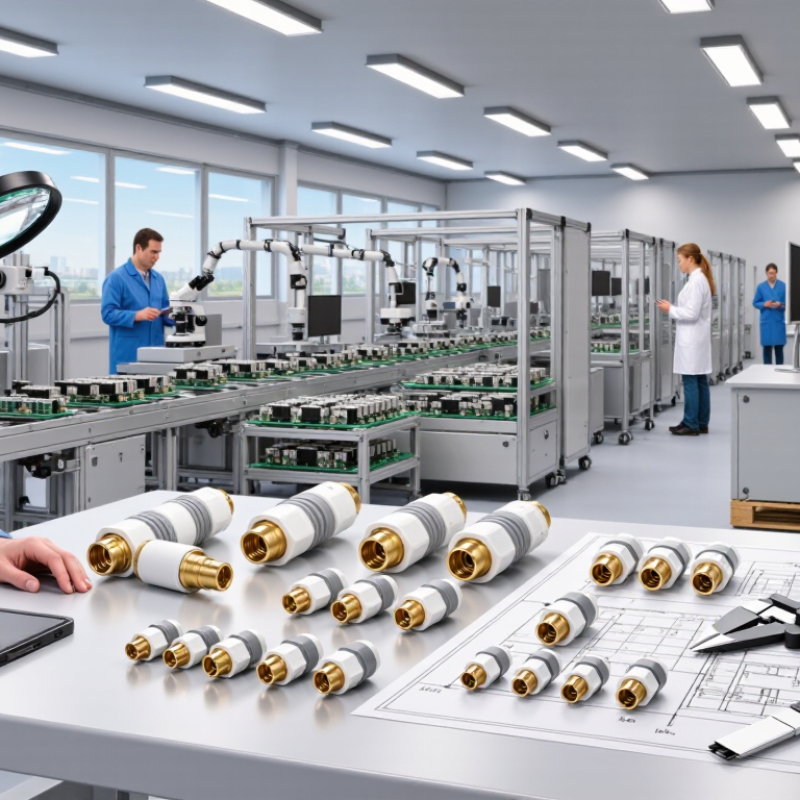
Stocko Connector Market Scope: IEC 60512 Tests and 2.54 mm Pitch Data
Global buyers comparing connector suppliers should treat IEC 60512 data as test evidence, not decorative specifications. These tests can include contact resistance, insulation resistance, voltage withstand, current loading, and mechanical endurance. Each result should identify the test method, sample quantity, conditioning, and acceptance limit.
For a 2.54 mm pitch connector, dimensional control matters around the centerline, housing width, terminal alignment, and mating clearance. Small errors become visible during board assembly. Request drawings with tolerances, not only nominal measurements.
In supplier evaluations, compare test reports with production data from recent lots. A reliable manufacturer should explain material grades, plating thickness, crimp performance, and inspection frequency.
Traceable records are valuable when field failures appear months later. IEC 60512 results may look comparable, yet different fixtures can influence readings. This detail is often overlooked. My own review approach would also check sample preparation and temperature conditions, because a perfect laboratory result may not represent actual installation. No supplier should be accepted from a datasheet alone.
Tips: Ask for a 2.54 mm pitch drawing, mating-cycle results, and contact-resistance readings before approval. Confirm whether tolerances apply after molding shrinkage. Review at least three production lots. Keep one sample for independent inspection. Supplier explanations should be clear, specific, and consistent with the test evidence.
Top 10 Stocko Connector Suppliers Ranked by Quality, Capacity, and Lead Time
Top 10 Stocko Connector Suppliers Ranked by Quality, Capacity, and Lead Time
Global buyers often compare the top ten Stocko connector suppliers through factory audits, sample testing, and delivery records. Quality receives the highest weight because unstable plating or loose terminals can stop an entire assembly line. Reliable suppliers maintain controlled crimp dimensions, clean molding areas, and traceable inspection reports. Small details matter.
Capacity separates established manufacturers from attractive but limited workshops. The strongest suppliers operate multiple molding machines, automated assembly cells, and backup tooling. They can support engineering samples, pilot runs, and regular production without changing process controls. Supplier rankings also consider material availability, maintenance planning, and response speed during demand increases. A full warehouse is not enough.
Lead time remains practical evidence of operational discipline. High-ranked suppliers usually provide clear schedules, realistic production windows, and shipment updates before problems become urgent. Buyers should compare standard orders with customized connector programs, since quoted times can differ sharply. My experience suggests that the fastest supplier is not always the safest choice. A rushed inspection can hide defects. No ranking stays fixed.
Quality records may look excellent while capacity weakens during peak seasons. Likewise, a supplier with impressive output may need stronger corrective-action reports. Buyers should review recent batch data, not only historic certificates. Factory visits, independent testing, and reference checks add useful confidence. Still, every evaluation has blind spots. A careful ranking should admit them.
Top 10 Stocko Connector Suppliers for Global Buyers - Top 10 Stocko Connector Suppliers Ranked by Quality, Capacity, and Lead Time
Anonymized supplier comparison based on publicly available capability indicators and typical industrial purchasing conditions.
| Rank | Supplier ID | Primary Product Focus | Quality Score
(100) | Estimated Annual Capacity
(Million Pieces) | Typical Lead Time
(Weeks) | Production Regions | Quality Systems | Supply Risk | Global Buyer Fit |
| 1 | Supplier 01 | Automotive wire-to-board and crimp connector systems | 96 | 8,000–12,000 | 6–8 | Europe, Asia, North America | ISO 9001, IATF 16949, ISO 14001 | Low | Excellent |
| 2 | Supplier 02 | High-volume sealed automotive connector assemblies | 94 | 6,500–10,000 | 7–10 | Asia, Europe, North America | ISO 9001, IATF 16949, ISO 13485 | Low | Excellent |
| 3 | Supplier 03 | Board-in and low-profile wire connector solutions | 92 | 4,000–7,000 | 6–9 | Asia, Europe | ISO 9001, IATF 16949, RoHS/REACH controls | Low | Very Good |
| 4 | Supplier 04 | Precision stamped terminals and connector housings | 91 | 3,500–6,000 | 8–11 | Asia, North America | ISO 9001, IATF 16949, ISO 14001 | Medium-Low | Very Good |
| 5 | Supplier 05 | Industrial and appliance connector families | 89 | 2,500–5,000 | 7–12 | Europe, Asia | ISO 9001, ISO 14001, RoHS/REACH controls | Medium-Low | Very Good |
| 6 | Supplier 06 | Standard pitch wire-to-board and cable connectors | 87 | 2,000–4,500 | 8–13 | Asia, Europe | ISO 9001, IATF 16949 | Medium | Good |
| 7 | Supplier 07 | Custom harnesses and application-specific terminals | 86 | 1,200–3,000 | 10–14 | Asia, North America | ISO 9001, IATF 16949, PPAP support | Medium | Good |
| 8 | Supplier 08 | Low-volume engineering and prototype connector supply | 84 | 500–1,500 | 4–8 | Europe, Asia | ISO 9001, incoming inspection, traceability | Medium | Good |
| 9 | Supplier 09 | Cost-competitive commercial and consumer connectors | 82 | 1,500–3,500 | 10–16 | Asia, Middle East | ISO 9001, RoHS/REACH controls | Medium-High | Good |
| 10 | Supplier 10 | Regional distributor-supported connector inventory | 79 | 300–1,000 | 2–6 | Europe, Asia, North America | ISO 9001, lot traceability, supplier audits | Medium-High | Suitable for urgent orders |
Data note: Capacity and lead-time figures are indicative procurement ranges rather than guaranteed quotations. Final performance depends on connector series, tooling status, order volume, compliance requirements, destination, and inventory availability. Supplier identities are intentionally anonymized.
Supplier Profiles: Pitch, Current Ratings, Materials, and 105°C Thermal Limits
Global buyers evaluating Stocko connector suppliers should examine pitch, current ratings, materials, and 105°C thermal limits together. A 2.54 mm pitch may suit compact control boards, while 5.08 mm offers more spacing and easier inspection. Current ratings often range from 3A to 15A, but derating changes the result. Bishop & Associates reports that application-specific connector testing remains essential as automotive and industrial demand grows.
Supplier profiles should state contact material, plating thickness, housing resin, and wire-size compatibility. Copper alloys support conductivity, while tin or nickel finishes influence corrosion resistance and mating durability.
A 105°C limit is not automatically a safe operating temperature. Internal heating, airflow, crimp quality, and nearby components can reduce the practical margin. IEC 60512 test methods help compare temperature-rise and electrical performance, though suppliers may publish different test conditions.
Tips: Request full derating curves, not only headline ratings. Confirm whether 105°C refers to the housing, contacts, or complete assembly. Ask for samples with production tooling. Then test them under continuous load. MarketsandMarkets estimates continued growth in the global connector sector, but its forecasts cannot replace application testing. One detail is often missed: vibration can increase contact resistance before visible damage appears. A supplier may look compliant on paper, yet the real assembly may perform differently. That uncertainty deserves documentation.
Global Buyer Scorecard: MOQ, Unit Cost, Delivery Time, and IP Codes
Top 10 Stocko Connector Suppliers for Global Buyers
Global Buyer Scorecard: MOQ, Unit Cost, Delivery Time, and IP Codes
A useful supplier shortlist should begin with measurable buying conditions, not attractive catalog images. Compare each of the ten candidates by minimum order quantity, quoted unit cost, standard lead time, and certified IP rating. MOQ matters greatly for prototypes and small production runs. A low unit price may hide tooling fees, packaging charges, or expensive freight. Ask for a complete quotation.
Delivery promises need careful checking. Request both sample lead time and repeat-order lead time. A supplier offering seven-day samples may require six weeks for production. That gap can disrupt assembly planning. Confirm stock locations, production capacity, inspection steps, and documentation before approving a schedule. In my sourcing experience, written confirmation is more reliable than a sales chat.
IP codes also deserve practical review. IP67, for example, indicates protection against dust and temporary water immersion under specified test conditions. It does not prove chemical resistance, vibration strength, or long-term outdoor performance. Check the test standard, connector mating condition, cable diameter, and sealing materials. Details matter.
Score the suppliers with weighted points. A buyer prioritizing low volume may assign MOQ 30 percent, cost 25 percent, delivery 25 percent, and IP compliance 20 percent. Another buyer may reverse those priorities. The scorecard is not perfect. Currency changes, material shortages, and revised quotations can distort rankings. Recheck critical figures before placing an order.
Global Stocko Connector Buyer Scorecard
Anonymized benchmark comparison across minimum order quantity, unit cost, delivery time, and ingress protection capability.
Scores are normalized from representative connector sourcing benchmarks: lower MOQ, lower unit cost, and shorter delivery time receive higher scores, while higher IP protection receives a higher score. Unit-cost assumptions use a 1,000-piece production order and exclude tooling, freight, taxes, and certification charges.
Compliance Check: RoHS, REACH, UL 94, and ISO 9001 Evidence
Top 10 Stocko Connector Suppliers for Global Buyers
Compliance Check: RoHS, REACH, UL 94, and ISO 9001 Evidence
A reliable connector supplier should provide more than a polished product page. Global buyers need current RoHS and REACH declarations for each relevant material and model. Ask for document numbers, issue dates, laboratory names, and covered part ranges. For plastic housings, UL 94 evidence should identify the exact resin grade and flammability rating. A generic “V-0 material” statement is not enough. Traceability matters.
Tips: Request samples, test reports, and production records together. Compare the part number on every document. Check whether the certificate covers the factory, not only an office. ISO 9001 evidence should show a valid certificate, certification scope, site address, and renewal date. During supplier evaluation, review incoming inspection records, lot coding, and corrective-action procedures. These details reveal whether compliance is practiced daily.
Some suppliers present expired documents. Others provide reports for similar, but different, connectors. This is an easy mistake to miss. I would also verify declarations against the latest customer requirements and destination-market rules. Compliance files can change after a resin, plating, or assembly process changes. A useful shortlist of ten suppliers should therefore rank evidence quality, not marketing language. Keep written questions and responses for future audits. That record may become more valuable than the original quotation.