top of page

What Are the Top Types of Solar Surge Protectors in 2026?

A solar array faces more than one kind of electrical threat. Switching events can create brief voltage spikes, while nearby lightning may induce surges along long cable runs. A Solar Surge Protector helps limit those transients, but the right type depends on where protection is needed. PV safety specialist John Wiles has published practical guidance on photovoltaic system design and safety. A concise paraphrase of that approach is: “Match the protection device to the circuit, system voltage, and installation point.” This is a paraphrase, not a verbatim quotation.

In 2026, buyers will commonly compare DC-side Type 2 devices, AC-side protectors, combined DC-and-AC units, and Type 1 or Type 1+2 devices for higher-exposure locations. Each serves a different role. A DC protector near the inverter cannot automatically replace protection at a rooftop combiner, and an AC unit does not protect every PV circuit. Details matter: maximum continuous operating voltage, discharge ratings, grounding, cable length, and the manufacturer’s installation instructions. A small combiner box beside a string inverter offers a useful picture of why placement matters; long, exposed conductors can change the protection needs.

There is no universal “best” model. Not quite. This guide compares the main protector types, explains their typical applications, and highlights trade-offs readers can verify in product specifications. It also points out where the available information may be incomplete. Local system design and a qualified electrical professional should inform final selection; a product label alone is not enough.
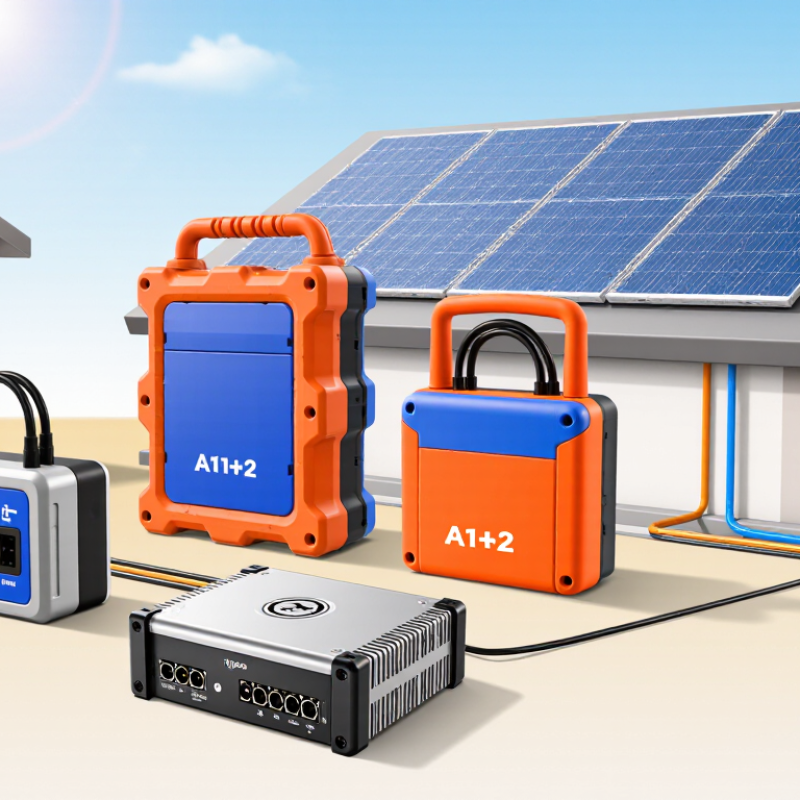
What Are the Top Types of Solar Surge Protectors in 2026?

How IEC 61643-31 Defines Surge Protection for PV DC Systems

IEC 61643-31 sets requirements and test methods for surge protective devices used on photovoltaic DC circuits, including systems up to 1,500 volts DC. It focuses on the conditions these devices must withstand, not simply the wording on a product label. PV arrays can maintain DC voltage during daylight, so protection must suit the array’s electrical characteristics. Small details matter.

Devices are commonly identified as Type 1, Type 2, or combined Type 1+2. Type 1 devices are tested for lightning-current impulses; Type 2 devices address induced surges and switching events. A combined device is tested for both duties. These labels describe test performance, but they do not decide the right choice for every installation. That depends on exposure, system layout, and any external lightning protection.

Check the maximum continuous operating voltage, Ucpv, against the array’s highest expected voltage, including cold-weather conditions. Also review the short-circuit current rating and voltage protection level, Up. A low Up can be helpful, but long connecting wires may weaken protection at the inverter. A tidy diagram can still hide a long cable loop. IEC 61643-31 defines device testing; correct selection and installation still require careful system assessment and applicable installation guidance.

Type 1 Solar SPDs: 10/350 μs Iimp Testing for Lightning Currents

Type 1 solar surge protective devices are designed for locations where lightning current may enter a photovoltaic system, such as a building with an external lightning protection system. Their defining test uses a 10/350 μs current impulse. The waveform rises to its peak in about 10 microseconds and decays more slowly, reaching half its peak around 350 microseconds. It represents a demanding lightning-current test, not every real strike.

The Iimp rating describes the peak impulse current the device is tested to handle. A higher number alone does not guarantee a suitable choice. Check the PV system’s maximum continuous operating voltage, short-circuit current conditions, and the SPD’s installation point. Coordination with the building’s lightning protection and grounding design matters too. Details count.

During testing, the device is subjected to the specified impulse, then assessed for damage and continued protective performance. The result helps compare products, but it cannot predict how a particular device will perform after every field event. That distinction is easy to overlook. In practice, installers should verify the product’s test documentation and follow the system design requirements. Even a correctly rated SPD can be less effective if its connecting leads are long or its wiring is poorly arranged. A small layout detail can matter.

Type 2 Solar SPDs: 8/20 μs In and Imax Testing for Induced Surges

Type 2 solar surge protective devices are designed to limit transient overvoltages caused by induced lightning surges and switching events. In a test, an 8/20 μs impulse rises to peak current in about eight microseconds and decays over roughly twenty. It is a brief, sharp pulse. The waveform helps compare how an SPD handles surge current under defined conditions, not how it performs in every real storm.

In refers to nominal discharge current: the test current the device is designed to conduct repeatedly under specified conditions. Imax is its maximum discharge current rating for the stated test. These figures are related, but they are not interchangeable. A larger Imax alone does not prove better protection; check the declared In, voltage protection level, system voltage, and pole arrangement together. One detail is easy to miss: test ratings depend on the specified setup. A rooftop array may face different cable lengths and bonding conditions than a laboratory bench. Keep conductors short, follow the installation instructions, and have a qualified installer verify the design. Check the status indicator after severe weather. It can help, though it cannot reveal every hidden problem.

Type 1+2 Solar SPDs: Combined 10/350 μs and 8/20 μs Tests

What Are the Top Types of Solar Surge Protectors in 2026?

Type 1+2 Solar SPDs: Combined 10/350 μs and 8/20 μs Tests

Type 1+2 solar surge protective devices combine protection against direct lightning-current surges and switching surges. Their tests use two distinct waveforms: 10/350 μs for Type 1 impulse current and 8/20 μs for Type 2 discharge current. IEC 61643-31 covers SPDs for photovoltaic installations. Check the device’s test ratings and installation instructions, not just its Type 1+2 label.

The need is growing. IRENA’s Renewable Capacity Statistics 2025 reports that global solar capacity reached about 1,865 GW in 2024, after roughly 452 GW of additions that year. More installations mean more inverters, long DC cable runs, and exposed rooftop equipment to protect. Still, an SPD cannot fix poor bonding or excessive cable length. That detail is easy to overlook.

Tips: Match the SPD’s maximum continuous operating voltage to the PV array’s maximum open-circuit voltage, including cold-weather conditions. Confirm the short-circuit current rating and required backup protection against the manufacturer’s instructions. Keep connecting leads short and direct. A tidy diagram helps, but the finished installation still needs careful verification.

AC-Side Solar SPDs: IEC 61643-11 Ratings for Inverter Connections

On the AC side, a solar surge protective device sits between the inverter and the building’s electrical system. Its job is to limit transient overvoltage before it reaches sensitive equipment. IEC 61643-11 classifies AC SPDs by test duty, not by a simple quality ranking. Type 2 devices commonly address induced lightning surges and switching events. Where a building’s lightning protection system or exposure calls for it, a Type 1 device, or a coordinated Type 1+2 unit, may be appropriate. The site design matters.

Check the ratings against the inverter connection and the supply system. Uc is the maximum continuous operating voltage; it must suit the circuit’s normal voltage. Up describes the device’s voltage protection level, which should be compatible with the inverter’s impulse withstand capability. In and Imax indicate discharge-current performance under specified tests. They are not interchangeable. Also review the required backup fuse or breaker, earthing arrangement, and lead length. Short, direct connections help limit added voltage during a surge. A label can look reassuring; wiring details still matter. Selection should follow the equipment instructions and a qualified assessment of the installation, since the right rating depends on the actual network and exposure.

What Are the Top Types of Solar Surge Protectors in 2026? — AC-Side Solar SPDs: IEC 61643-11 Ratings for Inverter Connections

AC SPD Type IEC 61643-11 Test and Rating Representative Rating Data Typical AC-Side Role Common Installation Position Key Selection Checks
Type 1 Tested with impulse current, Iimp, using a 10/350 μs waveform. Common product ratings include 12.5 kA per pole Iimp; higher ratings are also available. The rating is product-specific, not a universal minimum. Designed to handle partial lightning current where lightning-current entry into the electrical installation is possible. At the installation origin or main distribution board, where required by the lightning-protection design; may be used on the AC supply side of an inverter. Check Iimp per pole, system voltage, earthing arrangement, protection coordination, and the applicable lightning-protection design.
Type 2 Tested with an 8/20 μs current waveform. Key ratings are nominal discharge current In and maximum discharge current Imax. Common product examples include In values of 5, 10, or 20 kA and Imax values of 20 or 40 kA; check the specific datasheet. Limits induced and switching surges on AC circuits. This is a common choice for inverter AC connections where Type 1 protection is not required at that location. At the inverter AC distribution board or another suitable point in the AC installation, coordinated with upstream protection. Compare In, Imax, voltage protection level Up, maximum continuous operating voltage Uc, and short-circuit ratings.
Type 1+2 Combines Type 1 impulse-current testing (10/350 μs) with Type 2 discharge-current testing (8/20 μs). Representative products may specify Iimp of 12.5 kA per pole alongside Type 2 In and Imax ratings. Values vary by product and configuration. Provides lightning-current and surge protection in one coordinated SPD when both capabilities are needed at the same installation point. Often considered at a main or sub-distribution board serving the inverter, subject to the site’s lightning and wiring design. Verify all Type 1 and Type 2 ratings, Up, Uc, pole arrangement, backup overcurrent protection, and coordination with other SPDs.
Type 3 Tested with a combination wave. The open-circuit voltage rating is Uoc; the test also uses a short-circuit current waveform. Combination-wave Uoc ratings such as 6 kV are found in product specifications. The required rating depends on the installation and the selected device. Fine protection for equipment exposed to residual surges after upstream protection has reduced the surge energy. Close to the inverter AC terminals or in a nearby distribution enclosure; normally used with coordinated upstream Type 1 or Type 2 protection. Check Uoc, Up, rated system voltage, lead length, and the manufacturer’s coordination requirements for upstream SPDs.

Selection note: IEC 61643-11 ratings describe the SPD’s test performance; they do not prescribe one rating for every solar installation. Select the SPD for the AC system voltage and earthing arrangement, the inverter manufacturer’s requirements, the site’s lightning exposure, and coordination with upstream devices. These AC-side device types are distinct from SPDs designed for photovoltaic DC circuits.

bottom of page