What Are the Top Welding Positioners to Buy?
Choosing the right Welding Positioners can improve access, reduce awkward handling, and help welders maintain consistent work. The decision is not just about rotation speed. Buyers must match rated load, table diameter, tilt range, and positioning accuracy to the parts they actually fabricate. A compact positioner may suit brackets and pipe sections, while heavy assemblies need a sturdier frame and dependable clamping.
Workforce trends make equipment choices worth careful review. The U.S. Bureau of Labor Statistics projects about 2% employment growth for welders, cutters, solderers, and brazers from 2023 to 2033, with roughly 45,800 openings each year, mostly from replacement needs. The American Welding Society has also projected demand for 360,000 welding professionals by 2027. These figures describe workforce demand, not positioner sales, but they underline the value of practical productivity tools. In a busy shop, easier part rotation can matter. Yet a positioner cannot correct poor fit-up or weak process control.
This guide compares leading options by capacity, control features, construction, and suitability for common shop tasks. It also considers setup space, service support, and the real cost of adding fixtures or controls. A small caveat: published load ratings do not always tell the whole story; eccentric loads can change what a machine handles safely. No single model wins every shop. Treat the shortlist as a starting point, then verify specifications with the manufacturer and test the machine against your heaviest, most awkward workpiece.
What a Welding Positioner Is and How It Works
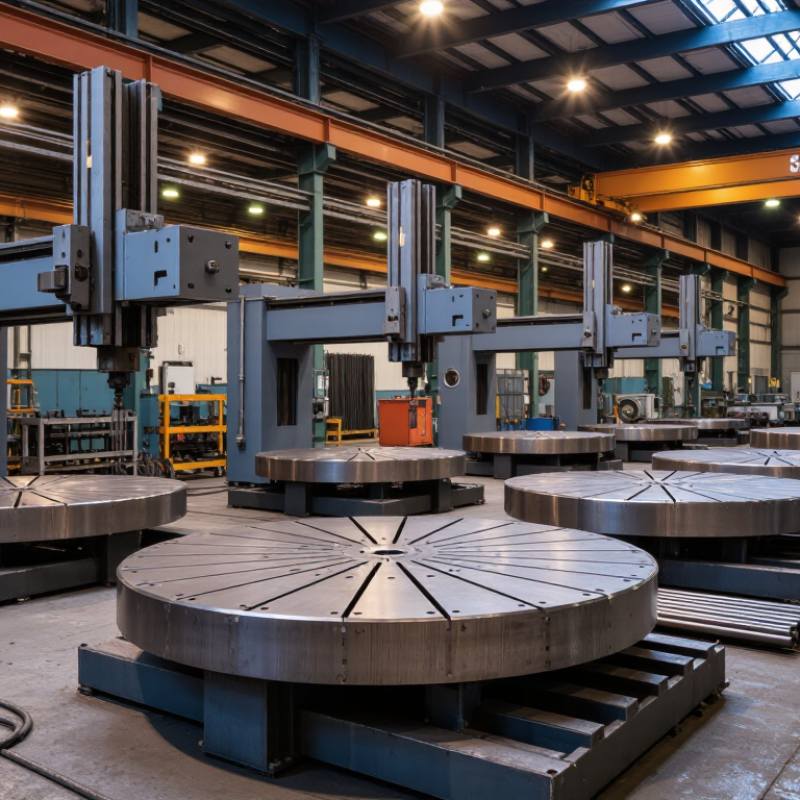
A welding positioner is a machine that holds and turns a workpiece so the joint can be placed at a workable angle. It does not weld; it moves the part while the operator or welding robot makes the weld. A basic unit uses a clamping plate, motor, and control pendant or foot pedal. The operator secures the part, then adjusts its rotation and, on some models, its tilt. That puts the seam within reach. Some units have one axis; others combine rotation and tilt. A positioner is not a cure-all.
In practice, setup matters. An off-center load can make rotation uneven, so operators need to check the fixture, workpiece weight, and center of gravity against the machine’s rated capacity. The International Federation of Robotics’ World Robotics 2024 report recorded 541,302 industrial robots installed worldwide in 2023. That figure is not positioner sales data, but it shows the scale of factory automation where positioners may help present parts consistently to welding systems. For a manual station, the useful test is simpler: can the operator reach the joint without awkwardly leaning over a hot, heavy assembly? It sounds straightforward. Yet part geometry, clamping access, and cable clearance can complicate the choice. A positioner can improve access, but it cannot correct poor fit-up or an unsuitable welding procedure.
Key Features to Compare Before Buying a Welding Positioner
Before comparing welding positioners, list the heaviest assembly, its center of gravity, and the welds that are hardest to reach. Check rated load at the actual working angle, not only the headline capacity. A long, uneven fixture can create more stress than a compact part of equal weight. Small details matter.
Compare rotation speed, tilt range, and control options against the work cycle. Variable speed helps when an operator needs to pause beside a joint or avoid weld-pool spill. A foot pedal can free both hands for torch positioning, while a handheld control may suit larger fixtures. Check duty cycle, chuck or faceplate compatibility, and how quickly tooling can be changed. The American Welding Society’s workforce outlook has estimated that U.S. employers may need 360,000 welding professionals by 2027. That makes repeatable setups and reduced repositioning valuable, but a positioner cannot replace training or sound procedure.
Ask for the rated capacity at each tilt position, installation requirements, and service intervals in writing. Confirm that the base fits the floor space and that clamps hold the part without blocking the weld path. Watch a trial run with a representative workpiece. Listen for rough rotation and check whether controls feel precise. I would not choose by speed alone; that is easy to overvalue. A slower unit may be the better fit, though shop needs vary.
What Are the Top Welding Positioners to Buy?
Compare these key features before buying. The percentages are suggested evaluation weights—not measured market data—and should be adjusted to your workpiece, production volume, and duty cycle.
Start with rated payload capacity, including the fixture and workpiece. Then check whether the table size, rotation and tilt range, speed controls, stability, and safety features suit your setup.
Top Welding Positioners for Different Shop Needs
A shop’s best welding positioner depends on the work it handles most often, not the largest job it might see once a year. For small repair bays, a compact tabletop model can turn brackets and short pipe sections without taking over the floor. Check the rated load with the fixture and workpiece included. That total is easy to underestimate.
For frames, tanks, or longer assemblies, a floor-mounted positioner with a larger table and suitable chuck may offer steadier support. Variable rotation speed helps operators keep a comfortable torch angle as the weld progresses. Foot controls can free both hands, while a hand pendant may suit occasional jobs. Controls matter.
Production shops should compare duty cycle, repeatability, and how quickly parts can be clamped and removed. A positioner that saves seconds per cycle can help, but only if its capacity matches the real workload. For mixed jobs, adjustable fixtures and a tilting axis add flexibility; they also add cost and setup time. A compact unit may look sufficient on paper, yet feel cramped once clamps and cables are in place. Measure the working area before buying, and leave room for imperfect setups.
How to Choose the Right Welding Positioner for Your Work
What Are the Top Welding Positioners to Buy?
How to Choose the Right Welding Positioner for Your Work
A welding positioner is worth buying when its capacity, motion, and controls suit the parts you handle. Start with the heaviest workpiece, including fixtures and clamps. Check the table diameter, rotation range, tilt angle, and speed control. A unit that looks powerful on paper may feel awkward beside a crowded workbench. Small details matter.
For repetitive welds, smooth adjustable rotation can reduce awkward body positions and help maintain a consistent torch angle. For occasional repairs, a simpler unit may be easier to set up and maintain. Match the rated load to your actual setup, not just the bare part. Confirm the workpiece stays balanced through its full tilt range, and inspect the clamping options. Consider control placement, emergency stopping, and cable clearance. Compact models save floor space, but may limit larger fixtures. I would not assume one machine suits every job.
Tips: Bring a sample workpiece or fixture when comparing models. Test the controls and check whether the table reaches useful angles without awkward repositioning. Leave room for cables and access around the machine.