How to Estimate Tyre Pyrolysis Plant Cost in 2026?
Estimating Tyre Pyrolysis Plant Cost in 2026 takes more than comparing equipment prices. A quoted machine price may exclude installation, commissioning, freight, or essential site work. The final investment depends on processing capacity, batch or continuous design, automation, and the condition of the proposed facility. Small details matter.
A practical estimate separates major equipment from supporting systems. These may include tyre feeding and cutting equipment, reactors, condensers, gas handling, emissions controls, storage, electrical work, and fire-safety provisions. Local labor, utilities, transport distance, and construction requirements can shift the total substantially. Prices also change with supplier availability and currency movements, so 2026 figures should be treated as planning estimates, not guaranteed offers.
Ask suppliers to state what their prices include. Compare technical specifications, capacity assumptions, warranty terms, installation scope, and expected maintenance needs. Request itemized quotations, then check whether the proposed layout fits your site and operating plan. A low equipment quote can look attractive. It may not represent the installed cost.
This guide explains the main cost categories, common budget gaps, and questions to raise before requesting proposals. It cannot replace a site-specific engineering review. Even a careful estimate has uncertainty; acknowledging that is better than presenting one precise figure without evidence.
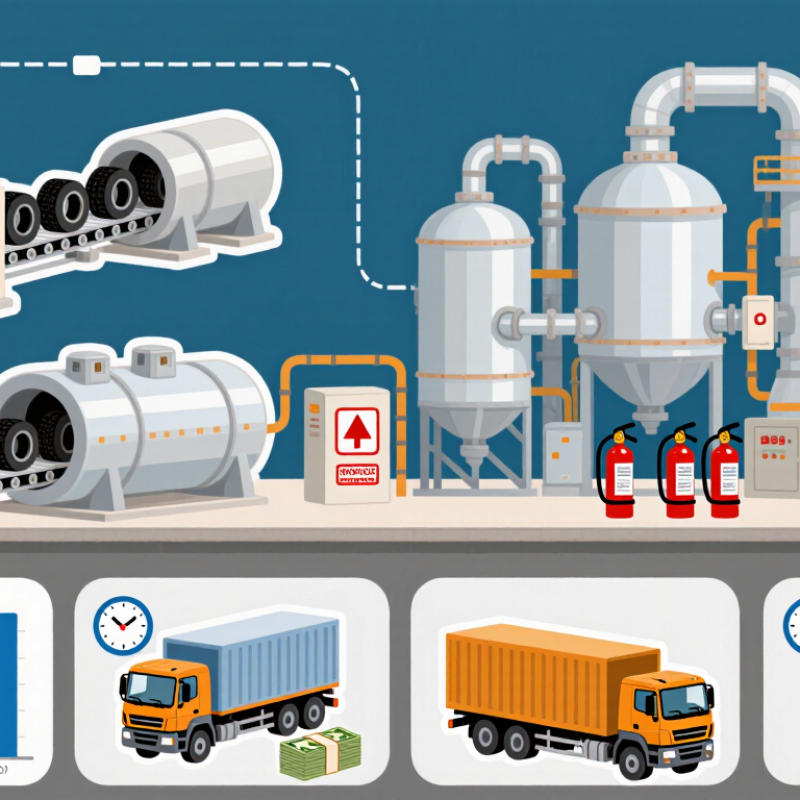
Define the Scope and Scale of the Tyre Pyrolysis Project
Before estimating tyre pyrolysis plant cost in 2026, define what the project must handle. A plant processing a few tonnes daily has different equipment and staffing needs from a continuous, higher-capacity operation. State the expected feedstock volume, operating hours, and whether tyres arrive whole or pre-cut. Capacity changes everything.
Decide which outputs the project intends to collect, store, and sell, such as pyrolysis oil, recovered carbon material, and steel. Each stream can require separate handling equipment, storage space, and quality checks. Specify whether the estimate includes tyre preparation, feeding systems, process equipment, cooling, and packaging. Missing one item can make a low quote look misleading.
Site conditions shape the budget, too. Check available land, power, water, road access, and space for safe storage. Ask whether the site needs foundations, utility connections, fire protection, or emissions-control equipment. These details should be reviewed with qualified engineers and local authorities before purchase. A first estimate will still be imperfect. That is normal. Record assumptions clearly, then compare supplier quotations on the same capacity, operating scope, and included equipment. A precise project brief is more useful than a single headline price.
Select Plant Capacity, Technology, and Product Configuration
Estimating tyre pyrolysis plant cost in 2026 starts with the amount of feedstock you can reliably supply. A line rated for five tonnes per day may suit a small operation, while larger capacity needs more space, storage, and material handling. Scale matters. But equipment cost does not rise in a perfectly straight line with capacity. One assumption deserves a second look: projected feedstock supply is not the same as steady daily supply.
Technology choice affects both the purchase price and operating needs. Batch systems may involve simpler operating cycles, while continuous systems can require more automation and integrated feeding equipment. Compare what each quote actually includes, such as tyre preparation, reactors, condensers, gas handling, emissions controls, installation, and utilities. The cheapest quote may omit important site work.
Product configuration also changes the budget. A plant designed to produce tyre-derived oil, recovered carbon material, steel, and process gas needs equipment to separate and handle each output. If buyers require more consistent product specifications, testing and additional processing may be needed. Request itemized quotations based on the same capacity, operating schedule, and product targets. Then compare installation and operating assumptions, not just the headline price. A neat spreadsheet can still hide a poor assumption.
How to Estimate Tyre Pyrolysis Plant Cost in 2026? - Select Plant Capacity, Technology, and Product Configuration
| Planning Scenario | Design Feed Capacity | Indicative Annual Feed | Typical Technology | Product Configuration | Indicative Installed Cost (2026 USD) | Typical Cost Drivers |
| Small-scale entry plant | 10 tonnes per day | About 3,300 tonnes per year | Batch or semi-batch reactor | Pyrolysis oil, recovered carbonaceous char, recovered steel, and non-condensable gas | US$1.0–2.5 million | Feed-size reduction, reactor loading method, emissions controls, site utilities, and the level of automation |
| Mid-scale commercial plant | 25 tonnes per day | About 8,250 tonnes per year | Multiple batch lines or semi-continuous system | Oil and char with steel recovery; optional char milling, screening, or oil treatment | US$2.5–5.5 million | Number of reactor lines, continuous feeding and discharge equipment, product handling, and environmental compliance requirements |
| Larger commercial plant | 50 tonnes per day | About 16,500 tonnes per year | Continuous or multi-line semi-continuous system | Higher-volume oil, char, and steel recovery; optional char upgrading and oil polishing | US$5.0–11.0 million | Redundancy, automation, shredding capacity, heat recovery, pollution-control equipment, and civil works |
Basis and limitations: These are broad, planning-level estimates in 2026 US dollars, not supplier quotations. Annual feed assumes approximately 330 operating days per year. Installed-cost ranges are intended to cover core process equipment, typical material handling, basic pollution-control systems, installation, and commissioning; land, financing, taxes, major off-site infrastructure, and unusual permitting or remediation costs are excluded. Actual costs depend on location, local standards, feed preparation, equipment specification, labor, and project scope.
Product note: Pyrolysis product yields and saleability vary with tyre composition, operating conditions, and separation or upgrading systems. Oil, char, steel, and gas proportions should be confirmed through representative feed testing and process guarantees; recovered char is not automatically equivalent to specification-grade carbon black.
Break Down Equipment, Installation, and Site Preparation Costs
Estimating a tyre pyrolysis plant’s cost in 2026 starts with the equipment scope, not a single headline price. A basic package may include tyre cutting, feeding, the reactor, condensers, gas handling, and product storage. Capacity and operating design change the price substantially. A larger reactor may need more robust feeding and cooling systems, while emissions-control equipment adds its own cost. Ask suppliers to list what is included, and what is not.
Installation is a separate budget line. It can cover freight unloading, crane hire, foundations, electrical work, process piping, insulation, and commissioning. For example, a reactor delivered in several sections may require extra lifting time and site welding. Labour costs also vary by location and project schedule. Small details matter. I would not treat a neat spreadsheet as certainty; installation assumptions are often where early estimates become inaccurate.
Site preparation can include soil testing, grading, drainage, access roads, utility connections, and space for safe material movement. A wet or uneven plot may require more groundwork than expected. Check whether the estimate includes water, power, ventilation, and storage-area preparation. Request separate figures for equipment, installation, and site work, with clear assumptions for capacity and operating hours. Keep a contingency for items discovered after a site survey. That figure may need revision.
Estimate Operating Costs, Permits, and Supporting Infrastructure
A 2026 tyre pyrolysis plant estimate should include more than equipment and installation. Operating costs depend on feedstock delivery, electricity, labor, maintenance, and residue handling. Ask suppliers for expected energy use per tonne and planned maintenance intervals. Then compare those figures with local utility rates and transport distances. Small differences add up.
Permits and supporting infrastructure can shift the budget substantially. Requirements vary by location, site design, emissions controls, and how products and residues are handled. Get written guidance from local permitting authorities and qualified environmental professionals before fixing a schedule. Include site preparation, fire protection, drainage, ventilation, utilities, storage areas, and monitoring equipment. A spreadsheet can still be wrong if it assumes the site is ready. That assumption deserves a second look.
Tips: Price utility connections and site works early. Keep a contingency for design changes, permit conditions, and commissioning delays. Ask for estimates with clear assumptions, not just one total figure.
Compare Supplier Quotes and Calculate the Total Investment
Estimating tyre pyrolysis plant cost in 2026 starts with comparing like-for-like supplier quotes. Check whether each offer includes the same processing capacity, feed preparation equipment, emissions controls, installation, commissioning, and operator training. A low equipment price may exclude shipping, foundations, electrical work, or spare parts. Ask suppliers to list exclusions and state the assumed feedstock condition. Details matter. A quote based on clean, uniformly cut tyres may not match your actual supply.
Tips: Put every quote into one comparison sheet. Record capacity, included equipment, delivery terms, warranty period, payment schedule, and optional costs. Ask for written clarification when a line says “included” without defining its scope. Small wording differences can shift the project budget.
To calculate total investment, add equipment and freight to site preparation, utilities, installation, permits, commissioning, initial spares, and working capital. Then include contingency for exchange-rate changes, delays, and design adjustments. Use local contractor estimates for civil and electrical work rather than relying only on a supplier’s general allowance. Keep taxes and financing costs visible as separate lines. The result is still an estimate, not a promise. A tidy spreadsheet can feel precise while site conditions remain uncertain; revisit the figures after a site inspection and a technical review of each offer.
How to Estimate Tyre Pyrolysis Plant Cost in 2026
Illustrative budget for a 10-ton-per-day plant; compare supplier quotes against the same equipment scope.
Estimated total: $650,000. Values are planning estimates in USD, not supplier quotations. Actual costs vary by location, plant configuration, emissions requirements, and project scope. Land, taxes, and working capital are excluded.