How to Use Organic Fertilizer for Better Plant Growth?
Organic Fertilizer can support healthy plant growth by supplying nutrients and adding organic matter to the soil. Unlike many quick-release synthetic products, organic options often release nutrients gradually as soil organisms break them down. The pace varies with moisture, temperature, soil type, and the product itself. A bag of composted manure, for example, may not behave like a pelletized plant food. Small details matter.
Before applying any product, check its label and consider what your soil and plants actually need. Too much fertilizer can damage roots or encourage leafy growth at the expense of flowers and fruit. A soil test can help clarify nutrient needs, though it may not answer every gardening question. It is tempting to treat organic products as automatically gentle, but they can still be misused.
For containers, beds, and lawns, application methods differ. Some products are mixed into the soil before planting; others are spread around established plants and watered in. Follow the label rather than guessing at the rate. Then watch for changes in leaf color, growth, and soil moisture over several weeks. Keep notes if you can. Results are not always dramatic, and that can be frustrating. This guide explains how to choose and use Organic Fertilizer with care, while leaving room for local conditions and a little trial and error.
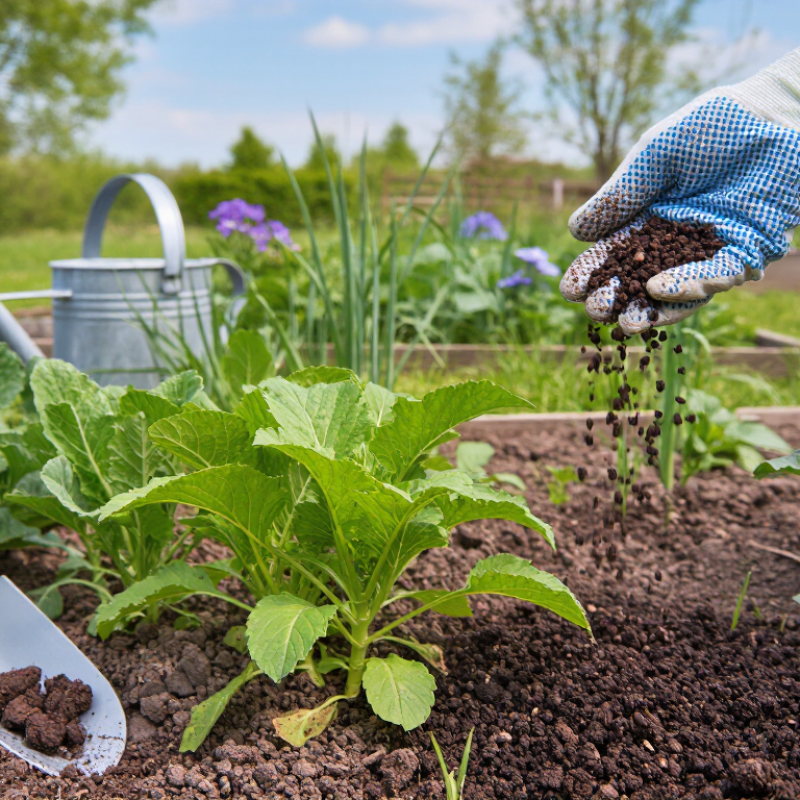
Understanding How Organic Fertilizers Support Plant Growth
Organic fertilizers feed plants and the soil community. Compost, well-rotted manure, and plant meals release nutrients as microbes break them down. This process can improve soil structure and water-holding capacity while supplying nitrogen, phosphorus, and potassium. That steadiness helps. Yet release rates depend on temperature, moisture, and material quality. On a cool spring morning, a compost-rich bed may still leave seedlings pale if available nitrogen is low. Organic does not mean instantly available. Rodale Institute’s 40-year Farming Systems Trial report found organic corn yields were 31% higher than conventional yields in drought years. The result reflects whole farming systems, not fertilizer alone. That distinction matters.
Match the material to the plant and soil. A soil test can reveal nutrient needs and help prevent excess phosphorus from repeated manure applications. Mix mature compost into the topsoil before planting, or apply it as a thin surface layer around established plants. Keep it away from stems. Watch leaf color and growth over several weeks, then adjust carefully. I sometimes expect visible change too quickly; organic nutrients may take time to become available. For containers, use a measured, well-aged amendment, since dense or unfinished material can restrict roots and create uneven growth.
Choosing the Right Organic Fertilizer for Your Plants
Choosing an organic fertilizer starts with the plant and the soil, not the bag. A leafy vegetable may benefit from nitrogen-rich composted manure, while flowering plants often need a more balanced nutrient supply. Check a soil test before adding fertilizer; excess phosphorus can build up even when plants look hungry. A brown leaf is not a diagnosis.
University of Minnesota Extension guidance notes that only a portion of compost nitrogen becomes available during the first growing season, with the amount depending on the material and its maturity. That slow release suits beds prepared weeks ahead, but it may not correct a fast deficiency. For quicker feeding, compare the guaranteed nutrient analysis on a labeled organic fertilizer and follow its rate. More is not better.
Match the material to the growing conditions, too. In a container, choose a fine, well-aged compost that drains freely; heavy manure compost can leave roots sitting in a damp mix. For a garden bed, spread compost evenly and work it lightly into the surface. I have sometimes trusted a neat N-P-K label too much. Watch new growth, and retest rather than adding another handful by habit.
Determining the Correct Amount and Timing
A sound fertilizer plan begins with a soil test, not a handful of pellets. Penn State Extension recommends testing established lawns every three years; vegetable beds also benefit from testing before nutrients are added. Follow the lab’s crop-specific recommendations and the fertilizer label. More is not better. Excess nutrients can wash away, while too little may leave pale leaves and slow growth.
Timing matters because organic nutrients often release gradually. Colorado State University Extension estimates that about 5–20% of compost nitrogen may become available during the first year. Work mature compost into the bed before planting, then apply a labeled organic fertilizer when the crop’s growth stage calls for it. Keep granules away from stems, and water them in. A cool spring can slow nutrient release; the calendar alone is not a reliable guide. I’d rather check the soil again than guess twice.
Tips: Measure the bed before calculating a dose. Start at the label’s lower rate if soil results are uncertain. Watch new leaves over the next few weeks, but remember that yellowing can have causes other than low nitrogen. Soil tests help separate a real nutrient need from a guess.
Applying Organic Fertilizer to Soil and Plants
Applying organic fertilizer to soil works best when it matches the plant’s needs. Start with a soil test; compost and manure can supply different amounts of nitrogen, phosphorus, and potassium. Spread mature compost in a thin layer, then mix it into the top few inches of soil without disturbing roots. Around established plants, place granular fertilizer near the drip line, not against stems. Water gently to move nutrients into the root zone.
Organic nutrients release at different rates, depending on temperature, moisture, and material. Avoid piling fresh manure near edible crops, and keep fertilizer off leaves unless its directions specifically allow foliar use. USDA Natural Resources Conservation Service guidance notes that soil organic matter can hold up to 20 times its weight in water. Organic amendments can build this resource over time, though they do not replace careful watering or balanced nutrition. Less is safer.
Tips: Wear gloves and measure applications rather than guessing. Keep a small gap around each stem, then water the soil. Check plants after two weeks: pale new leaves may signal a problem, but yellowing can have several causes. I sometimes find that a generous handful feels reassuring; it can also be too much. Adjust the next application using plant growth and soil-test results.
Monitoring Plant Growth and Adjusting Fertilizer Use
Watch the plant, not just the calendar. Each week, note leaf color, new growth, and soil moisture. A phone photo beside a ruler can reveal changes that memory misses. Pale older leaves may suggest low nitrogen, but poor drainage or damaged roots can look similar. Check the soil before adding more fertilizer.
Organic fertilizers release nutrients at different rates, especially as soil temperature and moisture change. Follow the product’s directions, then wait through its stated release period before considering another application. Too much can push soft, leafy growth and may harm roots. Slow down. If growth stays weak, inspect for pests and compacted soil, and consider a soil test rather than guessing.
Keep a simple record of application dates, amounts, rainfall, and plant response. Compare plants in similar light and containers; one struggling seedling is not enough evidence. I have sometimes treated yellow leaves as a fertilizer problem too quickly. That was a poor assumption. Adjust one factor at a time, such as watering or feeding, and observe for a couple of weeks. If leaf tips brown after feeding, pause further applications and check that the fertilizer was measured and watered in as directed.
Monitoring Plant Growth and Adjusting Organic Fertilizer Use
How to use this chart: The illustrative sample measurements show average plant height over six weeks. Track the same plants regularly, and use growth trends alongside soil-test results and fertilizer-label directions before adjusting application rates. Plant responses vary with crop, soil, weather, and fertilizer type.