top of page

What Is a Waste Water RO System and How Does It Work?

A Waste Water Ro System turns contaminated water into a reusable resource through pressure-driven membrane separation. It pushes pretreated wastewater across semi-permeable membranes. Water molecules pass through. Salts, metals, organic residues, and many microorganisms remain concentrated on the reject side. The purified stream, called permeate, may support industrial reuse, process water, or carefully regulated discharge.

The system depends on more than membranes alone. Screens remove larger particles. Cartridge filters protect sensitive equipment. Chemical conditioning can reduce scaling and biofouling. High-pressure pumps then maintain the force required for reverse osmosis. Sensors track conductivity, pressure, flow, and recovery rate. These details matter. A cloudy feed can quickly damage performance. Poor cleaning can increase energy use and shorten membrane life.

Professor Menachem Elimelech, a leading water-treatment researcher, has stated, “There is no silver bullet to solve the water crisis.” His observation suits reverse osmosis well. A Waste Water Ro System is powerful, but it is not magic. Its results depend on feed quality, pretreatment, membrane selection, and disciplined operation. The concentrated reject stream also requires responsible management. Ignoring it creates another problem.

Real facilities often reveal an uncomfortable truth. Design calculations may look perfect, yet field conditions change daily. Temperature shifts. Chemicals fluctuate. Operators make imperfect decisions. Reliable performance therefore requires testing, maintenance, and honest monitoring. This guide explains how the system works, where it performs well, and why thoughtful management remains essential.

What Is a Waste Water RO System and How Does It Work?

What Is a Wastewater RO System?

A wastewater RO system is an advanced treatment unit that purifies treated wastewater through reverse osmosis. It uses pressure to push water through a semi-permeable membrane. Dissolved salts, metals, nutrients, and many trace contaminants remain in the concentrated reject stream. Cleaner water, called permeate, passes through the membrane.

The U.S. EPA’s Guidelines for Water Reuse reports that reverse osmosis can remove roughly 90–99% of dissolved salts, depending on feedwater quality and operating conditions. However, RO is not a standalone solution. Screens, biological treatment, cartridge filters, and disinfection usually protect the membrane and improve reliability.

The UN World Water Development Report 2024 states that agriculture accounts for about 70% of global freshwater withdrawals.

This pressure makes wastewater reuse increasingly practical, although energy demand and concentrate management still deserve attention. No membrane performs perfectly.

Tips:

Check turbidity, conductivity, and fouling indicators before selecting an RO unit. Keep pretreatment stable. A sudden pressure increase may signal scaling or biological growth. Review the recovery rate, too. Higher recovery saves water, but it can increase salt concentration and cleaning frequency.

The U.S. EPA’s Water Reuse Action Plan identifies membrane processes as important barriers in advanced water reuse, but actual performance depends on monitoring, maintenance, and site-specific testing. A laboratory pilot may reveal problems that a design spreadsheet misses.

Key Components of a Wastewater RO System

A wastewater RO system uses pressure to separate dissolved salts, metals, and many organic compounds from treated wastewater. Its key components must work together, because the membrane is rarely the first line of defense. UN-Water reports that more than 80% of global wastewater is discharged without adequate treatment, increasing pressure on reliable reuse systems. The process usually begins with screening and equalization tanks. Cartridge filters then capture fine particles. Chemical dosing may control scaling and biological growth.

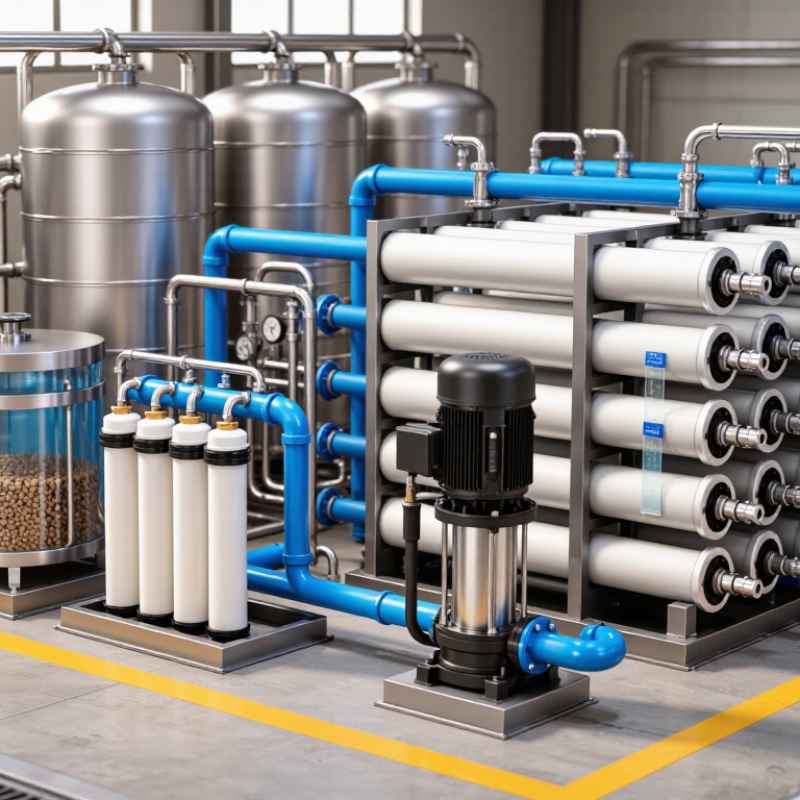
The high-pressure pump pushes conditioned water through pressure vessels containing semi-permeable membranes. Water molecules pass through as permeate, while concentrated contaminants leave as reject water. Flow meters, pressure gauges, and conductivity sensors monitor performance. A conductivity rise can signal membrane damage or poor pretreatment. Typical RO membranes remove about 95% to 99% of dissolved salts under suitable operating conditions, according to technical guidance from the Water Environment Federation.

Cleaning-in-place equipment restores flow when fouling develops. It is not a minor accessory. Industrial systems often include automated valves, chemical tanks, and data logging for safer operation. Recovery rates vary widely with wastewater quality, temperature, and scaling risk. Designers sometimes promise impressive recovery numbers. Real wastewater is less obedient. The UNESCO World Water Development Report 2024 emphasizes growing competition for freshwater, while practical experience shows that stable pretreatment often matters more than simply increasing pump pressure.

How Wastewater Moves Through the RO Process

What Is a Waste Water RO System and How Does It Work?

How Wastewater Moves Through the RO Process

A wastewater reverse osmosis system treats water by pushing it through a semipermeable membrane. The process begins with screening, where large solids, fibers, and debris are removed. Equalization tanks can steady changing flow and contaminant levels. This matters. Unstable feed water can overload later equipment.

Water then passes through cartridge filters that capture smaller particles. A high-pressure pump moves the filtered stream toward the RO membrane. Pressure forces water molecules through the membrane surface. Dissolved salts, metals, microorganisms, and many organic compounds remain in the concentrated stream. Cleaner permeate collects on the opposite side. The rejected stream leaves separately.

The flow is closely monitored. Operators check pressure, conductivity, temperature, and permeate volume during operation. A sudden pressure increase may indicate fouling or blocked filters. Rising conductivity can suggest membrane damage or poor sealing. Real systems rarely behave perfectly. Wastewater changes by season, production schedule, and cleaning practice. A system designed from laboratory data alone may perform differently onsite. Membranes also need periodic cleaning, although excessive cleaning can shorten their service life. Recovery settings require care because higher water recovery may increase scaling risk. I have found that small changes in pretreatment often affect membrane performance more than expected.

How Reverse Osmosis Removes Contaminants

A wastewater reverse osmosis (RO) system uses pressure to separate dissolved contaminants from treated water. Feed water passes through pretreatment, often using sediment filters and scale control. A high-pressure pump pushes this water across a semipermeable membrane. The membrane contains extremely small pathways. Water molecules pass through more easily than many dissolved salts, metals, nitrate, and organic compounds. This purified stream is called permeate.

Contaminants do not disappear. They collect in concentrated reject water, which requires controlled handling. RO efficiency depends on feed quality, pressure, temperature, and membrane condition. A damaged or clogged prefilter can increase fouling quickly. Operators should monitor conductivity, flow rate, pressure, and pH. Rising permeate conductivity often signals scaling, membrane damage, or poor pretreatment.

RO can reduce many microorganisms, but it should not replace appropriate disinfection. Some gases and very small neutral compounds may also pass through. It is not magic. In practical installations, a system may perform well on paper yet waste more water than expected. Regular maintenance and independent laboratory testing help confirm actual contaminant removal. The safest design matches the membrane, pretreatment, and testing plan to the specific wastewater.

What Is a Wastewater RO System and How Does It Work?

Reverse osmosis uses pressure to force water through a semipermeable membrane. Water molecules pass through, while many dissolved salts, metals, microorganisms, and other contaminants are retained in the reject stream.

Typical contaminant rejection ranges for properly operated RO membranes. Actual performance depends on membrane type, feed-water chemistry, pressure, temperature, fouling, and pretreatment. Chlorine is normally removed before the RO membrane because it can damage many membrane materials.

Wastewater RO System Applications and Maintenance

A wastewater RO system uses pressure to push treated water through a semi-permeable membrane. The membrane blocks many dissolved salts, metals, organic compounds, and microorganisms. Clean water passes through, while concentrated wastewater leaves through a separate stream. In practice, the system needs pretreatment. Screens, cartridge filters, and carbon filtration can reduce debris and protect the membrane. Without this step, performance may fall quickly.

Wastewater RO systems support industrial reuse, laboratory processes, food production, and cooling-water recovery. They can also help reduce freshwater demand in facilities with consistent wastewater quality. Each application needs testing before equipment selection. pH, conductivity, temperature, hardness, and suspended solids affect operating results. A maintenance log should record pressure, flow rate, conductivity, and cleaning dates. Small changes matter.

Inspect filters regularly and replace them when pressure increases or flow drops. Clean the membrane when normalized performance declines, not only when the water looks cloudy. That approach is often missed. Follow the membrane manufacturer’s chemical limits and local wastewater requirements. Never discharge concentrated streams without proper evaluation. Operators should also check pumps, valves, seals, and storage tanks for leaks. Even a well-designed system can underperform when sensors drift or records are incomplete. A monthly review may reveal problems earlier, though actual service intervals depend on water quality and daily operating hours.

What Is a Waste Water RO System and How Does It Work? - Wastewater RO System Applications and Maintenance

Data Dimension Typical Data or Range What It Means Operational or Maintenance Consideration
System definition Membrane-based wastewater treatment process A wastewater reverse osmosis system uses pressure to force water through a semipermeable membrane while retaining many dissolved salts, metals, organic compounds, microorganisms, and suspended contaminants. Pretreatment is essential because RO membranes are sensitive to suspended solids, scaling compounds, oil, and oxidizing chemicals.
Main process streams Feed water, permeate, and concentrate Feed water enters the membrane system. Permeate is the treated water that passes through the membrane. Concentrate, also called reject or brine, contains a higher concentration of retained contaminants. Both permeate quality and concentrate disposal must be managed to keep the system compliant and reliable.
Typical treatment sequence Screening → clarification or filtration → cartridge filtration → chemical conditioning → RO → post-treatment The sequence removes larger particles and protects the RO membrane before high-pressure separation. The exact configuration depends on wastewater composition, required water quality, temperature, and discharge requirements.
Operating pressure Approximately 10–30 bar for many brackish or industrial wastewater applications Pressure supplies the driving force needed to overcome osmotic pressure and move water through the membrane. The required pressure varies with salinity, temperature, recovery, membrane type, and fouling level. Excessive pressure can increase energy use and membrane stress.
Water recovery Commonly about 50–85% per pass, depending on feed quality Recovery is the percentage of feed water converted into permeate: Recovery = permeate flow ÷ feed flow × 100%. Higher recovery reduces liquid waste but increases the risk of scaling and concentration polarization.
Salt and dissolved solids rejection Often approximately 95–99% for many dissolved salts under suitable conditions Rejection indicates how effectively the membrane retains a dissolved constituent: Rejection = (feed concentration − permeate concentration) ÷ feed concentration × 100%. Actual rejection differs by contaminant, membrane condition, pH, temperature, pressure, and operating age.
Feed turbidity Preferably below 1 NTU after pretreatment Turbidity reflects light-scattering particles that can contribute to membrane fouling. Monitor the pretreatment outlet and investigate sudden increases before they reach the RO vessels.
Silt Density Index An SDI15 value below 3 is generally desirable; values below 5 are commonly used as an upper design limit SDI estimates the fouling potential of fine suspended particles in the feed water. High SDI may require better clarification, media filtration, ultrafiltration, or improved cartridge filtration.
Cartridge filter rating Commonly 1–5 micrometres nominal or absolute, depending on design Cartridge filters protect high-pressure pumps and membrane elements from larger particles. Replace filters when the differential pressure reaches the supplier’s limit or when flow and pressure indicate blockage.
pH operating window Often approximately pH 5–9 during operation; membrane-specific limits apply pH affects membrane performance, scaling potential, chemical compatibility, and contaminant rejection. Maintain the pH within the membrane manufacturer’s approved range and verify chemical dosing with regular testing.
Temperature effect Permeate flow generally increases as water temperature rises Water viscosity decreases at higher temperatures, allowing more water to pass through the membrane. Salt passage may also change. Compare performance using temperature-corrected data rather than raw flow alone.
Common scaling compounds Calcium carbonate, calcium sulfate, barium sulfate, silica, and metal hydroxides Scaling occurs when dissolved minerals exceed their solubility and precipitate on membrane surfaces. Use pretreatment, pH adjustment, antiscalant where appropriate, controlled recovery, and periodic cleaning.
Common fouling sources Suspended solids, microorganisms, oils, natural organic matter, iron, manganese, and colloids Fouling forms a layer on the membrane surface and reduces water production or increases pressure demand. Use source control, effective pretreatment, suitable biocide practices, and cleaning based on normalized performance trends.
Chlorine control Free chlorine is typically removed before polyamide RO membranes Oxidants can chemically damage many thin-film composite membranes and reduce salt rejection. Use dechlorination or another approved protection method, and verify residual oxidant at the RO inlet.
Key performance indicators Normalized permeate flow, normalized salt passage, feed pressure, concentrate pressure, differential pressure, conductivity, and recovery These measurements reveal fouling, scaling, membrane damage, instrumentation problems, and hydraulic restrictions. Record data consistently and compare it with baseline values corrected for temperature and operating conditions.
Cleaning trigger Often considered when normalized permeate flow decreases by about 10–15%, salt passage rises by about 5–10%, or differential pressure increases significantly A performance decline indicates that contaminants may be accumulating on or inside the membrane elements. Use site-specific limits and diagnostic testing; cleaning too late can make fouling more difficult to remove.
Cleaning frequency Highly variable; commonly several times per year in challenging wastewater service Frequency depends on feed quality, pretreatment, recovery, operating hours, and contaminant loading. Performance-based cleaning is generally more effective than relying only on a fixed calendar interval.
Cleaning chemistry Acid cleaners for many mineral scales; alkaline cleaners for many organic and biological deposits Different deposits require different cleaning conditions, concentrations, contact times, and temperatures. Use only membrane-compatible chemicals, follow safety procedures, and flush thoroughly after cleaning.
Routine inspection interval Critical readings: each operating shift or daily; laboratory and mechanical checks: weekly to monthly Frequent monitoring helps identify changes before they cause membrane damage or unplanned shutdowns. The final schedule should reflect system size, automation level, wastewater variability, and regulatory requirements.
Permeate quality monitoring Conductivity or total dissolved solids, pH, turbidity, and application-specific contaminants Permeate quality confirms whether the treated water is suitable for reuse, process water, or discharge. A sudden conductivity increase may indicate membrane damage, sealing problems, incorrect flow conditions, or instrument error.
Industrial reuse applications Cooling tower makeup, boiler feed pretreatment, rinsing, washing, process water, and wastewater volume reduction RO can produce a lower-dissolved-solids water stream suitable for many non-potable industrial uses. Additional treatment may be needed for high-purity applications, microbial control, or specific trace contaminants.
Municipal and commercial applications Tertiary water reuse, high-strength wastewater treatment, landfill leachate treatment, and desalting of reclaimed water RO is used when biological treatment and conventional filtration do not provide sufficient dissolved-contaminant removal. Feed equalization, advanced pretreatment, concentrate management, and online monitoring are often required.
Concentrate management Discharge to an approved sewer or outfall, further concentration, evaporation, beneficial recovery, or permitted disposal RO does not destroy dissolved contaminants; it transfers much of the contaminant load into a smaller concentrate stream. The disposal method must meet local environmental, sewer, and water-quality requirements.
Main advantages High dissolved-contaminant removal, modular design, and water reuse potential RO can reduce total dissolved solids and many ionic contaminants without phase-change heating. Benefits must be evaluated against energy consumption, pretreatment needs, membrane replacement, and concentrate handling.
Main limitations Fouling, scaling, pressure demand, concentrate production, and sensitivity to feed variability RO is a separation process rather than a complete destruction or stabilization process for all wastewater contaminants. A properly designed pretreatment and monitoring program is necessary for stable long-term operation.

Note: Operating ranges are general engineering reference values. Actual limits should be established from wastewater analysis, membrane specifications, equipment design, applicable permits, and site operating data.

bottom of page