What Are Lead Glasses Used For?
Lead Glasses are designed to reduce occupational exposure to scattered X-rays reaching the eyes, especially during fluoroscopy and other image-guided procedures. They do not replace distance, good positioning, ceiling-suspended shields, or personal dosimetry. Think of them as one layer of protection—not a force field. Fit matters: gaps at the sides or above the frame can let scatter reach the eye.
The International Commission on Radiological Protection’s Publication 118 recommends an occupational lens-of-the-eye dose limit of 20 mSv per year, averaged over five years, with no single year above 50 mSv. That recommendation makes eye protection a practical concern, not a cosmetic choice. Radiation biologist John W. Hopewell has studied radiation-related lens injury; a careful paraphrase of the lesson from this field is simple: protect the lens consistently, rather than assuming exposure is harmless. This is a paraphrase, not a verified verbatim quotation.
In everyday use, lead glasses may be worn by interventional clinicians, radiographers, and other staff who work near scattered radiation. Their protective value depends on lens shielding, frame coverage, fit, and the room’s shielding practices. Performance can vary. Check the manufacturer’s stated lead equivalence, keep the lenses in good condition, and follow local radiation-safety procedures. A pair left on a shelf protects no one. And even well-fitted glasses cannot prevent every exposure. The most reliable approach combines eyewear with sound technique and routine dose monitoring.
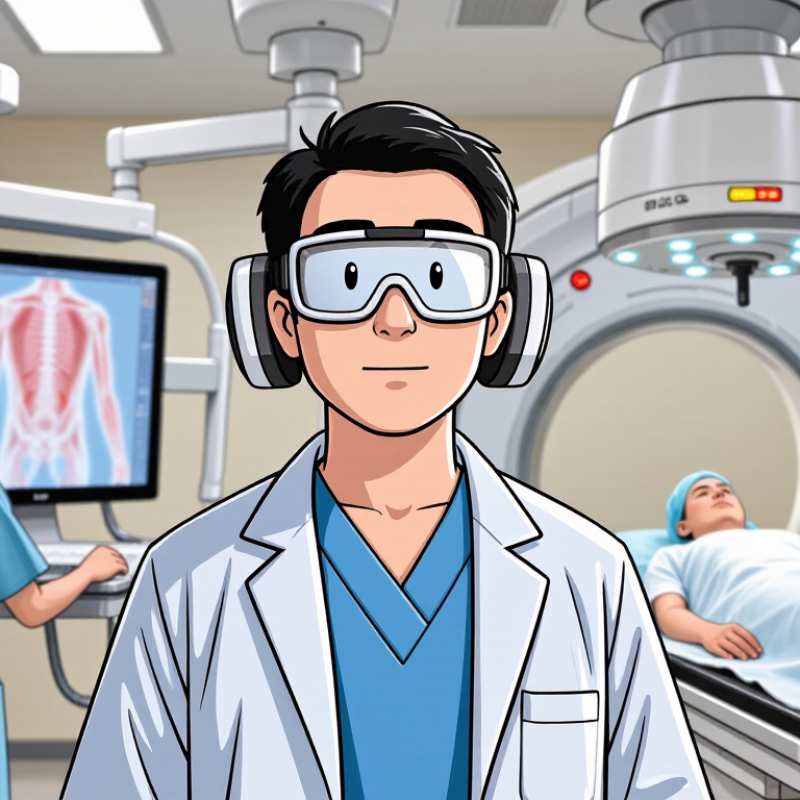
Primary Uses of Lead Glasses in Radiation Protection
Lead glasses are used mainly where staff work close to X-ray equipment, especially during fluoroscopy-guided procedures in cardiac catheterization labs, operating rooms, and pain clinics. They reduce exposure to scattered radiation reaching the eyes; they do not replace ceiling shields, lead aprons, or safe positioning. The ICRP’s Publication 118 recommends an occupational lens-dose limit of 20 mSv per year, averaged over five years, with no single year exceeding 50 mSv. That limit makes eye protection a practical part of routine radiation-safety practice, not an optional extra.
The protection depends on more than the lead equivalence printed on a product. A close fit, side coverage, and correct positioning help block scatter approaching from different angles. Prescription lenses can also affect fit, so staff should check that frames sit securely without gaps. IAEA guidance on radiation protection in interventional procedures emphasizes layered protection and monitoring, since individual exposure varies with procedure, position, and workload. Lead glasses cannot eliminate dose. Fit is easy to overlook. In a busy room, fogging, discomfort, or a slipping frame may tempt someone to take them off; those everyday details deserve attention alongside formal dose records.
What Are Lead Glasses Used For? - Primary Uses of Lead Glasses in Radiation Protection | Setting or Task | Main Radiation Concern | How Lead Glasses Help | Practical Protection Considerations |
| Fluoroscopy-guided procedures | Scattered X-rays produced when the primary beam interacts with the patient. | Lead-equivalent lenses attenuate some radiation reaching the eyes. | Use with appropriate room shielding, protective clothing, distance, and correct equipment positioning. |
| Interventional radiology and cardiology | Repeated or prolonged exposure to scattered radiation during image-guided procedures. | Help reduce occupational eye-lens exposure for staff working near the patient. | Choose well-fitting eyewear with side protection; exposure reduction depends on fit, coverage, and work position. |
| Mobile C-arm procedures | Scatter from the patient and nearby surfaces while staff work close to the imaging field. | Provide an additional layer of protection for the eyes when staff cannot remain behind a fixed barrier. | Keep the image receptor and shielding positioned appropriately, and maximize distance when practical. |
| Radiation work near X-ray equipment | Occupational scatter during tasks performed in controlled or supervised areas. | Can lower eye exposure as part of a task-specific radiation-protection program. | Use only when indicated by a workplace risk assessment; eyewear does not replace structural barriers or safe work practices. |
| Procedures requiring a clear view of the work area | Eye exposure when a face shield or other bulky protection is impractical. | Combine radiation-attenuating lenses with a familiar glasses-style fit and unobstructed vision. | Check that the frame sits close to the face without interfering with other personal protective equipment. |
| Selection and routine use | Variation in protection due to lens design, frame coverage, fit, and radiation energy. | Provide specified lead-equivalent attenuation when the product is properly selected and worn. | Verify the stated lead equivalence at the relevant X-ray energy, inspect for damage, and follow local radiation-safety guidance. |
How Lead Glass Reduces Exposure to X-Rays and Gamma Rays
Lead glass is used in viewing windows where people need to see into an area that uses X-rays or gamma rays. It contains lead compounds, which help attenuate radiation as it passes through the pane. Lead’s high atomic number makes interactions with X-ray photons more likely, reducing the amount that travels through the glass. It does not eliminate radiation. That distinction matters.
The protection depends on the glass thickness and the radiation’s energy. A pane’s lead-equivalent rating describes its shielding performance under specified conditions, so the rating should match the equipment and room design. In an imaging suite, for example, staff may observe a patient through a shielded window while remaining behind the protective barrier. The frame and surrounding wall matter too; small gaps can weaken the overall shielding.
Gamma rays can be more penetrating than many diagnostic X-rays, so one type or thickness of lead glass is not suitable for every setting. A qualified radiation-protection professional can assess the needed shielding. Clear visibility is useful, but clarity alone says nothing about protection. That is easy to overlook. Even a well-rated pane needs correct installation and routine inspection, especially if the frame shifts or the glass becomes damaged.
Common Settings Where Lead Glasses Are Worn
What Are Lead Glasses Used For?
Common Settings Where Lead Glasses Are Worn
Lead glasses are commonly worn in fluoroscopy suites, where clinicians use continuous or pulsed X-rays to guide procedures. Interventional radiologists, cardiologists, nurses, and technologists may stand close to the patient, where scattered radiation can reach the eyes. The glasses help reduce that exposure. They do not block every type of radiation, and they are not a substitute for room shielding or safe positioning.
They may also be used in operating rooms during image-guided surgery, in some dental imaging workflows, and in veterinary clinics where staff stay near an animal during X-ray procedures. Use depends on the task, exposure pattern, and workplace guidance. Fit matters. Glasses that slip down the nose or leave wide gaps at the sides may offer less useful coverage. Side shields can help reduce exposure from oblique angles.
A practical detail is often missed: eyewear needs care. Scratches, loose hinges, and poor fit can make it uncomfortable, so staff may avoid wearing it consistently. Protective glasses should be checked and stored properly, with their protective rating verified by the facility. They reduce risk, not erase it; distance, barriers, and thoughtful positioning remain essential.
Types and Features of Lead Glasses
Lead glasses come in several designs, each suited to a different fit and field of view. Standard frames resemble everyday eyewear, while wraparound styles extend protection toward the sides. Some models add side shields. Fit-over glasses are made to sit over prescription eyewear, and prescription lead glasses combine vision correction with shielding. Coverage matters. A frame that slips down or leaves wide gaps may offer less practical protection than its specifications suggest.
A key feature is the lens’s stated lead equivalence, often listed in millimeters of lead. Available levels vary, and attenuation depends on factors such as X-ray energy and how the glasses are worn. Leaded lenses can be heavier than ordinary lenses, so nose-pad comfort, temple pressure, and balance deserve attention during a full shift. Clear vision matters too; distortion or reflections can make close tasks tiring. A pair can feel protective yet still leave gaps.
Check product documentation for lead equivalence and coverage, then follow your facility’s radiation-safety procedures. Lead glasses reduce exposure to the eyes; they do not replace distance, shielding, or other established controls. Inspect frames and lenses for damage, and store them in a protective case rather than tossing them into a drawer. Small scratches may seem harmless, but damaged eyewear should be assessed before continued use.
Factors That Affect Protection and Safe Use
Lead glasses help reduce radiation exposure to the eye lens during some X-ray procedures, especially when scattered radiation is present. Their protection depends on the lens’s stated lead equivalence and the X-ray energy. A higher rating does not tell the whole story. Fit matters too: gaps at the temples or low coverage can leave skin exposed. They reduce exposure, but do not eliminate it.
Protection also depends on where the wearer stands and how the equipment is used. Distance, shielding, and limiting time near the source remain important. Glasses should sit securely without slipping when the wearer looks down. Scratches, cracks, loose frames, or damaged side shields may affect performance. Some damage is hard to spot, so routine checks and professional inspection matter. Follow workplace guidance for selection, care, and replacement.
Tips: Check the rating and fit before use. Store glasses in a padded case, not loose in a drawer. If they feel uncomfortable, adjust them rather than leaving them off. Lead eyewear is only one layer of protection; it is easy to overestimate what a pair of glasses can do.
What Are Lead Glasses Used For? Factors That Affect Protection and Safe Use
Lead glasses help reduce occupational eye exposure to scattered X-rays. The chart shows how distance affects X-ray intensity under the idealized inverse-square law: relative intensity is calculated as 100 ÷ distance², with 1 metre set to 100. Actual exposure depends on the equipment, beam, shielding, and room geometry; this chart does not measure or represent the attenuation of lead glasses.
For safe use, choose eyewear with an appropriate lead-equivalence rating for the task and follow local radiation-safety guidance. A proper fit, adequate side coverage, and regular inspection also matter. Lead glasses complement—not replace—other protective measures.