top of page

Why Choose a Spinning Filter for Global Sourcing?

Choosing a Spinning Filter for global sourcing is not simply a price comparison. It is a decision about process stability, product quality, maintenance, and supplier accountability. In polymer processing, a filter may face contaminated feedstock, fluctuating melt pressure, and continuous production demands. A small design weakness can become visible through black specks, pressure spikes, or rejected yarn.

Manfred Hackl, former CEO of EREMA Group and a recognized plastics-recycling expert, has stated, “Recycling is not a trend; it is a necessity.” His observation also supports a wider sourcing lesson: filtration equipment must serve real production conditions, not only impressive catalog specifications. A reliable Spinning Filter should match the polymer type, throughput, filtration rating, operating temperature, and expected contamination level. It should also provide practical access to spare parts and technical support across regions.

Look beyond the purchase order.

Experienced buyers examine screen life, pressure control, cleaning procedures, and changeover time. They ask how the supplier verifies materials, tests each unit, and handles failures after installation. Documentation matters. So does communication when a production line stops at midnight.

Global sourcing can lower costs, but the cheapest filter may create higher operating expenses. Freight delays, unfamiliar service teams, or unsuitable components can weaken the original calculation. This is easy to underestimate.

A careful evaluation should include samples, technical drawings, test records, and transparent warranty terms. No supplier is perfect. Even strong specifications need validation under actual melt conditions. The better choice is usually the Spinning Filter that combines measurable performance with responsive support, realistic engineering, and dependable long-term cooperation.
Why Choose a Spinning Filter for Global Sourcing?

What Is a Spinning Filter and How Does It Work?

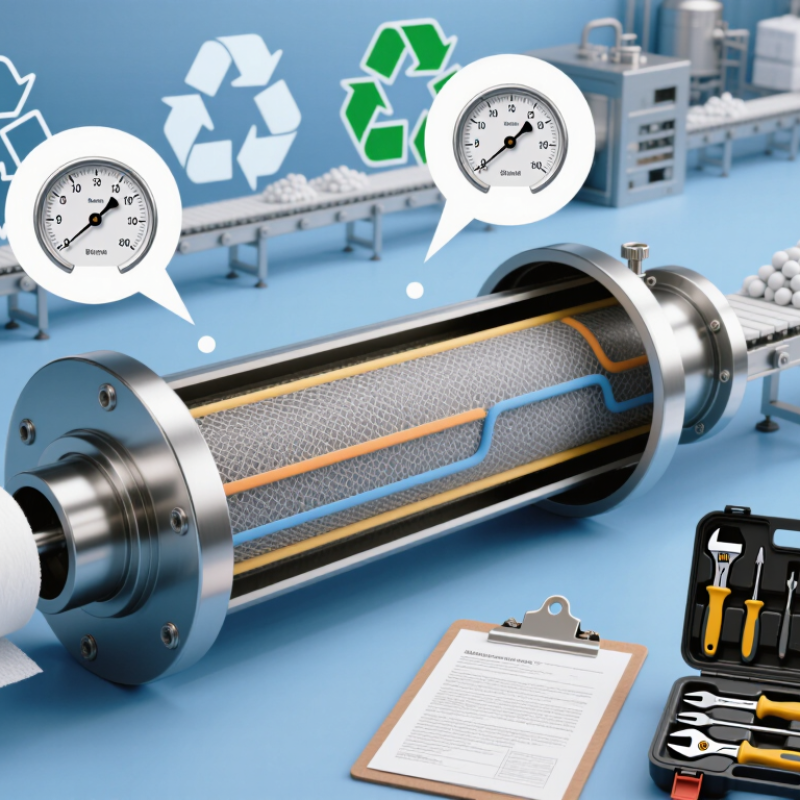
In polymer fiber production, a spinning filter sits between melt preparation and the spinneret. It removes gels, carbonized particles, metal fragments, and other solid contaminants. The unit usually contains layered filter media inside a heated housing. Molten polymer passes through the media as the filter assembly rotates or advances. Rotation spreads contamination across a larger surface. This can stabilize pressure during extended production.

The working principle is simple, but the details matter. As contaminants collect, differential pressure rises across the screen. A rotating mechanism moves a cleaner section into the flow path. Some designs scrape or backflush the loaded area. Others use replaceable elements and controlled indexing. Operators monitor melt temperature, inlet pressure, outlet pressure, and motor torque. A sudden pressure increase may indicate contamination, poor heating, or incorrect screen selection. It is not magic. The filter cannot repair degraded polymer. It only separates particles that the media can retain.

For global sourcing, buyers should request test data, compatibility records, and clear maintenance instructions. Screen opening, filtration area, seal design, and operating temperature require close review. A low purchase price may hide frequent element changes or unstable fiber quality. Ask for traceable inspection records. Also check whether local technicians can obtain suitable replacement parts. One practical lesson is clear: rushed installation can reduce performance. Pilot trials remain valuable, especially with recycled or variable feedstock. They reveal pressure behavior that a catalog cannot predict.

Which Industries Benefit Most from Spinning Filter Technology?

Spinning filters are especially valuable in industries that process contaminated or variable raw materials. Recycled plastics often contain paper fibers, aluminum fragments, and degraded polymer. The OECD’s Global Plastics Outlook reported 353 million tonnes of plastic waste in 2019, while only 9% was recycled. This gap increases demand for stable melt filtration during recycling and extrusion.

Synthetic fibers and nonwovens also benefit significantly. Textile Exchange reported global fiber production at about 124 million tonnes in 2023, with continued growth expected through 2030. During polymer spinning, a rotating filter can reduce pressure fluctuations and help protect spinneret openings. Cleaner melt means fewer broken filaments, uneven denier, and unexpected line stoppages. Operators often notice the difference through steadier pressure readings and fewer dark specks in finished yarn.

Packaging films, technical textiles, and agricultural materials are other strong applications. A spinning filter can support continuous production when feedstock quality changes between batches. However, the fit is not automatic. High-temperature polymers, abrasive fillers, and sticky contaminants can shorten screen life. That assumption deserves scrutiny. Buyers should compare filtration accuracy, screen-change time, pressure control, and cleaning requirements using real production samples. Industry reports provide useful market direction, but factory trials reveal the practical truth.

What Are the Key Advantages for Global Sourcing?

Why Choose a Spinning Filter for Global Sourcing?

Global sourcing needs stable performance across changing suppliers, climates, and water conditions. UNCTAD’s Review of Maritime Transport 2023 reports that over 80% of global merchandise trade by volume moves by sea. Delays can therefore affect production schedules quickly. A spinning filter supports continuity by removing particles while maintaining a steady flow. Its rotating action can reduce manual cleaning and limit unplanned stoppages.

The operational advantage is measurable. A well-sized system protects pumps, valves, and downstream equipment from suspended solids.

It also helps buyers standardize filtration across factories in different regions. This can simplify spare-parts planning and technician training. The WTO’s Global Trade Outlook and Statistics 2024 recorded a 1.2% decline in merchandise trade volume during 2023. That pressure makes uptime and maintenance control more important in sourcing decisions.

However, a spinning filter is not a magic shield. Performance depends on mesh selection, pressure, flow rate, and contaminant type. Fine fibers may require additional treatment. Initial specifications are often too optimistic.

Procurement teams should request site data, trial results, cleaning intervals, and verified energy figures before approving a supplier. ISO 9001-based quality controls can improve documentation, but they cannot replace field testing.

Reliability comes from evidence, not attractive equipment brochures.

How to Evaluate Spinning Filter Suppliers and Specifications?

Why Choose a Spinning Filter for Global Sourcing?

How to Evaluate Spinning Filter Suppliers and Specifications?

A spinning filter can maintain melt quality while reducing manual screen changes. For global sourcing, supplier evaluation matters as much as filter design. Begin with throughput, filtration rating, pressure drop, and operating temperature. A specification sheet should state screen area, rotation speed, seal materials, and maximum continuous pressure. “Fine filtration” is not precise enough.

According to Smithers’ 2024 report, The Future of Global Recycled Plastics to 2028, recycled plastics demand is expanding while contamination remains a major processing challenge. That trend increases the value of stable filtration during fiber and film production. Ask suppliers for test data using your actual polymer, contaminant type, and target flow rate. Laboratory results with clean resin may look impressive. They may not predict production behavior.

Inspect the supplier’s traceability system. Can they identify screen material, heat-treatment records, and inspection dates? ISO 9001 certification supports process control, but it does not prove filter performance. Request pressure-versus-throughput curves, replacement-part tolerances, and references from similar applications. A practical factory trial should record melt pressure, filter-change frequency, energy use, and product defects. I would not treat the lowest quote as the best value. That judgment can still be wrong. Delivery time, technical support, and spare-screen availability often decide the real sourcing cost. Check those details before signing.

Why Choose a Spinning Filter for Global Sourcing?

A spinning filter helps stabilize melt cleanliness, protect spinneret performance, and reduce production interruptions. The scorecard below provides a practical weighting model for comparing suppliers and technical specifications without relying on brand names.

Use the weighting as a starting point: filtration consistency and throughput should receive the highest priority, while pressure-drop control, screen life, changeover support, traceability, and lead-time reliability help verify long-term sourcing value. Confirm all specifications against polymer type, melt temperature, output rate, screen area, and operating pressure.

What Factors Affect Cost, Quality, and Delivery Decisions?

Why Choose a Spinning Filter for Global Sourcing?

What Factors Affect Cost, Quality, and Delivery Decisions?

A spinning filter can support global sourcing when suppliers need stable separation, controlled flow, and manageable maintenance. Its rotating screen handles continuous production more effectively than many static designs. However, the cheapest quotation is rarely the lowest total cost. Buyers should compare filter area, motor power, screen material, replacement parts, and cleaning requirements. Small differences matter.

Quality depends on more than stainless steel grades. Ask for test records, dimensional drawings, weld inspection details, and flow data from comparable applications. A supplier with clear documentation is easier to evaluate and audit. In factory checks, inspect screen tension, shaft alignment, seals, and access panels. These details reveal workmanship quickly. Not always perfectly.

Delivery decisions require practical planning. Confirm production capacity, approval stages, packaging methods, and spare-part availability before placing an order. A customized spinning filter may need extra engineering time, especially when inlet sizes or control systems differ. Request a realistic schedule with inspection dates, not only a final shipment promise. Delays often begin with unclear drawings.

Regional freight, import procedures, installation support, and technician travel can also change the final budget. A supplier may offer fast production but lack local service capability. That weakness can extend downtime after arrival. Procurement teams should score cost, quality, and delivery separately, then review the trade-offs with operations staff. One overlooked maintenance step can affect the whole decision.

Why Choose a Spinning Filter for Global Sourcing? - What Factors Affect Cost, Quality, and Delivery Decisions?

Indicative sourcing-planning data for industrial spinning filters. Actual values vary by filter area, housing material, filtration rating, order volume, testing requirements, and destination.

Decision Factor Typical Industry Range or Benchmark Effect on Cost Effect on Quality Delivery Impact Priority
Filtration Rating Approximately 5–100 microns for many industrial applications Finer filtration generally increases media cost, pressure-drop requirements, inspection needs, and cleaning complexity. Determines particle-removal performance and protects downstream equipment from contamination. Specialized media and additional testing may add approximately 1–3 weeks. High
Filter Area and Flow Capacity Commonly selected from several square meters to more than 100 m², depending on flow rate Larger filtration area increases material usage, motor size, frame dimensions, and packaging cost. Insufficient area can cause high pressure drop, short cleaning cycles, and premature wear. Large or custom assemblies may require longer fabrication and freight preparation. High
Filter Media Material Polyester, polypropylene, nylon, stainless steel mesh, and other application-specific media Metal mesh and chemically resistant materials usually cost more than standard synthetic media. Influences chemical compatibility, temperature resistance, abrasion resistance, and service life. Non-standard materials may have longer procurement lead times. High
Housing and Contact Materials Painted carbon steel, stainless steel, engineering plastics, or mixed-material construction Stainless steel and corrosion-resistant alloys can materially increase raw-material and welding costs. Affects corrosion resistance, hygiene suitability, mechanical strength, and operating-temperature limits. Material availability and fabrication capacity can change the schedule by 1–4 weeks. High
Rotational Speed and Drive System Often designed within approximately 1–20 revolutions per minute, depending on process duty Higher torque, variable-frequency drives, gearboxes, and controls increase equipment and integration costs. Correct speed supports stable cake formation, cleaning efficiency, and reduced media stress. Electrical customization and factory testing may extend lead time. Medium
Pressure Drop and Energy Demand System-specific; commonly evaluated against the process pump and allowable operating pressure Low-pressure-drop designs may require greater filter area or higher-quality media, increasing initial cost. Stable pressure helps maintain consistent flow and reduces the risk of process disruption. Performance validation may require additional factory or site testing. High
Automation and Instrumentation Manual control, semi-automatic cleaning, or fully automated PLC-based operation Sensors, control panels, valves, alarms, and communication interfaces increase purchase price and commissioning cost. Automation improves repeatability, monitoring, fault detection, and process protection. Control-panel engineering and software validation may add approximately 2–6 weeks. Medium
Quality Inspection and Testing Dimensional inspection, material certificates, leak testing, pressure testing, and functional testing as required Expanded inspection documentation and witnessed testing increase labor and third-party service costs. Verifies conformity, mechanical integrity, sealing performance, and operational reliability. Formal inspection plans can add several days to the production schedule. High
Order Quantity Single-unit projects through repeat orders of dozens or more units Higher volumes can reduce unit cost through material purchasing, standardized setup, and shared testing. Repeat production supports consistent dimensions and process control when specifications remain unchanged. Batch production can shorten average unit time but may require more production slots upfront. Medium
Customization Level Standard configuration, modified configuration, or fully engineered-to-order system Custom drawings, tooling, engineering hours, special connections, and validation increase total landed cost. Customization can improve process fit but introduces more design-interface risks. Engineering-to-order projects commonly require longer approval and manufacturing cycles. High
Packaging and Export Protection Domestic protective packing, seaworthy export packing, or reinforced moisture-resistant crating Export-grade packing adds timber, moisture barriers, shock protection, labeling, and handling costs. Proper packaging reduces corrosion, impact, and contamination risks during multimodal transport. Crating, fumigation documentation where applicable, and port handling affect dispatch timing. Medium
Transport Mode and Route Sea freight, air freight, rail, truck, or multimodal delivery Air freight is faster but substantially more expensive; sea freight generally offers lower cost for heavy equipment. Longer routes increase exposure to vibration, humidity, and handling events. Typical international transit may range from about 1–8 weeks, excluding customs delays. High
Spare Parts and Maintenance Plan Recommended critical spares commonly include seals, bearings, sensors, drive components, and filter media Adding initial spares increases purchase cost but can reduce emergency freight and downtime expenses. Planned replacement parts help preserve filtration performance and equipment availability. Including spares in the original shipment avoids a separate procurement cycle. Medium
Total Landed Cost Equipment price plus packing, freight, insurance, duties, taxes, installation, and commissioning Lowest purchase price does not always provide the lowest total cost after logistics and integration expenses. Supplier documentation, compatibility, and service support can affect lifetime operating results. Customs clearance, local installation, and acceptance testing should be included in the schedule. High

Planning note: Use the ranges as early-stage procurement benchmarks only. A final comparison should be based on the same process conditions, filtration target, throughput, materials, inspection scope, delivery terms, and after-sales requirements.

bottom of page