Why Choose Stainless Steel Round Tube?
Why Choose Stainless Steel Round Tube? The answer begins with performance, not appearance. In workshops and construction sites, Stainless Steel Round Tube offers a useful balance of strength, corrosion resistance, and clean design. Its circular profile distributes pressure more evenly than many angular shapes. This matters in handrails, frames, fluid lines, furniture, and protective barriers. A properly selected tube can withstand moisture, repeated handling, and daily exposure without demanding frequent repainting. It also supports precise cutting, bending, drilling, and welding when fabricators use suitable tools and procedures. That practical flexibility is one reason engineers continue to specify it.
Material grade still matters. Common 304 stainless steel suits many indoor and general outdoor applications. Grade 316 may perform better near saltwater or aggressive chemicals because of its molybdenum content. Details decide. Wall thickness, outside diameter, surface finish, weld quality, and support spacing all influence the final result. Industry specifications and supplier test documents should guide purchasing decisions, rather than appearance alone. A bright surface can look excellent while hiding poor dimensional control. That risk deserves attention.
The choice is not automatic. Stainless steel may cost more initially than carbon steel or aluminum. However, reduced coating requirements and longer service life can improve overall value. Experienced professionals still inspect the environment, load conditions, joining method, and maintenance plan before recommending a grade. I have seen projects focus heavily on polished finishes while overlooking drainage around connections. That is an avoidable mistake. Good design leaves water no place to linger. Careful selection makes Stainless Steel Round Tube a dependable, hygienic, and visually consistent solution, though every application deserves its own technical review.
What Is Stainless Steel Round Tube?
What Is Stainless Steel Round Tube?
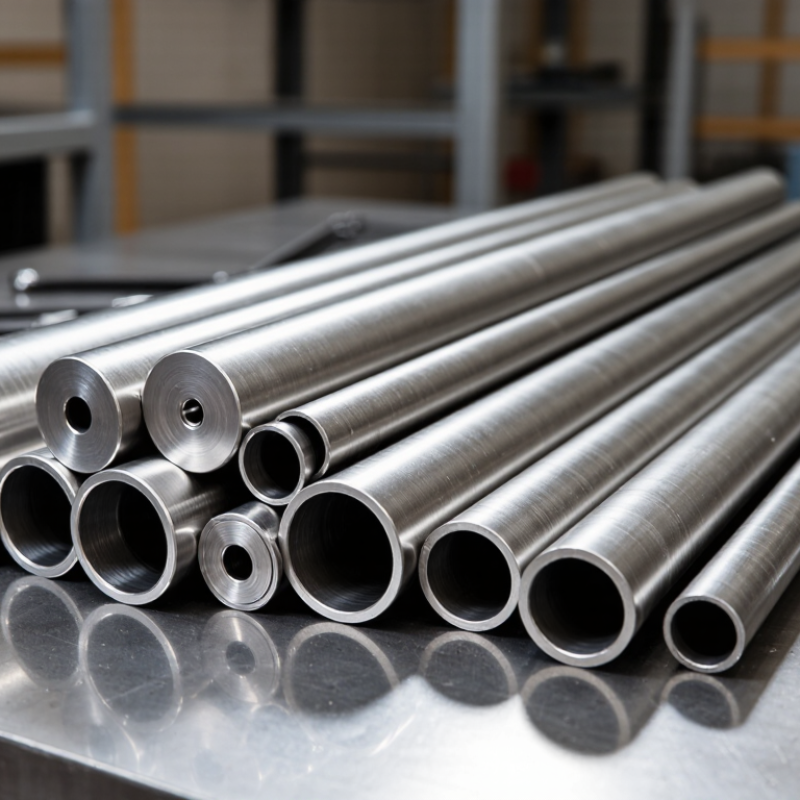
Stainless steel round tube is a hollow, cylindrical section made from corrosion-resistant steel. Its outside diameter is round, while its wall thickness determines strength, weight, and flow capacity. Manufacturers produce it as welded or seamless tube. Welded tube begins as flat strip, which is formed and joined along a longitudinal seam. Seamless tube is shaped without that welded joint and is often selected for demanding pressure applications.
In practical work, tube is measured by outside diameter and wall thickness. A 25 mm outside diameter tube with a 1.5 mm wall is not interchangeable with a pipe of the same nominal size. That difference affects fittings, supports, bending, and internal volume. Common stainless grades include 304 for general environments and 316 where chloride exposure is higher. However, grade choice alone does not guarantee long service life. Surface finish, fabrication quality, cleaning, and installation also matter.
I have seen polished tube lose its appearance after careless grinding. Small iron particles can leave brown marks on the surface. Proper tools and post-fabrication cleaning reduce this risk. Round tube is used in handrails, frames, heat exchangers, food equipment, and fluid systems. It looks simple. The details are not. Wall variation, weld quality, and unsupported spans deserve inspection before installation. Even experienced fabricators can underestimate condensation and coastal exposure. That is one reason a specification should state dimensions, grade, finish, testing, and service conditions clearly.
How Its Material Properties Improve Performance
Why Choose Stainless Steel Round Tube?
How Its Material Properties Improve Performance
Stainless steel round tube earns its place through measurable material performance. Chromium content of at least 10.5% forms a thin, self-repairing passive layer, according to ISO 15510. This layer helps resist moisture, oxygen, and many everyday contaminants. It is not magic, though. Chlorides, stagnant water, and poor cleaning can still cause pitting.
Type 304 stainless steel typically provides a minimum tensile strength of 515 MPa and yield strength of 205 MPa, based on ASTM A240 requirements. That strength supports frames, fluid lines, guards, and architectural assemblies without excessive wall thickness. Its smooth circular profile also reduces dirt traps and distributes pressure evenly. In workshop use, round tube is easier to wipe and visually inspect than many angular sections. Small details matter.
For salt exposure, Type 316 usually performs better because molybdenum improves resistance to chloride attack. The Nickel Institute identifies this advantage in its stainless steel corrosion guidance. Stainless steel also retains useful toughness across a broad temperature range, although exact performance depends on grade, weld quality, and surface finish. This is where specifications can become inconvenient. A polished surface may look superior, but a correctly selected grade matters more. The International Stainless Steel Forum reports that stainless steel is recovered extensively at end of life, supporting a durable, recyclable material cycle. That does not remove the need for responsible design.
Why Round Tube Geometry Supports Structural Efficiency
Why Choose Stainless Steel Round Tube?
Why Round Tube Geometry Supports Structural Efficiency
A round tube carries loads through a continuous curved wall. This geometry distributes stress around the entire section, rather than concentrating it at corners. It also provides similar bending resistance in every direction. That matters for columns, handrails, frames, and exposed supports facing changing loads.
The American Institute of Steel Construction identifies hollow structural sections as efficient for compression and torsion design. Its Design Guide 24 emphasizes that closed sections can improve stability and connection planning. Euro Inox structural guidance also recognizes circular sections for their balanced resistance and clean load paths. These advantages become practical on site. A round tube can reduce sharp edges, simplify cleaning, and fit smoothly into welded connections.
Stainless steel adds useful durability. The International Stainless Steel Forum reports that stainless steel contains at least 10.5% chromium, which supports its passive corrosion-resistant surface. Less repainting can mean fewer interruptions over a structure’s service life. Still, geometry is not magic. Thin walls may buckle, and poor drainage can create hidden corrosion risks near joints. Designers should check diameter-to-thickness ratios, local buckling, weld details, and actual exposure conditions. I have seen elegant tube layouts fail on paper because the connection design arrived too late. Structural efficiency includes the details.
Which Applications Benefit from Stainless Steel Round Tube?
Stainless steel round tube serves many applications where cleanliness, durability, and dependable appearance matter.
Its smooth surface is easy to wash, making it suitable for food-processing lines, commercial kitchens, beverage equipment, and pharmaceutical facilities. It also performs well in handrails, public furniture, architectural frames, and protective barriers. The circular shape distributes loads evenly and reduces sharp dirt-collecting corners.
Water treatment systems and outdoor structures can benefit from stainless round tube, especially in humid or corrosive environments. However, the correct grade matters. A tube used near saltwater may require stronger corrosion resistance than one installed indoors. Wall thickness also affects pressure capacity, impact resistance, and welding performance. In fabrication work, poor weld cleaning can cause surface staining, even when the material itself is appropriate. Stainless steel is durable, but it is not maintenance-free.
Tips: Confirm the grade, outside diameter, and wall thickness before ordering. Check the environment, including chemicals, salt exposure, heat, and cleaning agents. Use compatible fittings and proper welding procedures. For visible installations, inspect the surface after cutting and polishing. A small design mistake can create trapped moisture, and that detail is easy to overlook. Testing remains wise when the tube carries pressure or supports people.