top of page

7 Ceiling Hoist Buying Tips for Global Buyers

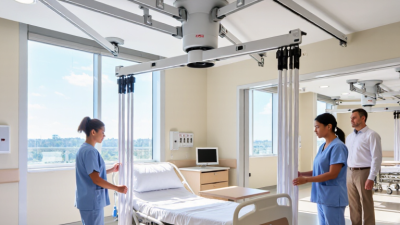
Choosing a Ceiling Hoist is not simply a matter of comparing lifting capacity and price. Global buyers must examine safety, room geometry, service support, training, and long-term operating costs. A quiet motor means little if the rail stops 20 centimeters short of the bed.

The World Health Organization’s Global Report on Assistive Technology identifies major access gaps worldwide. It also stresses suitable products, trained users, and reliable support systems. Market reports from Grand View Research and Fortune Business Insights show continued growth in patient-lifting equipment. However, their market definitions differ. Their figures should guide research, not replace it. This is where purchasing decisions can become imperfect.

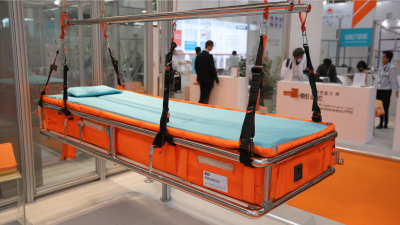
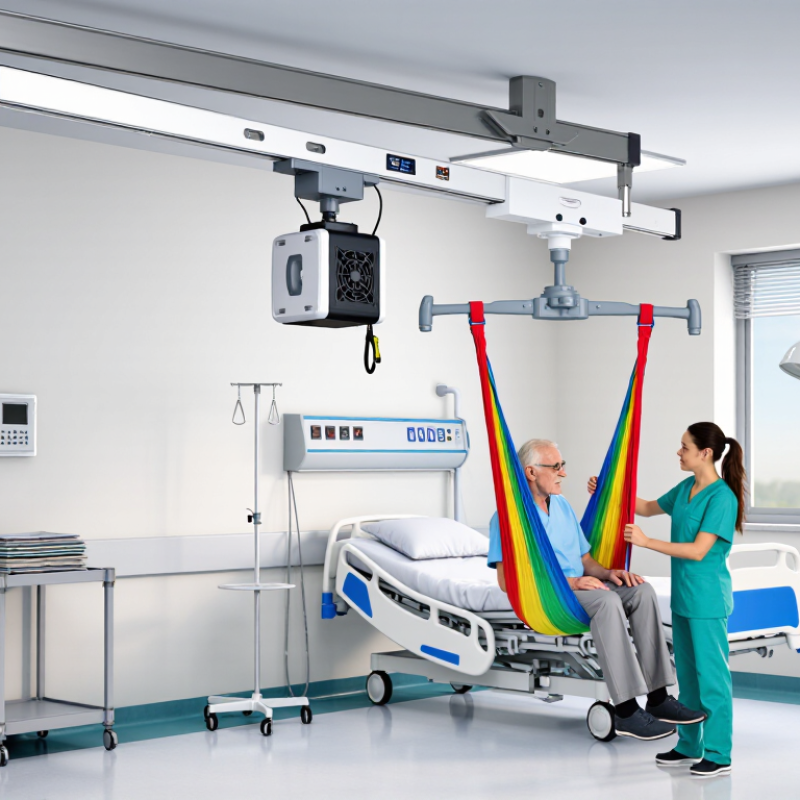
Safe patient handling deserves special attention. Audrey Nelson, PhD, RN, FAAN, a recognized safe-patient-handling researcher, has stated, “There is no such thing as a safe manual lift.” Her warning supports a practical principle: reduce manual transfers whenever equipment and care procedures allow. A Ceiling Hoist can help, but only when its sling, spreader bar, rail design, and emergency lowering function match real clinical conditions.

This guide presents seven buying tips for global purchasers. It considers working load limits, transfer paths, battery performance, installation requirements, maintenance access, documentation, and supplier credibility. Buyers should request test records, warranty terms, spare-parts plans, and local technician coverage. A low purchase price may become expensive after one failed battery or unavailable component.

The best choice is not always the strongest model. It is the system that caregivers can use correctly, repeatedly, and confidently. That standard sounds obvious. It is often missed.
7 Ceiling Hoist Buying Tips for Global Buyers

Define Patient, Load, and Transfer Needs Under ISO 10535:2021

7 Ceiling Hoist Buying Tips for Global Buyers

Define Patient, Load, and Transfer Needs Under ISO 10535:2021

A ceiling hoist should match the person, not only the room. Under ISO 10535:2021, evaluate lifting performance, safe working load, controls, and transfer functions. Tip 1: Record the patient’s weight, posture, mobility, and skin sensitivity. Tip 2: Check whether transfers involve beds, wheelchairs, toilets, or floor recovery. Tip 3: Confirm the safe working load, including sling weight and movement forces. A narrow safety margin is a poor decision.

Tip 4: Measure the complete route. Note ceiling height, rail length, door clearance, turning space, and charging points. Tip 5: Ask for test evidence related to ISO 10535:2021, including repeated loading and emergency lowering checks. A certificate alone may not explain real performance. Tip 6: Review sling compatibility, attachment points, cleaning instructions, and inspection access. Small details matter during a rushed transfer. They often do.

Global buyers should also assess installation quality and service capacity. Tip 7: Require clear manuals, staff training, maintenance intervals, spare-part plans, and local technical support. Electrical requirements may differ between countries, so verify voltage and protection systems before ordering. A site survey remains essential. Drawings can miss a beam, a doorway, or a caregiver’s working angle. My practical caution is simple: expected patient needs may change faster than equipment plans. Choose a system that allows reassessment, but do not assume every accessory suits every user.

7 Ceiling Hoist Buying Tips for Global Buyers - Define Patient, Load, and Transfer Needs Under ISO 10535:2021

A practical procurement table for evaluating ceiling-mounted patient hoists, room coverage, safe working load, transfer conditions, and documentation.

Tip Buying Decision Needs to Define Useful Planning Data ISO 10535:2021 Connection Buyer Verification Common Risk
1 Set the required patient capacity Identify the highest expected patient or resident mass, including foreseeable growth, clothing, medical accessories, and the sling or spreader-bar assembly. Illustrative calculation:
150 kg patient + 10 kg sling and attachments = 160 kg minimum working load before any required procurement margin. The selected safe working load must not be lower than the complete suspended load.
ISO 10535:2021 addresses requirements and test methods for hoists used to transfer persons with disabilities. Load-related testing should be assessed against the hoist’s declared safe working load and intended use. Request the rated safe working load, maximum user mass, sling compatibility limits, and load-test documentation. Confirm that the rating applies to the complete hoist configuration, not only the motor unit. Choosing capacity from average patient weight and overlooking the sling, spreader bar, positioning accessories, or future bariatric use.
2 Map every transfer route Define transfers between bed, chair, wheelchair, toilet, shower trolley, treatment area, and any other destination. Record whether transfers are straight, lateral, turning, or multi-stage. Measure room length and width, bed and chair positions, required lifting height, door clearances, obstruction locations, and the distance between transfer points. The standard is relevant to the safe functional use and testing of the hoist. A compliant hoist still requires a suitable installation layout that permits controlled movement and does not create collision or entrapment hazards. Prepare a scaled room drawing and verify the proposed rail path, lifting range, hand-control reach, and access to emergency lowering or emergency stop functions. Selecting a straight rail when the room requires turning, or leaving insufficient clearance for the patient, sling, bed, furniture, or caregiver.
3 Choose the rail configuration for coverage Decide whether the application needs a straight rail, traversing rail, room-covering system, turntable, or a combination of rail sections. Document the required coverage area, rail length, transfer points, ceiling height, structural fixing positions, and any need to move between rooms. ISO 10535:2021 evaluates the hoist as an assistive product; the ceiling support structure and building installation must also be designed, checked, and maintained according to applicable local construction and safety requirements. Obtain the rail layout, permissible loads at each fixing point, installation method, structural calculations where required, and commissioning records. Treating the rail as a cosmetic accessory and failing to verify the ceiling substrate, fixing method, deflection, or load transfer into the building.
4 Match lifting range and transfer height Define the lowest and highest required positions, including floor recovery, bed transfers, toileting, showering, and wheelchair seating. Record floor-to-ceiling height, bed height range, chair seat height, bathtub or shower access height, and the patient’s seated and reclined transfer positions. The hoist must be evaluated for its declared operating range and intended transfer function. The usable range is affected by rail height, hanger length, sling geometry, and patient posture. Request the minimum and maximum lifting heights under rated load. Conduct a practical trial with representative bed, chair, sling, and patient-position scenarios. Specifying only the maximum lift and discovering that the system cannot lower the patient safely to the floor or reach the required seating surface.
5 Specify sling and attachment compatibility Identify patient posture, support requirements, body shape, clinical condition, transfer frequency, and whether seated, reclined, amputee, toileting, or hygiene slings are needed. Confirm sling size range, attachment method, maximum sling load, spreader-bar dimensions, head and trunk support, leg-support configuration, and cleaning requirements. Safe hoist performance depends on the complete system. The hoist, hanger or spreader bar, sling, attachment points, and user instructions must be compatible and used within their declared limits. Request compatibility statements, sling instructions, inspection criteria, labeling, and training requirements. Never combine components solely because their connectors appear physically compatible. Using an unsuitable sling size, incorrect attachment points, incompatible loop or clip systems, or a sling that has exceeded its inspection or service life.
6 Evaluate controls, power, and emergency functions Define daily transfer volume, caregiver workflow, charging location, power-failure expectations, emergency lowering needs, and whether the patient or caregiver will operate the control. Record expected transfers per shift, charging cycle, battery replacement access, control-cable length, emergency-stop location, manual or powered emergency lowering, and audible or visual status indications. ISO 10535:2021 includes safety and performance considerations for hoists and their operation. Buyers should verify the manufacturer’s declared emergency functions and operating instructions for the selected configuration. Test the emergency stop, emergency lowering, battery indication, charger, hand control, and restart behavior during commissioning. Confirm that staff can reach and use the functions without unsafe repositioning. Assuming the hoist remains usable during a power failure without confirming battery condition, emergency lowering method, or caregiver training.
7 Build a verification and maintenance plan Define who will install, commission, inspect, clean, repair, and document the hoist and rail system across its service life and operating environment. Include local electrical requirements, ingress or cleaning conditions, inspection frequency, service access, replacement parts, staff training, incident reporting, and records of defects or repairs. ISO 10535:2021 provides a basis for relevant hoist requirements and test methods, but local legislation, workplace rules, electrical requirements, building regulations, and risk assessments may impose additional obligations. Require technical files, instructions for use, conformity documentation applicable to the destination market, commissioning results, maintenance instructions, inspection forms, and user training records. Treating ISO 10535:2021 as a substitute for local regulatory compliance, professional installation, routine inspection, risk assessment, and competent user training.

Important planning note: The 160 kg calculation is an illustrative procurement example, not a universal capacity recommendation. Safe working load, installation capacity, sling limits, patient assessment, and local legal requirements must be verified for the complete ceiling hoist system. ISO 10535:2021 should be read together with the applicable national regulations, installation requirements, risk assessment, and manufacturer instructions.

Compare Safe Working Loads, Lift Ranges, and Duty Cycles with EN 10535

When comparing ceiling hoists, start with the safe working load stated for the complete system. Check the hoist, spreader bar, sling, and attachment points. EN 10535 provides requirements and test methods for electrically powered hoists used to transfer people. It does not replace a site-specific risk assessment. A 160-kilogram user may need a higher-rated system when clothing, equipment, or movement adds load. Allowance matters.

Measure the lift range in the actual room. Record the lowest transfer position, highest bed position, rail height, and floor clearance. A generous range on paper may fail beside a deep mattress or wheelchair. Check whether the hoist can move smoothly at both limits. It sounds obvious. It is often missed.

Duty cycle deserves careful attention. Compare rated lifting frequency, operating time, rest periods, and emergency lowering performance. A busy care facility may perform dozens of transfers daily, while a private room may use the hoist less often. Ask for test evidence linked to EN 10535, including endurance and safety functions. I would also inspect charging access, control response, and sling compatibility during a practical trial. Specifications can look complete, yet staff may find the controls awkward. That feedback should change the purchase decision. Verify installation loads, rail geometry, maintenance access, and applicable national requirements before approval.

Verify Ceiling Structure, Rail Design, and Installation Loads Before Purchase

Before buying a ceiling hoist, verify the building first. Do not guess. Inspect beams, slabs, hangers, welds, and connection points with a qualified structural engineer. The supporting structure must carry the hoist, rail, trolley, rated load, impact forces, and repeated cycling. A 500-kilogram hoist may impose higher forces during starting, stopping, or uneven loading.

Rail design deserves equal attention. Confirm the rail span, curvature, travel limits, end stops, trolley wheel loads, and clearance from lighting or sprinklers. Review the supplier’s load calculations against the actual ceiling drawings. U.S. OSHA requirements call for clearly marked rated loads and suitable supporting construction under 29 CFR 1910.179. ASME B30.16 also provides inspection and operating guidance for overhead hoists. These references are useful, but they do not replace a site survey.

Installation loads are often underestimated. HSE recorded 138 worker fatal injuries in Great Britain during 2023/24, according to its annual workplace fatality report. That figure does not specifically measure hoist failures, but it shows why lifting plans need disciplined review. Ask for anchor calculations, fastener specifications, installation tolerances, and proof-test procedures. Require records showing who approved the structure and who installed the system. Small omissions matter. I would also recheck the load path after installation, because drawings can differ from the real ceiling.

Check Electrical Safety and Compliance with IEC 60601-1 and EU MDR 2017/745

For global buyers, a ceiling hoist should be checked as medical electrical equipment, not ordinary lifting hardware. The IEC 60601-1 assessment should cover input voltage, frequency, protective earth, insulation, leakage current, dielectric strength, and creepage distances. Ask for test records, not only a declaration. A loose earth connection can turn a quiet ward into a serious electrical risk.

EU MDR 2017/745 also requires a clear intended purpose, risk classification, technical documentation, clinical evaluation, and post-market surveillance. Confirm that the hoist’s claims match its actual design. Check the emergency stop, battery charging system, hand control, limit switches, and load indicators under realistic conditions. Test the unit with a patient-sized load, not an empty sling.

The World Health Organization’s Global Atlas of Medical Devices reports more than two million medical device types worldwide, grouped into over 7,000 generic categories. This scale makes vague product descriptions dangerous. Request the applicable standards list, risk-management file, verification results, and instructions translated for the destination market. Verify local plug, voltage, and conformity requirements too. Documentation can look complete while missing one critical test. That is where buyers should slow down.

Evaluate Supplier Service, Spare Parts, Warranty, and Global Certification Support

7 Ceiling Hoist Buying Tips for Global Buyers

Supplier service can matter more than a low purchase price. The WHO and UNICEF Global Report on Assistive Technology (2022) estimates that more than 2.5 billion people need assistive products today. Demand may exceed 3.5 billion by 2050. A ceiling hoist must therefore remain supported for years, not months. Ask for a written service network, technician response times, installation training, and escalation contacts. Check whether support covers your country, language, and time zone. A polished sales team is not enough.

Spare parts deserve close inspection. Request a parts list for motors, batteries, chargers, hand controls, slings, and rail hardware. Confirm availability periods and compatible replacements. Warranty terms should state coverage for labor, batteries, corrosion, and transport. Ambiguous exclusions can become expensive surprises. Require preventive-maintenance instructions and service records. ISO 10535:2021 provides safety and performance requirements for mobile and stationary patient lifts, including lifting accessories. Certification support should include current test reports, declarations, labels, manuals, and market-specific registration guidance. ISO 13485 certification can indicate a controlled medical-device quality system, but it does not replace local approval.

Ask for evidence.

A practical supplier should explain which documents apply in each destination. That answer may reveal weaknesses. I would also request a sample complaint process and anonymized failure data. Many buyers overlook this. They focus on maximum load, then discover that a replacement battery takes eight weeks. Test the hoist with a real room layout, including rail turns, transfer distances, and emergency lowering. Reliability is experienced at the bedside, not in a brochure.

bottom of page