Contact Us
Contact Us

Your Total Safe Patient Handling Partner
1000 Items
China Best Person Lift Assist Suppliers for Global Buyers
Choosing the right Person Lift Assist supplier in China requires more than comparing prices or reading polished catalogs. Global buyers need safe equipment, consistent manufacturing, clear documentation, and responsive technical support. This guide explores how experienced Chinese manufacturers serve hospitals, care homes, rehabilitation centers, and home-care markets worldwide.
Reliable suppliers usually demonstrate practical knowledge through factory audits, product testing, and traceable quality procedures. Buyers should examine lifting capacity, sling compatibility, emergency lowering systems, battery performance, and frame stability. A sample unit can reveal details that photographs hide, such as noisy actuators, uneven casters, or difficult hand controls. Small details matter.
Compliance documents should be reviewed carefully.
Strong suppliers can explain applicable international requirements without making vague promises. They should provide user manuals, inspection records, spare-parts plans, and training materials in suitable languages. Export experience also matters, especially when packaging, customs documents, and after-sales communication affect delivery timelines. However, no supplier is perfect. Product claims may sound stronger than daily performance. Buyers should request independent verification and test the equipment under realistic conditions, including different patient weights and transfer environments.
This introduction will help global purchasers compare leading China Person Lift Assist manufacturers with greater confidence. It focuses on evidence, usability, safety culture, production capability, and long-term cooperation. The goal is not to promote the cheapest option. It is to identify a dependable partner whose equipment performs steadily when caregivers and patients need support most.
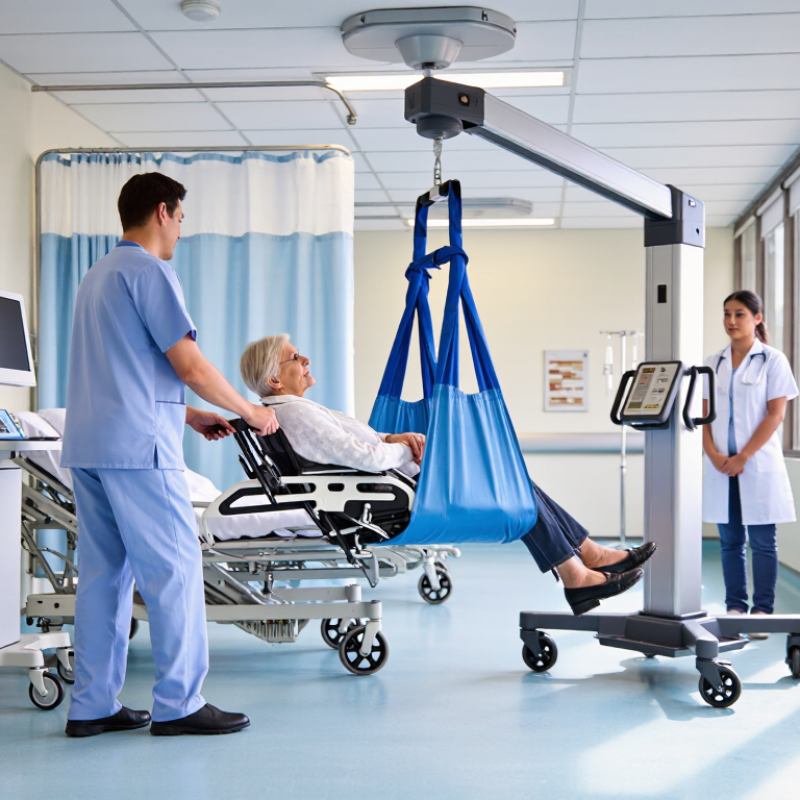
What Is a Person Lift Assist Device?
A person lift assist device is equipment designed to help move an individual safely between positions. It may support transfers from a bed to a wheelchair, toilet, or standing position. The device reduces physical strain on caregivers and can provide greater dignity for users. It is not a shortcut.
Common designs include mobile floor lifts, sit-to-stand aids, ceiling-mounted systems, and powered transfer chairs. Most use a sling, support belt, platform, or padded harness. A motor, hydraulic system, or counterbalance mechanism then assists the movement. Controls should be clear, responsive, and easy to reach. Emergency lowering is also important. Small details matter.
In practical use, correct sizing comes before appearance or price. A sling must fit the user’s body and support needs. The floor should remain stable and free from obstacles. Caregivers need proper training before operating powered equipment. Weight capacity, battery performance, adjustment range, and cleaning requirements deserve careful review. From supplier evaluations, documentation often reveals more than polished product photos. Yet fit is not always perfect. A device may work well in a clinic but feel awkward in a crowded home. Regular inspection is essential, especially around straps, wheels, brakes, and lifting points. Buyers should request test information, maintenance guidance, and user instructions in a language their staff understand.
| Device Category | What It Is | Typical Safe Working Load | Typical Lift or Transfer Range | Common Power Configuration | Typical Applications | Key Safety Features |
|---|---|---|---|---|---|---|
| Mobile Floor Patient Lift | A wheeled lifting device that uses a sling or support attachment to raise and transfer a person between a bed, chair, wheelchair, or bathroom surface. | Approximately 150–250 kg, depending on the model and sling system. | Usually supports floor-level lifting and transfers across a practical range of approximately 1.0–1.8 m. | Rechargeable electric actuator with a hand control; manual emergency lowering is commonly provided. | Hospitals, nursing homes, rehabilitation centers, home care, and assisted-living facilities. | Emergency lowering, locking casters, spreader-bar restraints, overload protection, and compatible patient slings. |
| Sit-to-Stand Lift | A compact assistive lift that helps a partially weight-bearing person move from sitting to standing while remaining supported by a knee pad, footplate, and grab handles. | Commonly 100–180 kg. | Designed mainly for seated-to-standing transfers rather than full suspension lifting. | Electric actuator with battery power; some versions use a manual or gas-assisted mechanism. | Toilet transfers, bed-to-chair transfers, rehabilitation, and mobility assistance for users with limited leg strength. | Adjustable knee support, non-slip footplate, secure hand grips, emergency stop, and controlled lifting movement. |
| Ceiling-Mounted Lift | A motorized lifting unit mounted to a ceiling track. It moves a supported person along the track without requiring a mobile base around the bed or chair. | Typically 150–250 kg; heavy-duty configurations may be higher. | Vertical lifting is commonly around 1.5–2.0 m, while horizontal travel depends on the installed track layout. | Rechargeable battery-powered motor with a pendant or wireless control. | Frequent transfers in hospitals, long-term care, accessible bathrooms, and bedrooms with permanent track systems. | Emergency lowering, battery status monitoring, end-stop protection, track locking, and audible or visual alerts on some models. |
| Standing Transfer Aid | A non-suspension transfer aid that supports a person who can bear some weight and pivot during movement between nearby surfaces. | Often 100–160 kg. | Provides a short-range transfer at approximately seated-to-standing height; it is not intended for full-body lifting. | Manual, electric, or hybrid mechanisms are available. | Bed-to-wheelchair transfers, toileting, dressing, and short-distance assisted movement. | Braked wheels, non-slip foot support, padded knee support, ergonomic handles, and stable base geometry. |
| Bathing and Toileting Lift | A lift or transfer chair designed to lower and raise a person safely for bathing, showering, or toileting while reducing caregiver strain. | Commonly 120–200 kg. | Typically provides vertical adjustment sufficient for transfer from a wheelchair or bed to a shower or toilet position. | Water-resistant rechargeable actuator or manual hydraulic system, depending on configuration. | Accessible bathrooms, hospitals, care homes, rehabilitation facilities, and home-care environments. | Water-resistant controls, corrosion-resistant frame materials, locking wheels, hygiene-friendly surfaces, and safety belts. |
| Pool or Hydrotherapy Lift | A corrosion-resistant lifting system that assists a person into and out of a swimming pool or therapy pool using a seat, sling, or support platform. | Usually 120–180 kg. | Lift height and rotation depend on pool edge geometry; many designs provide controlled lowering into the water. | Battery-powered electric actuator or hydraulic drive; charging and controls must be suitable for the environment. | Hydrotherapy centers, accessible swimming pools, rehabilitation clinics, hotels, and community facilities. | Emergency stop or lowering, corrosion-resistant components, secure transfer seat, stable anchoring, and controlled descent. |
| Portable Folding Patient Lift | A lighter mobile lift that can be folded or partially disassembled for transport, storage, or use in multiple care locations. | Approximately 100–180 kg. | Generally offers a lifting range similar to a compact floor lift, subject to frame size and sling position. | Rechargeable electric actuator with removable or replaceable battery on some configurations. | Home care, community nursing, temporary care settings, and facilities requiring flexible equipment storage. | Mechanical locking points, emergency lowering, transport wheels, overload protection, and folding-frame safety locks. |
Related Posts
-
Top 10 Medical Lift Manufacturers for Global Buyers?
-
Top 10 Medical Hoists in China for Efficient Patient Handling?
-
How to Choose the Best Standing Lift for Your Needs?
-
2026 Top Patient Lift Sling Options for Global Buyers?
-
7 Tips for Choosing the Best Mobile Patient Lift
-
Mastering the Art of Using Patient Lifts for Enhanced Caregiver Efficiency