What Is a Stand Assist Device and How Does It Work?
A Stand Assist device helps a person move from sitting to standing with more support and control. It may be a floor-standing frame, a chair-mounted aid, or a powered lift. The right choice depends on the user’s strength, balance, mobility, and home layout. A device is not a substitute for an individual assessment.
Occupational therapy pioneer Mary Reilly wrote, “Man, through the use of his hands as they are energized by mind and will, can influence the state of his own health.” Her words reflect why supported movement matters: it can help people take part in everyday routines while preserving as much independence as possible. But a device must fit the person. A frame that feels steady beside one armchair may be awkward beside another, especially on thick carpet or in a cramped room.
This guide explains what a Stand Assist device is, how its handles, base, and support mechanisms work, and which features affect safe use. It also covers practical setup, common device types, and questions to discuss with a healthcare professional. Small details matter. So does fit. No device makes every transfer safe, and choosing one without assessing the user’s needs can create problems. A little caution is worthwhile.
What a Stand Assist Device Is—and How It Differs from a Full-Body Lift
What Is a Stand Assist Device and How Does It Work?
What a Stand Assist Device Is—and How It Differs from a Full-Body Lift
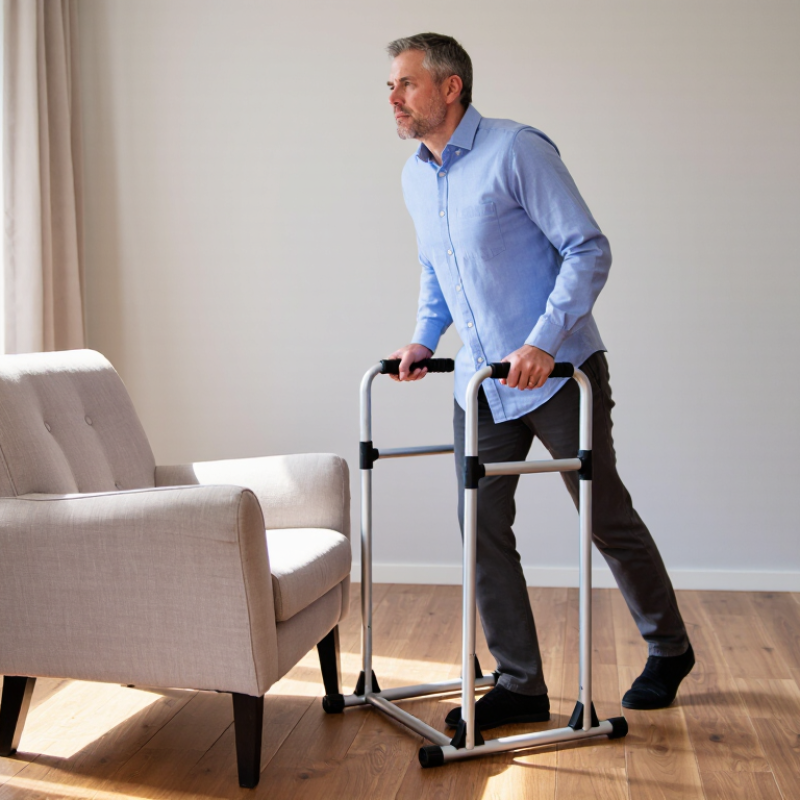
A stand assist device helps a person move from sitting to standing, often beside a bed, chair, or toilet. Depending on its design, it may use a support frame, handles, a seat sling, or powered lifting. The person usually needs to bear some weight through their legs and follow simple directions. A full-body lift is different. It supports most or all of the person’s weight in a sling and moves them between surfaces, even when they cannot stand. The right choice depends on mobility, balance, body support, and the transfer setting—not just convenience.
Tips: Check the device’s instructions and fit before each transfer. Keep the floor clear, lock any required wheels, and explain each step calmly. A care professional can help assess whether the person can safely bear weight. Small details matter.
A stand assist device is not automatically safer for every user. Weak knees, poor trunk control, pain, or sudden fatigue can make standing transfers difficult. The caregiver should avoid pulling on the person’s arms or rushing the lift. If the person cannot stay upright or consistently support some weight, a full-body lift may be more appropriate. Even then, setup and training matter. I would reassess after a change in health; yesterday’s safe transfer may not feel safe today.
Key Components: Base, Handgrips, Knee Supports, and Brakes
A stand assist device helps a person move from sitting to standing when they can bear some weight and follow instructions. Its base sits on the floor, usually around the user’s feet. A broad, stable base can reduce rocking, but it still needs clear space and a level surface. Small details matter.
Handgrips give the user a firm place to hold while leaning forward and rising. They should feel comfortable and sit within easy reach. Knee supports rest against the lower legs to help prevent the knees from slipping forward. Their height and position need to suit the user; poor contact can cause discomfort or reduce support. Fit is not a minor issue.
Brakes help keep the device from rolling during a transfer. A caregiver should check that they engage fully before the user begins to rise, then follow the device’s instructions about when to release them. The exact steps vary by design. A therapist or trained professional can assess whether the user has enough strength, balance, and coordination for this type of aid. It is not right for every person, and I would not assume a device is safe just because it feels sturdy.
What Is a Stand Assist Device and How Does It Work?
A stand assist device helps a person move from sitting to standing by providing a stable base and places to hold and position the legs. Brakes help keep wheeled models stationary during setup.
How to read the chart: The values show the typical order of steps, not a measurement of strength or device performance. Exact procedures vary by device and user; follow the manufacturer’s instructions and care-team guidance.
How a Supported Transfer Works: Assess, Position, Rise, and Pivot
What Is a Stand Assist Device and How Does It Work?
How a Supported Transfer Works: Assess, Position, Rise, and Pivot
A stand assist device supports a person moving from sitting to standing and turning toward another seat. Before starting, check the person’s alertness, balance, leg strength, and ability to follow simple directions. Confirm the device suits their needs and weight, and follow its instructions or care plan. Clear rugs and footrests from the path. A quick assessment matters.
Position the person near the edge of a stable chair, with feet flat and knees aligned with the device’s supports. Help them place their hands on the handles. The caregiver then operates the device as directed while the person actively pushes through their legs. Rise slowly. Pause if they feel dizzy, weak, or uncomfortable. Once upright and steady, guide a small pivot toward the destination chair. Avoid pulling on their arms. The sequence can look simple, but real transfers are not always smooth; stop and get trained help if the person cannot bear weight or becomes unsteady.
Tips: Use calm, clear cues, such as “lean forward” and “stand.” Check that the receiving seat is close and stable. Don’t rush the pivot. Even a small change in foot position can affect balance.
What Is a Stand Assist Device and How Does It Work? — How a Supported Transfer Works: Assess, Position, Rise, and Pivot
A stand assist device supports a person who can participate in standing and bearing some weight during a transfer. It is not a full-body lift. The device design and the person’s care plan determine the correct technique.
| Transfer stage |
What the caregiver does |
What to check |
Why it matters |
| 1. Assess |
Confirm the person is alert, willing, and able to follow instructions and take part in standing. Explain the transfer and check for pain, dizziness, or new weakness. |
Review the care plan and device instructions. Confirm the device is suitable for the person’s abilities and body size, and that the destination surface is ready. |
A stand assist device generally requires the person to bear some weight and cooperate. If they cannot do so safely, use the transfer method recommended by a qualified professional. |
| 2. Position |
Place the device close to the starting seat as directed by its manufacturer. Help the person move toward the front of the seat, position their feet on the foot platform if provided, and place their knees against the designated support if applicable. |
Make sure the device is stable and correctly set up. Apply brakes where the model requires them; keep feet, clothing, and tubing clear of moving parts. Use the device’s prescribed belt or support. |
Good alignment gives the person a stable base and helps prevent feet from slipping or knees from moving out of position. |
| 3. Rise |
Give clear, calm instructions. Ask the person to lean forward as appropriate and push through their legs or use the device’s handles as instructed. Assist with the device only according to its operating instructions. |
Move smoothly and avoid pulling on the person’s arms or shoulders. Watch for pain, loss of balance, fatigue, or dizziness; stop if the person becomes unwell or cannot continue safely. |
A controlled rise lets the person contribute while the device provides support. The caregiver should not try to lift the person manually. |
| 4. Pivot |
Once the person is upright and stable, guide the turn toward the destination using the device’s approved method. Keep the movement controlled and communicate each action. |
Check that the route is clear and the destination is close enough for a safe transfer. Do not twist the person’s body or move the device in a way the manufacturer prohibits. |
A slow, supported turn reduces sudden movement and helps maintain balance during repositioning. |
| 5. Sit and finish |
Align the person with the destination seat and help them lower slowly, following the device instructions. Confirm they are seated comfortably before removing supports or moving the device. |
Check that the person is stable, their feet are supported, and any belt or device component is removed or released as instructed. Leave the area safe and within reach of needed items. |
Controlled lowering helps prevent a sudden drop and ensures the person is safely settled at the end of the transfer. |
Safety note: Device designs and transfer procedures vary. Follow the manufacturer’s instructions and the person’s care plan, and seek guidance from a qualified healthcare professional if suitability or technique is uncertain.
Choosing a Device: User Ability, Fit, Weight Capacity, and Care Setting
Choosing a stand assist device starts with what the person can do today, not just their diagnosis. Can they bear weight through both legs, follow directions, grip the handles, and keep their trunk steady? A trained clinician should assess an actual transfer, including from a low chair or toilet. CDC’s 2024 older-adult falls data reports that about one in four adults aged 65 and older falls each year. That figure does not mean every older adult needs a device; it does make balance and fall history worth discussing. Small details matter. Slippery socks can change the transfer.
Fit and capacity are not minor checks. Measure the user and confirm their knees, feet, and hands meet the device’s intended contact points. Check the stated weight limit and follow the manufacturer’s instructions; never assume a device fits because it worked for someone else. A common mistake is testing it only in a spacious room. At home, doorways, rugs, and tight bathroom turns may change what is practical. In care facilities, staff training and transfer routines matter too. The U.S. Bureau of Labor Statistics’ 2022 injury data reported 4.5 cases per 100 full-time equivalent workers in health care and social assistance, compared with 2.7 across private industry. OSHA’s nursing-home ergonomics guidance stresses safe resident handling and appropriate equipment. Reassess after changes in strength, pain, or mobility. The first choice may need revisiting.
Safe Patient Handling: NIOSH’s 35 lb Patient-Lifting Guideline Under Ideal Conditions
A stand assist device helps a person move from sitting to standing while reducing the caregiver’s need to lift. The person places their feet on a platform, holds a support handle, and leans forward as the device provides stability. Some models include a seat or knee support. The person must be able to bear some weight and follow instructions; a device cannot make every transfer safe.
The often-cited 35-pound figure needs context. Ergonomist Thomas Waters’ 2007 analysis in the journal Applied Ergonomics estimated that caregivers should not manually lift more than 35 pounds of a patient’s weight under ideal conditions. Those conditions include a close load, good posture, and no twisting. This is not a universal safe limit, nor does it mean a 35-pound lift is safe in every room or for every worker. Real transfers involve unpredictable movement. That matters.
NIOSH’s safe patient-handling guidance favors assistive equipment and individualized assessment over relying on body mechanics alone. A stand assist device can help when the person can participate, but staff should check balance, strength, cognition, footwear, and the transfer path first. Clear the floor. Lock wheels where required. If the person cannot bear weight reliably, a different transfer method may be needed. The 35-pound benchmark is useful, but it is an estimate—not a guarantee.